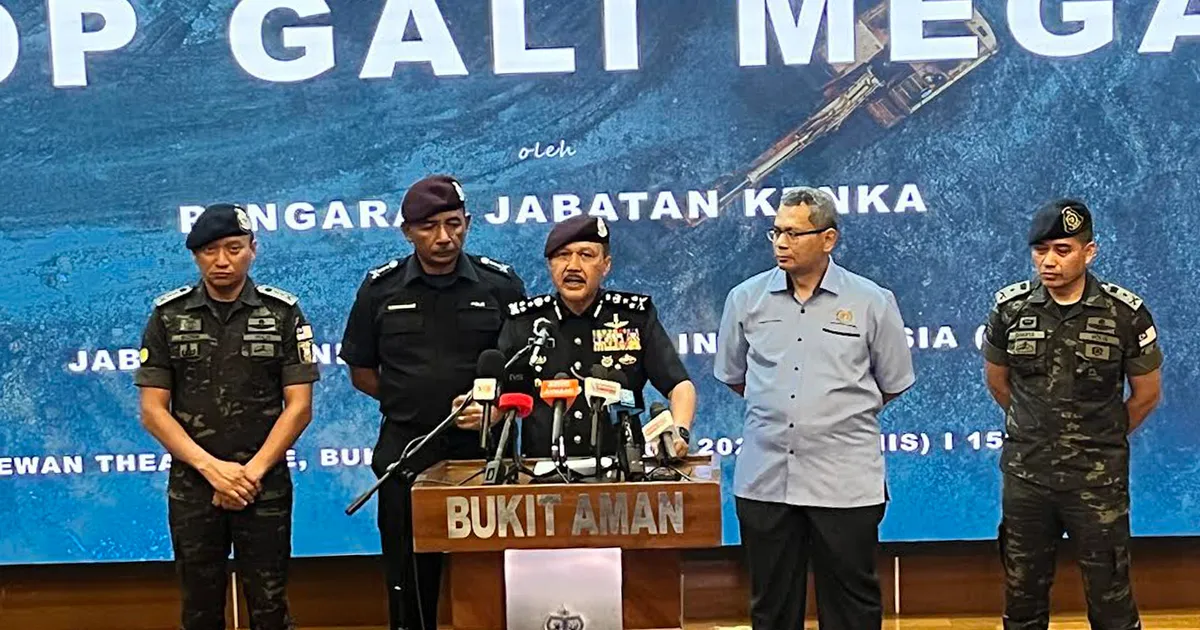
A comprehensive enforcement operation spanning five days in mid-August has resulted in the arrest of 99 individuals involved in illegal mining activities across Malaysia, with authorities uncovering and seizing assets valued at RM119 million. The coordinated campaign, which ran from August 19 to 23, represents a substantial escalation in the government's efforts to combat unauthorised extraction of natural resources, a persistent challenge that undermines regulatory frameworks and deprives the state of legitimate revenue.
During the intensive operation, enforcement teams recovered approximately 33,000 tonnes of illegally extracted natural materials, comprising coal, quarry stone, earth and sand, with an estimated market value of RM21 million. This substantial haul demonstrates the scale at which illegal mining operations function, often operating across multiple sites simultaneously and employing sophisticated networks to extract, process and distribute materials beyond government oversight. The breadth of confiscated materials reflects the diversified nature of illegal extraction activities, which extend far beyond precious minerals to include common construction materials that feed into Malaysia's robust building and infrastructure sectors.
The distinction between the total asset seizure figure of RM119 million and the raw materials valuation of RM21 million suggests that enforcement authorities targeted not only stockpiled extracted resources but also equipment, machinery, vehicles and financial assets associated with mining networks. This comprehensive approach to asset seizure disrupts the operational capacity of illegal mining enterprises by eliminating the capital infrastructure necessary to continue activities, thereby imposing immediate economic consequences that extend beyond simple resource recovery.
Illegal mining represents a multifaceted challenge for Malaysian policymakers and enforcement agencies. Beyond the straightforward loss of state revenue and natural resource depletion, unauthorised extraction operations frequently occur in environmentally sensitive areas, causing soil degradation, water contamination and ecosystem disruption. The five-day operation thus serves purposes extending beyond revenue protection to encompass environmental stewardship and the safeguarding of landscapes critical for agricultural productivity and biodiversity conservation across the nation.
The operation underscores ongoing tension between formal mining regulations and their enforcement capacity. Malaysia maintains established licensing frameworks for legitimate mineral extraction, yet illegal operators often exploit regulatory gaps, operate in remote areas where monitoring proves difficult, or employ corrupt officials to obscure their activities. The coordinated five-day campaign signals a shift toward more intensive, time-concentrated enforcement surges rather than traditional routine monitoring, potentially reflecting resource constraints within enforcement agencies and the necessity to concentrate personnel and equipment for maximum impact.
From a regional perspective, Malaysia's crackdown aligns with broader Southeast Asian challenges regarding resource security and governance. Cross-border smuggling networks frequently move illegally extracted materials across porous international boundaries, particularly toward processing facilities in Thailand and Indonesia or final markets in China and Vietnam. A sustained enforcement effort must therefore address not merely domestic extraction but also transnational trafficking networks that monetise stolen resources through complex supply chains largely invisible to Malaysian authorities.
The arrest of 99 individuals raises questions about prosecution capacity and judicial resources. Malaysia's legal system has demonstrated variable success in prosecuting mining-related offences, with some cases experiencing protracted delays or lenient sentencing that fails to deter future violations. The substantial number of arrests creates both opportunity and challenge: an opportunity to demonstrate serious consequences for illegal mining, but also a risk of court backlogs that ultimately diminish deterrent effects through extended processing periods.
Industry observers note that illegal mining frequently represents rational economic calculation for participants facing poverty or limited legitimate employment alternatives, particularly in rural areas where mining opportunities cluster. Addressing the phenomenon sustainably requires not merely enforcement but complementary economic development strategies that provide viable livelihoods, technological capacity building for small-scale operators to transition toward licensed activities, and revenue-sharing mechanisms that incentivise community cooperation with authorities rather than complicity with illegal networks.
The August operation also highlights the significance of natural resource governance for Malaysia's economic agenda. Quarry stone, sand and coal represent inputs fundamental to construction, manufacturing and energy sectors; their illegal extraction circumvents taxation and environmental compliance requirements, distorting market competition and undermining legitimate operators who bear regulatory costs. Enforcement thus benefits law-abiding mining businesses that operate within licensing frameworks, creating competitive equity within the sector.
Looking forward, the scale of this operation suggests that authorities possess data-driven intelligence regarding high-risk mining zones and operational networks. Sustaining momentum requires continued intelligence development, inter-agency coordination between mining authorities, environmental agencies and law enforcement, and potentially technical investments in remote sensing and surveillance technologies to monitor vast territories more effectively than ground-based patrols alone.
The RM119 million asset seizure represents material economic impact on illegal mining operations, yet enforcement officials recognise that sporadic crackdowns, however substantial, produce only temporary disruption unless coupled with long-term deterrent strategies. Elevated penalties, asset forfeiture processes that eliminate proceeds, and corporate accountability mechanisms targeting middlemen and processors who purchase illegal materials could collectively raise the cost of participation and incentivise compliance with regulatory frameworks that protect Malaysia's natural resource endowment.

