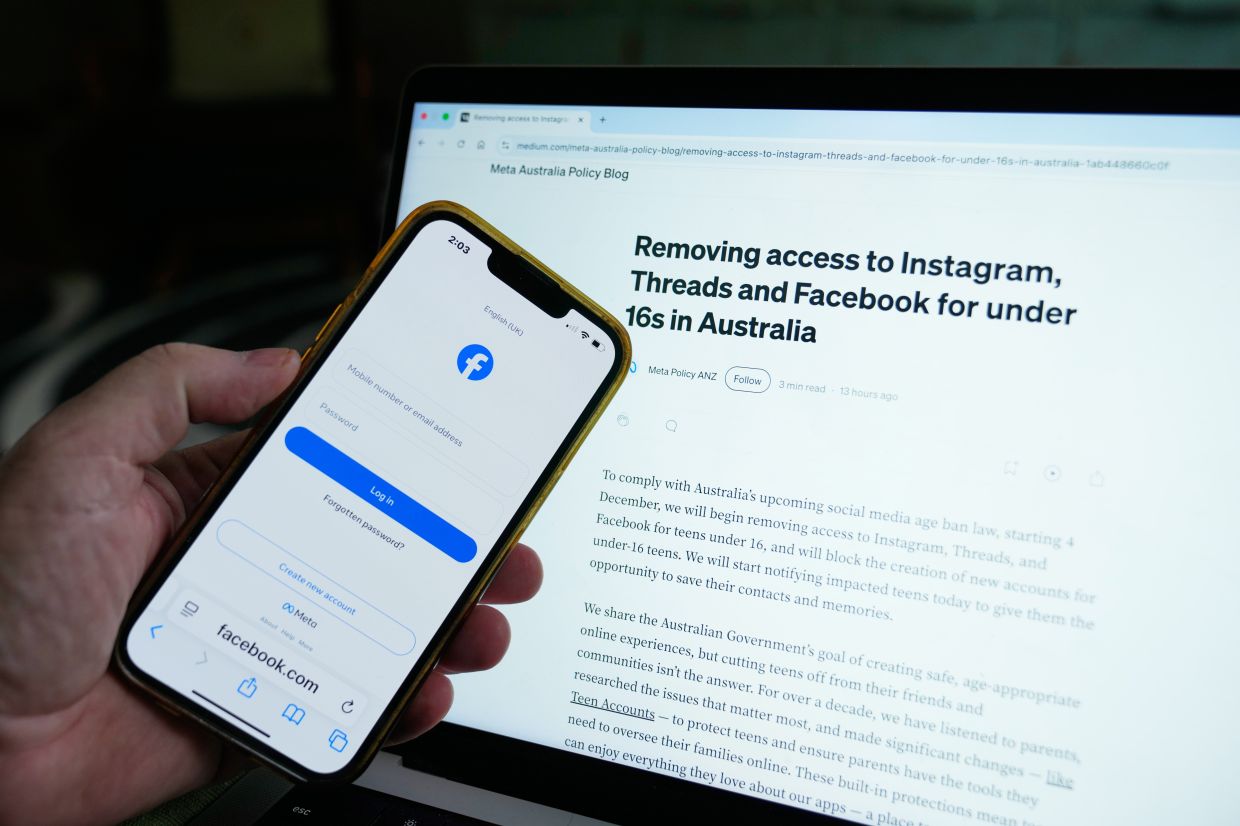
Prime Minister Anthony Albanese has expressed strong displeasure at an eight-week Senate inquiry delay affecting crucial amendments designed to bolster enforcement of Australia's social media ban for children under 16. The government submitted draft legislation to Parliament with the express purpose of expanding the authority granted to eSafety Commissioner Julie Inman Grant, the country's designated online safety regulator, to tackle widespread non-compliance among major platforms including Facebook, Instagram, and YouTube. The prohibition itself came into force in December, marking one of the world's most restrictive age-gate policies on digital platforms.
The proposed legislative amendments represent a significant escalation in regulatory power. Beyond the commissioner's existing capacity to request information from social media companies, the changes would grant Inman Grant authority to demand the surrender of documents and detailed records about platform compliance efforts. Additionally, the amendments expand her investigative reach to encompass third-party technology providers, including age verification services, allowing her to validate or challenge claims platforms make regarding their effectiveness in blocking underage users. These enforcement mechanisms are essential given emerging evidence that major platforms have largely circumvented the spirit of the legislation through inadequate age-checking practices.
The Senate referral, initiated on July 2 by the coalition opposition Liberal Party and the minor Australian Greens party, represents a significant political obstacle for Albanese's centre-left Labour government, which lacks majority control of the upper chamber. Speaking to the Australian Broadcasting Corporation, the Prime Minister articulated his frustration about the tactical delay. Albanese emphasised that the timing of legislative passage directly impacts the commissioner's ability to issue enforceable demands, warning that extended deliberation provides social platforms with a convenient window to destroy or conceal documentation of non-compliance before regulatory action commences. He underscored that immediate passage would establish a clear date from which the commissioner's enforcement powers activate, triggering financial penalties against non-compliant platforms.
The financial stakes embedded in the amendments are substantial. The legislation proposes doubling the maximum financial penalty imposed on platforms failing to implement reasonable child-exclusion measures to A$99 million, equivalent to approximately US$68 million or RM276.56 million. This punitive architecture represents the government's attempt to create genuine financial disincentives for continued regulatory non-compliance. However, critics note that the existing penalty framework has never been deployed, raising questions about whether heightened fines alone address the structural problem of inadequate platform compliance even under threat of sanctions.
Greens Senator David Shoebridge, who has consistently opposed the social media ban on grounds of principle, articulated a sceptical perspective during recent media appearances. Speaking to Sky News Australia, Shoebridge questioned the strategic logic of doubling penalties that authorities have never previously invoked. He suggested that merely increasing financial penalties without addressing underlying implementation failures represents an incomplete policy response. Shoebridge's observation reflects a deeper policy critique: that heightened punishment mechanisms might prove theatrically impressive without substantively improving child safety outcomes if the underlying compliance infrastructure remains fragmented.
The opposition coalition presents a different critique altogether. Communications spokesperson Senator Sarah Henderson characterised the entire legislative framework as fundamentally flawed, describing it as hastily designed, poorly implemented, and inadequately functioning. Rather than endorsing delays, Henderson argued that the amendments themselves require toughening to address systemic weaknesses in the original ban structure. The opposition signals its intention to conduct rigorous parliamentary examination of the proposed amendments, suggesting it views the Senate inquiry as an opportunity to fundamentally reshape rather than merely accelerate the legislation.
Context regarding the ban's initial reception and implementation demonstrates the political momentum initially behind the measure. Parliament passed the foundational legislation in 2024 with overwhelming cross-party support, granting ten targeted platforms more than twelve months to operationalise age-exclusion mechanisms. The initial implementation generated headline-generating results, with authorities reporting that over 5 million child accounts were removed, deactivated, or restricted following the December commencement date. These figures created public perception that the ban functioned effectively, generating international attention from jurisdictions contemplating similar regulatory approaches.
However, subsequent monitoring by the eSafety Commissioner has revealed a starkly different reality. In March, eSafety published damning compliance data indicating that approximately seven in ten children holding active accounts on restricted platforms on the ban's commencement date remained active on Facebook, Instagram, Snapchat, and TikTok. This persistence rate suggests that initial account removals represented either temporary deactivations subject to immediate reinstatement or accounts belonging to older teenagers who circumvented age-verification systems through straightforward deception. The disparity between initial reporting and subsequent compliance measurement triggered growing concern among regulators about platform sincerity regarding child-protection obligations.
In response to persistent non-compliance, Commissioner Inman Grant escalated her regulatory posture significantly. In April, she announced consideration of initiating court proceedings against Facebook's parent company Meta, Instagram's parent, TikTok, and YouTube, alleging systematic failure to implement reasonable steps toward child exclusion. The threatened litigation represents a formal acknowledgment that voluntary platform cooperation has proven insufficient to achieve legislative objectives. Notably, Inman Grant indicated provisional satisfaction with compliance efforts undertaken by secondary platforms including X, Kick, Reddit, Threads, and Twitch, suggesting that regulatory pressure produces differentiated outcomes depending on platform corporate structure and market position.
Communications Minister Anika Wells provided recent testimony regarding the absence of measurable improvement across the regulatory landscape. Wells reported receiving monthly compliance updates from the eSafety Commissioner since March, consistently documenting stagnation or regression in platform adherence to child-protection standards. Her statement that authorities are "not seeing improvements" underscores the fundamental justification for the proposed amendments: existing regulatory tools have proven insufficient to compel platform transformation. This assessment carries significance extending beyond Australia's borders, as multiple nations closely monitor whether Australia's regulatory experiment can achieve its stated objectives or whether social media platforms possess effective countermeasures against government child-protection mandates.
The Senate inquiry delay therefore acquires symbolic importance beyond its immediate legislative consequences. For Malaysian and Southeast Asian observers, the Australian experience illuminates the structural challenges governments encounter when attempting to regulate digital platforms operating across jurisdictions with minimal domestic operational presence. The platform resistance to Australian requirements, despite Australia's economic and regulatory standing, suggests that enforcement asymmetries favour corporations maintaining technological control over account verification systems. Malaysia and regional governments contemplating similar age-restriction policies should closely examine whether Australia's emerging regulatory challenges indicate fundamental limitations in national-level social media governance, or whether stronger enforcement mechanisms like those proposed in the delayed amendments might eventually establish workable regulatory frameworks.

