Australia's transport safety authorities are moving quickly to investigate a troubling sequence of three near-miss incidents at Sydney Airport that unfolded over less than two weeks in August, triggering alarm about operational procedures at one of the country's busiest aviation hubs. The incidents—including two dangerous encounters on August 9 alone—have prompted both the nation's safety regulator and Prime Minister Anthony Albanese to demand comprehensive inquiries into what went wrong and whether systemic weaknesses contributed to the close calls.
The most recent incident occurred on the morning of August 9 when a Virgin Australia Boeing 737 was cleared for takeoff by air traffic control. As the crew began their departure sequence, they spotted a Qantas aircraft crossing the same runway directly ahead of them. The Virgin Australia pilots immediately brought their aircraft to a complete stop approximately one kilometre away from the Qantas plane, which had separately received clearance from the tower to taxi across the runway. The gap between disaster and safe resolution appeared frighteningly narrow in this scenario, illustrating how quickly runway incursions can escalate.
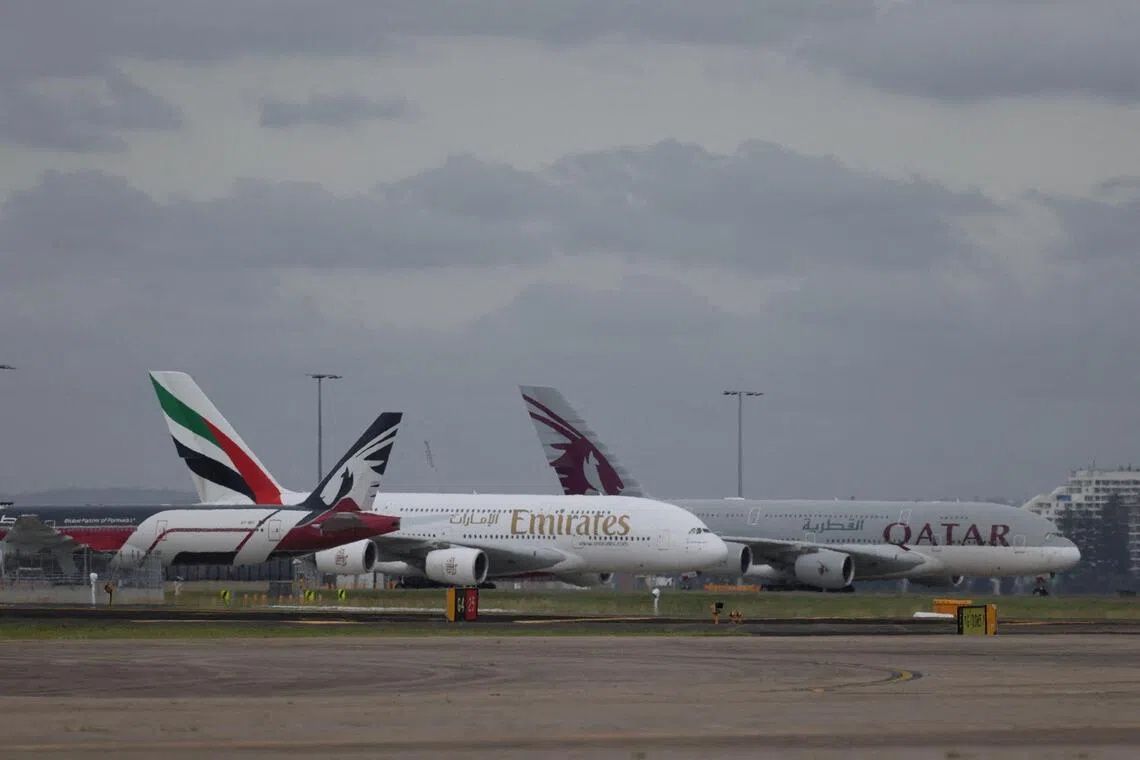
Hours earlier that same morning, tension had mounted at the airport once more when a Jetstar pilot was compelled to apply maximum braking force to avert a collision with a Qatar Airways jet. That dual concentration of incidents within hours—rather than being isolated aberrations—suggested a pattern that demanded investigation. These August events followed an earlier collision near-miss on July 27, when two Qantas aircraft that had both received takeoff clearance narrowly avoided each other. Three separate incidents within seventeen days at a major international airport created immediate public and government concern about air safety protocols.
Angus Mitchell, the chief commissioner of the Australian Transport Safety Bureau, acknowledged the gravity of the situation while attempting to reassure the public that the regulator was treating the matter with appropriate seriousness. Mitchell stated that investigators would examine whether organisational or systemic issues had played roles in the sequence of events. He indicated that the inquiry would consider multiple factors beyond simple pilot or controller error, including the airport's operational tempo at the time, staffing levels in the control tower, and the specific conditions prevailing during each incident. This broader investigative lens suggested authorities suspected deeper structural problems rather than isolated mistakes.
One immediate puzzle confronting investigators involved the delayed disclosure of the August 9 incidents. Questions emerged about why such dangerous situations took considerable time to be formally reported through official channels, raising concerns about internal reporting protocols and whether frontline safety issues were being escalated appropriately within the system. Mitchell acknowledged that there had been a "supervisory or training situation" occurring on August 9, hinting that controller inexperience or ongoing instruction may have been a contributing factor. The specificity of this comment suggested investigators already had preliminary findings about what occurred during the shift.
Mitchell also highlighted what he characterised as a significant ramp-up period for Australian air traffic services. The nation's aviation sector has been actively recruiting, training, and qualifying new air traffic controllers to meet capacity demands as aviation services expand. While this expansion is necessary to handle growing air traffic volumes, particularly as Southeast Asian tourism and trade routes intensify, the transition period inevitably involves controllers with varying levels of experience managing complex runway sequences. The timing of these near-misses during a period of controller recruitment and certification raised awkward questions about whether adequate supervision and training protocols were in place for newly qualified staff managing Sydney's demanding airspace.
For Malaysian and broader Southeast Asian readers, these incidents carry particular resonance. Sydney Airport serves as a major international hub for flights throughout the Asia-Pacific region, including numerous services to and from Malaysia. Operational disruptions or safety concerns at such a critical node reverberate through regional aviation networks. Moreover, as aviation demand in Southeast Asia continues accelerating, nations including Malaysia are similarly ramping up controller hiring and training programmes. The Sydney incidents provide a cautionary case study about the risks of expanding too rapidly without ensuring comprehensive supervisory and safety infrastructure keeps pace with growth.
Prime Minister Anthony Albanese's decision to personally call for an investigation underscored the political dimensions of aviation safety in Australia. For voters and taxpayers, airport safety is non-negotiable; any suggestion that procedural lapses or staffing shortages might have created dangerous conditions demands high-level political engagement and transparent response. Albanese's involvement signalled that the government took the incidents seriously and would not allow them to be dismissed as minor technical matters.
Mitchell's statement that "three incidents occurred that shouldn't have occurred" captured the essential problem authorities faced. None of these were inevitable outcomes of complex aviation operations. Each represented a discrete point where established safety procedures should have prevented the situation from developing. The fact that this happened three times in two weeks rather than as isolated one-off aberrations suggested something systematic was amiss. Whether the root cause lay in training deficiencies, understaffing, procedural gaps, or combinations thereof, the investigation would need to identify exactly where the safety chain had broken and why multiple safeguards had not prevented these situations.
The investigation's eventual findings will likely influence not only Sydney Airport's operations but also how other regional aviation authorities, including in Malaysia, assess their own runway safety procedures, controller training intensity, and supervisory oversight. As aviation authorities across Southeast Asia manage rapid growth, the Sydney incidents serve as a reminder that expansion without concurrent investment in safety infrastructure and training quality carries real costs. The investigation's conclusions may help shape regional best practices and inform how Malaysian and other Southeast Asian airports calibrate their own growth strategies alongside safety imperatives.

