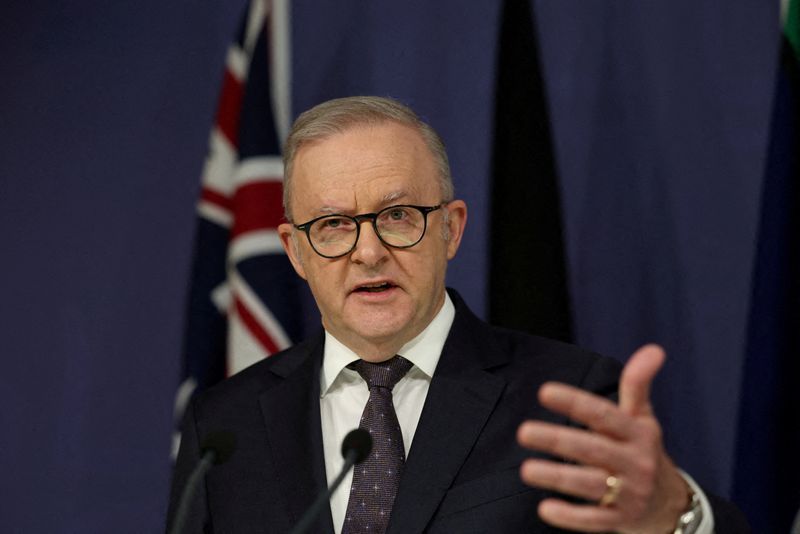
Australia will establish a dedicated Office of AI positioned within the Department of the Prime Minister and Cabinet, marking a shift towards unified governance of the country's artificial intelligence development. Prime Minister Anthony Albanese is expected to announce the initiative during a major address in Sydney on Wednesday, signalling Canberra's commitment to treating AI as a priority technology requiring coordinated whole-of-government oversight rather than fragmented, sector-by-sector responses.
The creation of this centralised office represents a significant departure from Australia's previous approach to AI governance. Until now, the country has managed artificial intelligence concerns through disparate regulatory frameworks, relying on existing privacy legislation, consumer protection laws, and a voluntary ethics framework rather than comprehensive AI-specific regulation. This patchwork system has left gaps in oversight while companies navigate different rules depending on their industry and the regulators involved.
Albanese is expected to frame this restructuring within a historical context, comparing Australia's new approach to how previous governments developed coordinated strategies for transformative technologies. He will reference civil aviation regulation introduced during the 1920s and genetic engineering frameworks established in the 1990s as precedents for proactive, whole-of-economy governance models. This framing positions the Office of AI as part of a continuum of responsible technology stewardship rather than reactive regulation.
Government officials argue that the centralised office will provide greater certainty for investors and businesses operating in Australia's AI sector. By streamlining approval processes and establishing clearer compliance pathways, the office aims to enhance Australia's competitive position as a destination for AI investment and data centre development. The country is actively competing with other developed nations to attract significant capital and talent to its technology ecosystem, and regulatory clarity is seen as essential to that strategy.
The announcement reflects Australia's broader aspiration to position itself as a global AI leader and a major hub for data centre operations. However, this ambition exists in tension with growing community concerns about the technology's societal impact. Labour displacement remains a significant worry, particularly across sectors vulnerable to automation. Additionally, the environmental footprint of data centres—which consume enormous quantities of water and electricity to maintain operations—has emerged as a contentious issue in Australia, where water scarcity is an ongoing challenge.
Beyond employment and environmental concerns, regulators and stakeholders are grappling with questions around intellectual property protection, cybersecurity, and personal safety as AI systems become more deeply embedded in critical infrastructure and consumer-facing applications. Reports of algorithmic bias, data privacy breaches, and other harms have intensified calls from civil society and some politicians for tougher legal frameworks. The Office of AI will need to address these competing pressures while maintaining investment appeal.
For Southeast Asian nations including Malaysia, Australia's regulatory approach carries important implications. As a regional economic leader and technology hub, Australian policy decisions often influence how regional governments frame their own AI strategies. Malaysia and other ASEAN countries are similarly grappling with how to encourage investment in artificial intelligence while protecting workers, consumers, and the environment. Australia's experience establishing a centralised coordination mechanism could serve as a template or cautionary tale for regional policymakers considering their own frameworks.
The Office of AI's mandate will extend across all government departments, enabling coordination between sectors as diverse as health, education, defence, and finance. This whole-of-government approach is designed to prevent regulatory arbitrage, where companies exploit gaps between departmental rules, and to ensure that AI development aligns with broader national objectives around security, equity, and public welfare. The office will likely establish standards for government use of AI systems, particularly in sensitive areas like immigration, law enforcement, and welfare administration.
International observers have noted that Australia's centralised approach represents a distinct model within the global AI governance landscape. While some countries have pursued sectoral or light-touch regulation, and others have established dedicated AI agencies with limited scope, Australia's model embeds AI coordination at the apex of executive government. This positioning suggests that policymakers view AI as fundamentally reshaping government function itself, not merely as a technology requiring oversight.
The initiative also reflects broader geopolitical dynamics. Australia's positioning of itself as an AI leader occurs within a context of strategic competition for technological dominance among major powers. By establishing clear governance structures and attracting investment, Canberra signals its commitment to remaining technologically advanced and economically competitive in an era where AI capabilities increasingly determine national economic and security standing.
Regulatory implementation will prove critical. The Office of AI will need to balance competing stakeholder interests: technology companies seeking flexibility and minimal compliance burdens, workers' unions demanding protections against displacement, environmental advocates pushing for strict data centre standards, and civil society groups advocating for algorithmic transparency and accountability. How effectively the office negotiates these tensions will shape not only Australia's AI development trajectory but potentially influence how the broader region approaches similar challenges.
The announcement also highlights the urgency policymakers now attach to AI governance. The speed with which artificial intelligence capabilities have advanced and proliferated through the economy has caught many governments unprepared. Australia's decision to elevate AI coordination to the prime ministerial level signals recognition that incremental, reactive regulation can no longer suffice. Instead, proactive institutional design at the centre of government is now viewed as necessary to shape technological development in accordance with national values and priorities.

