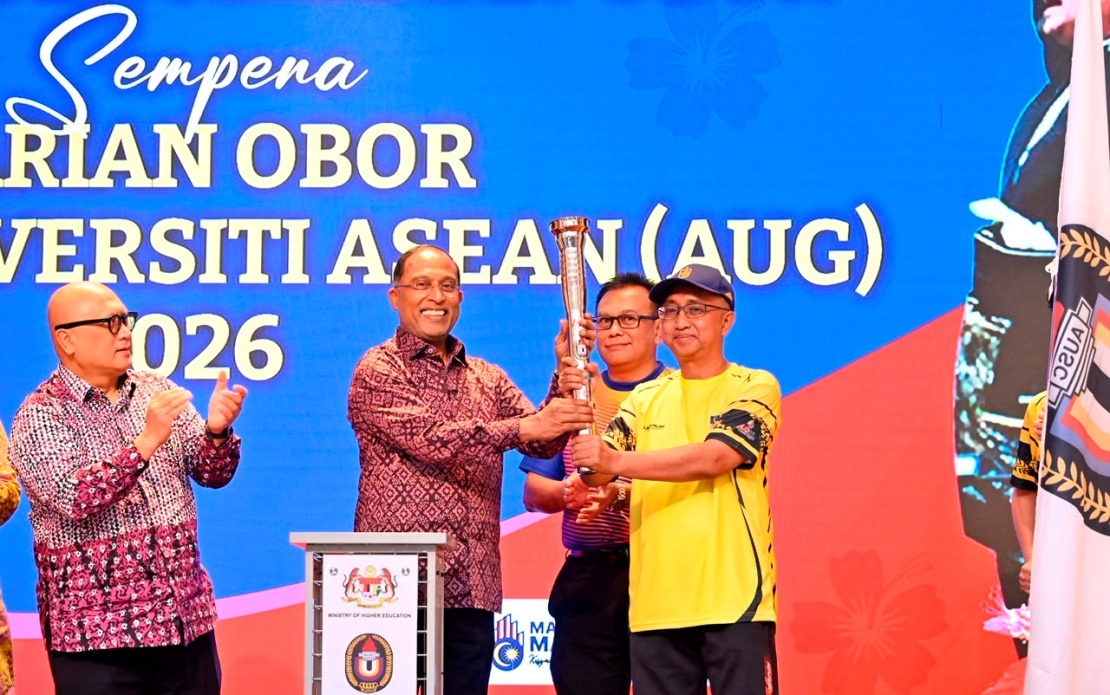
The ASEAN University Games torch run was formally inaugurated at the Ministry of Higher Education headquarters in Putrajaya on Wednesday, marking a symbolic turning point in Malaysia's preparations to host the region's most significant university sports gathering. Higher Education Minister Datuk Seri Dr Zambry Abd Kadir presented the ceremonial torch to Prof Dr Mohammad Ismail, Deputy Vice-Chancellor of Universiti Malaysia Kelantan and chief of the Malaysian contingent, during a ceremony held as part of the ministry's monthly assembly. The occasion crystallised months of organisational groundwork into a visible moment of national commitment, underscoring the government's determination to project Malaysia's capabilities as a sporting nation on the ASEAN platform.
Dr Zambry's remarks at the handover ceremony conveyed the weightier dimensions underlying the Games. He emphasised that the participating athletes would serve as ambassadors for Malaysia, tasked with upholding the nation's reputation whilst competing amongst their peers from across Southeast Asia. The minister's exhortation to "carry the Malaysian torch and the torch of victory" framed athletic achievement not merely as personal or institutional success, but as an extension of national pride. This rhetorical positioning reflects how governments throughout the region view university sports as training grounds for future sporting talent and as diplomatic soft power tools that showcase organisational prowess and national unity.
Four elite athletes accompanied the torch during its inaugural journey, each representing different sporting disciplines and institutions that exemplify Malaysia's athletic diversity. Long jumper Andre Anura Anuar and shot putter Nani Sahirah Maryata both competed under Universiti Putra Malaysia's banner, karate competitor Thevendran Kaliana Sundram represented Universiti Pertahanan Nasional Malaysia, whilst taekwondo athlete Lee Hui Yee competed for Sultan Salahuddin Abdul Aziz Shah Polytechnic. Their presence alongside the torch symbolised the broad collegiate participation that will characterise the Games, bridging traditional universities with tertiary technical institutions.
The torch's physical journey mapped the educational landscape that has mobilised behind the AUG 2026 cause. Beginning at the Ministry of Higher Education grounds in Putrajaya, it proceeded through Kuala Lumpur to the Ministry of Tourism, Arts and Culture before returning to the education ministry's premises. Subsequent phases of the torch relay would extend to five major universities: Universiti Kebangsaan Malaysia, Universiti Putra Malaysia, Universiti Pertahanan Nasional Malaysia, Universiti Malaya, and Universiti Teknologi MARA. This choreographed progression through Malaysia's higher education sector underscored the Games' function in rallying institutional pride and student engagement across the country's university system.
The scale of AUG 2026 positions it as a substantial logistical and diplomatic undertaking for Malaysia. Scheduled to run from December 10 through 19, the Games will accommodate approximately 4,669 participants drawn from eleven ASEAN nations, encompassing 2,849 athletes and officials, alongside 700 referees and competition officials and 920 volunteers. This organisational structure reflects contemporary standards for major sporting events, requiring coordination across multiple sectors including sports governance, hospitality, transportation, and security. The participation of athletes from across ASEAN signals the Games' importance as a regional institution, distinct from purely national competitions yet smaller in scale than the Southeast Asian Games, thereby serving a specific niche in the region's sporting calendar.
Nineteen sports will feature across four host cities—Shah Alam, Kuala Lumpur, Serdang, and Bangi—under the overarching theme of "HOLISTIC.EXCELLENCE". This thematic framework suggests organisers envision the Games as transcending athletic competition alone, encompassing holistic athlete development and institutional excellence. The geographic distribution across the Klang Valley metropolitan region and surrounding areas indicates an effort to leverage existing sports infrastructure whilst distributing both the logistical burden and economic benefits across multiple municipalities. For Malaysian and regional audiences, this represents a significant opportunity to observe emerging talent pools from universities throughout Southeast Asia, providing a competitive proving ground before athletes potentially progress to senior national teams.
The torch run itself carries particular resonance within Malaysian sporting culture, where such ceremonial elements have historically mobilised public engagement and media attention. Unlike the Olympic torch relay, which commands global recognition, the AUG 2026 torch run functions primarily as a regional symbol, yet one that carries genuine weight within ASEAN sporting circles. For Malaysian universities and their student bodies, the torch's passage through their campuses creates tangible connection to an international event occurring within national borders, fostering campus-level participation and enthusiasm that extends beyond the competing athletes themselves.
University sports programming throughout Southeast Asia has expanded considerably over the past decade, reflecting broader trends of youth development and sporting diplomacy within ASEAN. The AUG 2026 represents Malaysia's opportunity to consolidate its position within this expanding ecosystem, potentially establishing benchmarks for venue quality, event management, and athlete experience that might influence future hosting assignments. For Malaysian universities, the Games provide platforms for international visibility, athlete recruitment possibilities, and institutional branding on the regional stage. The concentration of events within the Klang Valley positions this nation's heartland as the sporting nexus of Southeast Asian university athletics, at least temporarily.
The involvement of both traditional research universities and polytechnic institutions in the torch relay suggests an inclusive approach to higher education sports that extends beyond the historically dominant universities. Sultan Salahuddin Abdul Aziz Shah Polytechnic's inclusion through athlete Lee Hui Yee acknowledges that technical and vocational higher education institutions develop competitive athletes worthy of regional platforms. This inclusive framing aligns with broader education policy objectives throughout Malaysia and the region, recognising that sporting excellence emerges across diverse institutional types rather than remaining concentrated within elite universities.
As Malaysia's AUG 2026 countdown formally commenced, the symbolism extended beyond the torch itself to encompass national readiness, institutional coordination, and regional positioning. The participation of the Higher Education Minister in the handover ceremony signalled governmental commitment at cabinet level, whilst the involvement of university leadership through Prof Dr Mohammad Ismail indicated institutional buy-in extending throughout Malaysia's higher education sector. For the athletes themselves—whether the torch-bearing representatives or the hundreds who would eventually compete—the Games represented a career milestone, an opportunity to test themselves against peers from across Southeast Asia in a controlled, developmental environment before potentially advancing to senior competition.
The AUG 2026 torch run thus marked not merely a ceremonial commencement but a crystallisation of months of behind-the-scenes coordination involving government ministries, universities, sports bodies, and volunteer organisations. The Games themselves would unfold across December's final weeks, but the torch's journey through Malaysia's educational landscape in the preceding months symbolised the breadth of national engagement required to host such international events. For Southeast Asian university sports and for Malaysia's positioning within regional sporting structures, the torch run represented the visible culmination of planning and the visible inauguration of execution.

