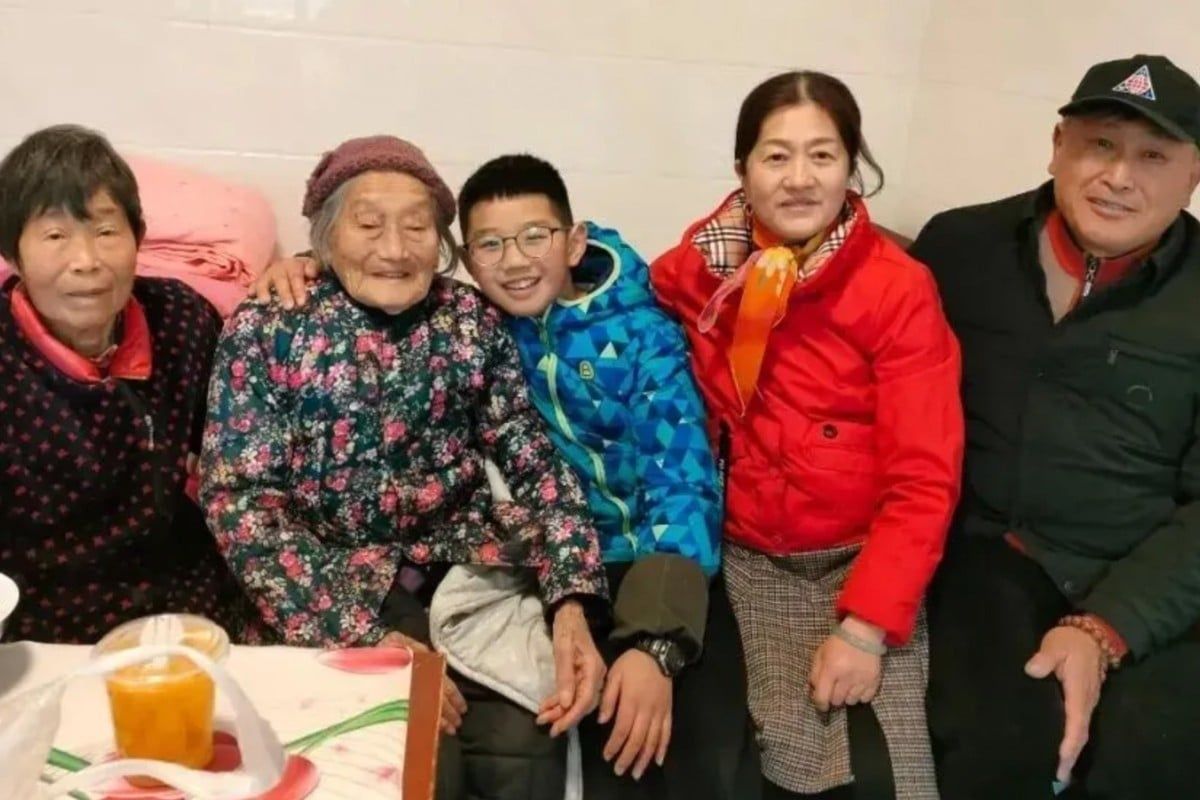
Wang Gaiying has become an unlikely internet sensation at 111 years old, with her views on ageing and longevity resonating across Chinese social media platforms. Living in Rugao, a city in Jiangsu province in eastern China, Wang represents a growing demographic in a region increasingly recognised for producing some of the world's longest-lived populations. Her story offers a compelling counterpoint to expensive wellness trends and pharmaceutical interventions, suggesting that sustained good health may lie instead in unremarkable daily rhythms and modest lifestyle choices that have remained constant throughout her life.
Rugao itself carries significant weight in longevity research circles. The municipality has earned the unofficial designation of a "longevity capital," a term applied to regions with exceptionally high concentrations of centenarians. As of February 2024, the city hosted 672 residents aged 100 or older—a density that far exceeds global averages and has prompted serious scientific inquiry into the underlying causes. This concentration is not accidental or merely a statistical anomaly. Researchers at the Chinese Academy of Sciences' Institute of Soil Science in Nanjing have conducted detailed analyses of the region's agricultural environment, discovering that the mineral-rich soil produces crops dense with trace elements that appear to confer measurable health benefits. The interplay between geography, agriculture, and human longevity in Rugao presents a compelling case study for environmental and nutritional gerontology.
Within this context, Wang's personal habits take on added significance. She lives in a five-generation household, an arrangement that keeps her socially embedded and provides constant low-level physical activity through intergenerational interaction. Well into her 100s, Wang continued agricultural work, harvesting peanuts and watermelons in the fields—labour that maintained cardiovascular fitness and muscular engagement without the artificiality of gym routines. Though advancing age has naturally reduced her capacity, she has deliberately transitioned to lighter domestic tasks rather than abandoning activity altogether. This adaptation demonstrates an important principle often overlooked in discussions of ageing: the maintenance of functional engagement with one's environment, scaled appropriately to current capacity, may matter more than the specific form that engagement takes.
Wang's philosophy treats housework not as a burden to be minimised but as legitimate physical activity deserving recognition. She wipes tables, folds clothes, and maintains involvement in domestic routines, understanding intuitively what gerontologists have increasingly documented—that regular movement, even of modest intensity, sustains circulation and preserves muscle tone across decades. When family members encourage her to rest, she resists with a clarity about her own needs. Her insistence that housework keeps her limbs active and blood flowing reflects both practical wisdom and psychological benefit. The sense of purpose and self-reliance derived from continuing to contribute to household functioning may prove as important physiologically as the movement itself, protecting against the depression and cognitive decline that sometimes accompanies forced dependency in advanced age.
Diet comprises another pillar of Wang's longevity framework, though her approach emphasises simplicity and balance rather than exotic superfoods or strict regimens. Her family deliberately varies her meals, rotating between dumplings and steamed buns as primary staples, ensuring dietary diversity without complexity. Fish holds particular importance in her diet, appreciated both for its nutritional density and ease of digestion—a practical consideration for someone in her second decade past 100. She consciously practices moderation, rejecting the notion that eating more represents abundance or care. This measured approach to nutrition aligns with emerging gerontological research suggesting that moderate caloric intake and consistent nutrient diversity may offer greater longevity benefits than the high-volume consumption that often characterises developed-world diets.
A notable historical detail involves baijiu, the traditional Chinese distilled spirit. Wang had previously enjoyed rice soaked in this potent liquor, a practice her family discontinued approximately five years ago. The decision reflected practical risk management rather than moral prohibition—concern about intoxication and the elevated danger of falls posed by alcohol at such advanced age. This adjustment illustrates an important dimension of extended longevity: the willingness to modify habits as bodily capacities shift, prioritising safety and functional preservation over attachment to established routines. The decision was made collaboratively within her household rather than imposed externally, respecting her autonomy while acknowledging genuine physiological risks.
Beyond the physical dimension, Wang attributes substantial importance to her emotional and spiritual practices. She maintains a personal discipline of performing at least one small good deed daily—complimenting family members or sending greetings to elderly friends. This habit reflects what researchers in positive psychology might term "purposeful living," the orientation toward contribution and connection that appears in studies as a protective factor for cognitive and cardiovascular health. Her calm demeanour and approach to emotional regulation prove equally significant. When frustration arises, she deliberately chooses sleep over rumination, trusting that rest provides perspective on daily troubles. Her observation that frustrations often seem unworthy of anger after adequate sleep demonstrates a sophisticated understanding of how fatigue amplifies emotional reactivity and how temporal distance facilitates rational appraisal.
Her sleep routine maintains remarkable consistency: bedtime at 7pm, waking at 7am, with one or two daytime naps. This structured schedule, sustained across decades, creates reliable circadian rhythm reinforcement—a factor increasingly recognised in longevity research as fundamental to hormonal balance, immune function, and cellular repair processes. The regularity itself, independent of total sleep duration, appears to confer health benefits. Unlike the erratic sleep patterns characteristic of modern life in developed nations, Wang's schedule operates in harmony with natural light cycles and biological rhythms, a pattern that would have characterised human existence before industrialisation.
The social media response to Wang's story reveals how her longevity has transcended individual biography to become a broader conversation about ageing in contemporary China. Observers note that Rugao residents likely possess genetic advantages from generations of selection in a longevity-promoting environment, yet they equally emphasise that genetics represent only one variable in a complex equation. Environmental factors—clean air, mineral-rich soil, agricultural livelihood, strong family structures—combine with individual behavioural choices to produce the region's distinctive demographic profile. Wang's case demonstrates that extraordinary longevity need not require extraordinary measures; instead, it emerges from sustained commitment to seemingly mundane practices undertaken across decades.
For Malaysian and Southeast Asian audiences, Wang's example offers particular relevance. The region shares comparable climatic and agricultural conditions with southern China, with many Southeast Asian communities maintaining similar patterns of intergenerational household organisation and traditional dietary practices. The mechanisms driving longevity in Rugao—engagement in purposeful activity, consumption of locally-grown produce rich in trace minerals, emotional equanimity, strong social bonds—remain accessible to contemporary populations without requiring expensive medical interventions or lifestyle overhauls. Wang's story implicitly challenges the assumption that modern medicine and technology offer the primary path to extended healthy life, suggesting instead that integration with community, sustained physical engagement, dietary moderation, and emotional resilience represent equally powerful determinants of longevity.

