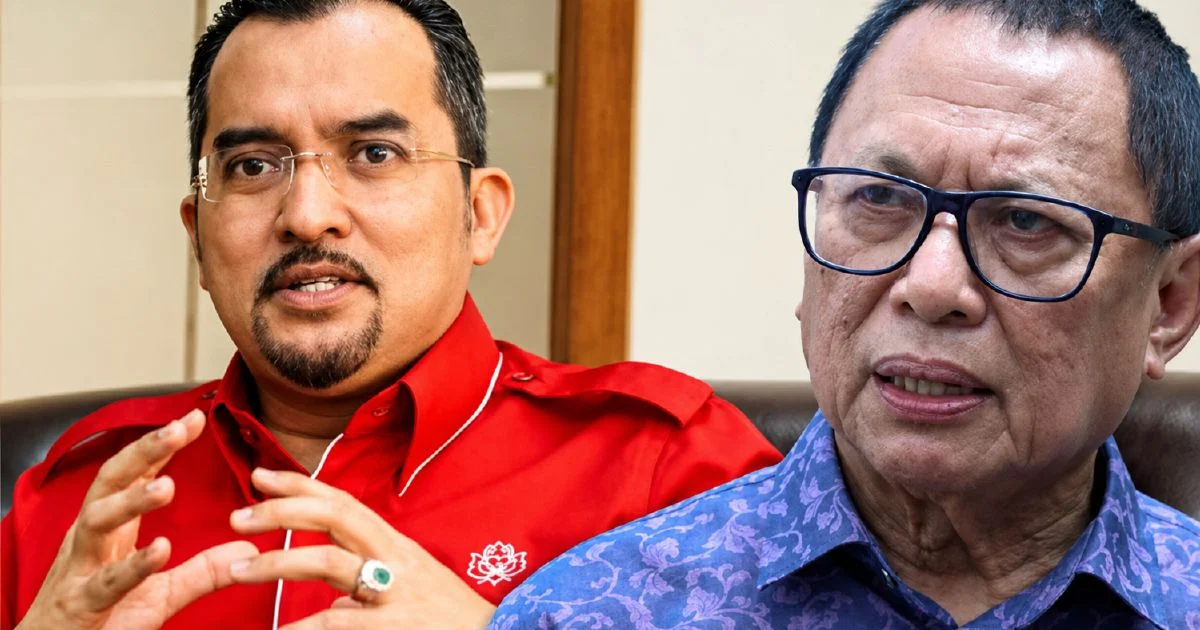
The feud between Umno's top leadership has intensified with Datuk Dr Asyraf Wajdi Dusuki mounting a vigorous defence against claims raised by departing party member Datuk Dr Mohd Puad Zarkashi. Speaking from Johor Baru, the Umno secretary-general did not shy away from confronting the allegations emerging from Puad Zarkashi's exit, signalling a deepening rift within Malaysia's oldest political establishment.
Puad Zarkashi's decision to leave Umno has triggered considerable speculation within political circles regarding the underlying tensions and governance challenges within the party. His departure, coupled with accompanying statements that drew connections to palace-related matters, appears to have struck a nerve within the party hierarchy. The escalating exchange between these two senior figures reflects broader anxieties about party cohesion and internal management that have long characterised Umno's turbulent recent period.
Asyraf Wajdi's spirited rebuttal suggests that Puad Zarkashi's claims have touched upon sensitive institutional relationships that Umno leadership considers fundamental to the party's standing. The secretary-general's willingness to engage publicly in this dispute, rather than allowing matters to fade into organisational silence, underscores the gravity with which the party apparatus is treating the allegations. Such high-profile exchanges typically emerge only when leadership perceives existential threats to party stability or credibility.
The timing of this confrontation arrives during a period when Umno continues navigating complex political terrain following Malaysia's recent electoral history. The party faces persistent internal factions and competing narratives about its direction, membership discipline, and institutional obligations. Puad Zarkashi's departure and subsequent assertions have evidently reopened wounds within the organisation that party elders had hoped to contain through conventional party channels.
The invocation of palace-related claims represents a particularly contentious dimension to this dispute. In Malaysian political culture, references to royal institutions carry extraordinary sensitivity, as these are deeply embedded within the constitutional and symbolic fabric of the nation. Umno, as a party historically associated with monarchical support and constitutional order, would regard any allegations suggesting improper engagement with palace matters as potentially damaging to its ideological positioning and political legitimacy.
Asyraf Wajdi's counter-arguments likely focus on defending both his personal reputation and Umno's institutional integrity against what the leadership presumably views as misleading characterisations. The secretary-general occupies a position requiring him to uphold party discipline whilst managing internal communications, making his public intervention a significant strategic move that signals urgent concern about narrative control within the party structure.
This dispute exemplifies broader challenges confronting traditional political parties in contemporary Malaysia, where internal disagreements increasingly find their way into public discourse through resigned members' statements. The loss of information control and the democratisation of dissent through departing figures making public claims has become a recurring headache for Umno management. The party's historical reliance on hierarchical decision-making and internal consensus-building appears inadequate for managing conflicts in an era of heightened media scrutiny and digital communication.
For observers tracking Umno's trajectory, this episode provides insight into the party's capacity to manage internal discord constructively. Rather than containing disputes within party structures, prominent figures engaging in public recrimination risks further erosion of party cohesion and member confidence. The secretary-general's willingness to engage Puad Zarkashi's assertions directly, whilst potentially necessary for addressing misleading claims, also elevates the visibility of internal grievances.
Regional political analysts will note that Umno's internal challenges carry implications extending beyond party management concerns. As a partner in various coalition arrangements and a significant stakeholder in federal governance arrangements, Umno's internal stability potentially affects broader political configuration across Malaysia. Senior party figures engaged in highly visible disputes risk diverting attention from policy agenda and substantive party business, ultimately disadvantaging the broader coalition of which Umno forms a component.
The substance of Puad Zarkashi's claims and Asyraf Wajdi's specific counter-arguments remain matters requiring careful examination within party circles and among interested observers. Whether his assertions carry merit or represent disgruntled departures, the public nature of their exchange reflects transforming dynamics within Malaysian political institutions, where transparency pressures and member activism increasingly challenge traditional gatekeeping mechanisms. The implications for Umno's long-term organisational health remain to be fully understood as this dispute develops.

