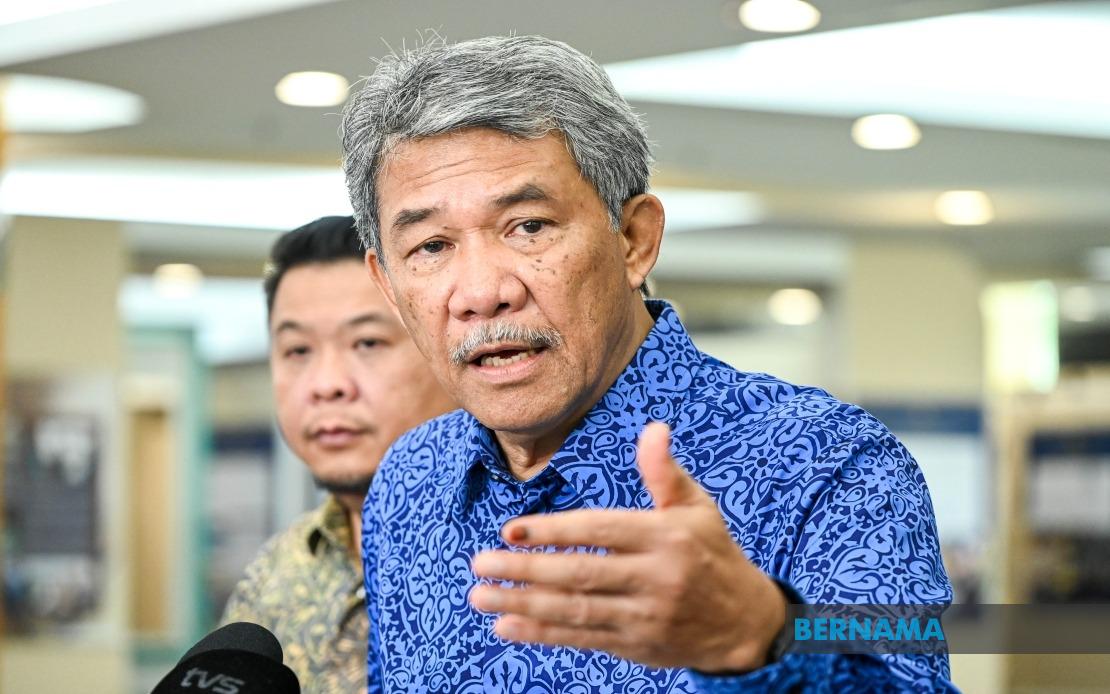
Regional integration in Southeast Asia faces a critical juncture as ASEAN leaders acknowledge that the bloc's internal trade networks remain underdeveloped relative to their economic ambitions. During the 59th ASEAN Day celebration in Putrajaya on Monday, Foreign Minister Datuk Seri Mohamad Hasan highlighted that intra-ASEAN trade—the commercial flows between member states themselves—constitutes less than 25 per cent of the region's total trade activity, representing a substantial untapped opportunity for deepening economic cooperation.
The gap between current performance and potential reflects a longstanding structural challenge within ASEAN: despite decades of regional integration frameworks, the bloc's ten member states remain heavily oriented toward external markets rather than towards one another. This dependency on global supply chains and trade with external partners, particularly China, the United States, and Europe, leaves ASEAN vulnerable to external economic shocks and limits the multiplier effects that stronger internal commerce could generate. Mohamad's framing of intra-ASEAN trade expansion as essential underscores a strategic pivot within the regional organisation's thinking, moving beyond the traditional emphasis on political diplomacy towards measurable economic outcomes that directly benefit member populations.
The projection that ASEAN will become the world's fourth-largest economy by 2030 is built on demographic scale and existing GDP trajectories rather than current trade integration. With a combined population exceeding 650 million people and a nominal GDP approaching $3 trillion, ASEAN possesses the raw ingredients for major economic status. However, Mohamad's candid assessment reveals that realising this potential requires deliberate institutional effort to redirect trade flows inward. The discrepancy between ASEAN's global economic weight and its internal trade integration suggests that current mechanisms, while theoretically sound, have failed to overcome persistent barriers including tariff structures, non-tariff impediments, logistics infrastructure gaps, and regulatory misalignment across member states.
ASEAN has established various institutional frameworks designed to facilitate commerce between member nations, most notably the ASEAN Free Trade Area, which theoretically permits the free movement of goods throughout the region. Yet the persistence of trade below 25 per cent of the total demonstrates that these mechanisms, though necessary, remain insufficient without complementary reforms and political commitment at the national level. Mohamad acknowledged these existing structures while implicitly suggesting their limitations, pointing to the ongoing reliance on enhanced coordination and additional initiatives to overcome entrenched obstacles that prevent goods from flowing seamlessly across ASEAN borders despite formal trade agreements.
Malaysia's recent chairmanship of ASEAN, concluded in the previous year, produced several resolutions and proposals designed to strengthen the economic pillar of regional cooperation. These initiatives, consolidated in the Kuala Lumpur Declaration, represent an attempt to provide strategic direction for deepening trade ties among member nations. The current Philippine chairmanship has inherited responsibility for advancing these proposals, suggesting a continuity of focus on economic integration across successive leadership rotations. This institutional handoff reflects growing recognition within ASEAN capitals that economic interdependence serves long-term political stability and that trade expansion must remain a priority regardless of which nation holds the rotating chair.
Malaysia's designation as Permanent Shepherd—or Permanent Auditor—of the ASEAN Community 2045 vision grants the country a structural role in ensuring that economic objectives remain central to the bloc's long-term development strategy. This custodial position implies ongoing responsibility for monitoring progress on intra-regional trade expansion and maintaining focus on foundational economic goals even as individual member states manage their own national priorities. For Malaysian policymakers, this role represents both an opportunity to shape ASEAN's economic architecture and a responsibility to ensure that ambitious 2030 targets translate into concrete commercial growth rather than remaining aspirational statements.
The challenge of expanding intra-ASEAN trade intersects with broader geopolitical and technological trends reshaping global commerce. As supply chain diversification accelerates following recent global disruptions, ASEAN faces both opportunity and competitive pressure. Strengthening internal trade networks could position the bloc to capture a larger share of regional value chains currently fragmented across Asia. Conversely, without deliberate intra-regional focus, ASEAN members risk remaining disparate nodes in global supply chains rather than developing as an integrated economic zone with its own internal dynamics and resilience.
For Malaysia specifically, the emphasis on intra-ASEAN trade expansion aligns with national development strategies emphasising regional positioning and integration. As a middle-income economy with established manufacturing capabilities and trading expertise, Malaysia potentially benefits substantially from deeper ASEAN integration that would increase market access for its goods and services. Enhanced regional commerce could strengthen Malaysia's role as a regional trading hub and create employment opportunities across sectors including manufacturing, logistics, and financial services that support international trade.
The stated goal of surpassing 25 per cent internal trade concentration appears modest when compared to intra-bloc trade percentages in other regional groupings. The European Union, for instance, sees roughly 60 per cent of member state trade occurring internally, while similar patterns characterise established integration frameworks elsewhere. This disparity suggests that ASEAN's potential for growth in internal commerce remains substantial, though realising it requires addressing structural impediments that go beyond institutional frameworks to include infrastructure development, regulatory harmonisation, and cultivation of regional business networks that operate comfortably across multiple jurisdictions.
Moving forward, the success of ASEAN's economic integration agenda depends on transforming aspirational targets into operational priorities within individual member states. This requires national governments to align domestic policies with regional objectives, invest in cross-border infrastructure, and support private sector participation in intra-ASEAN commerce. Mohamad's public articulation of the trade deficit reflects official recognition that incremental progress within existing frameworks may be insufficient, suggesting that more ambitious reforms may be necessary to genuinely unlock ASEAN's economic potential and ensure that the bloc's projected fourth-largest economy status materialises as a reality benefiting all member populations.

