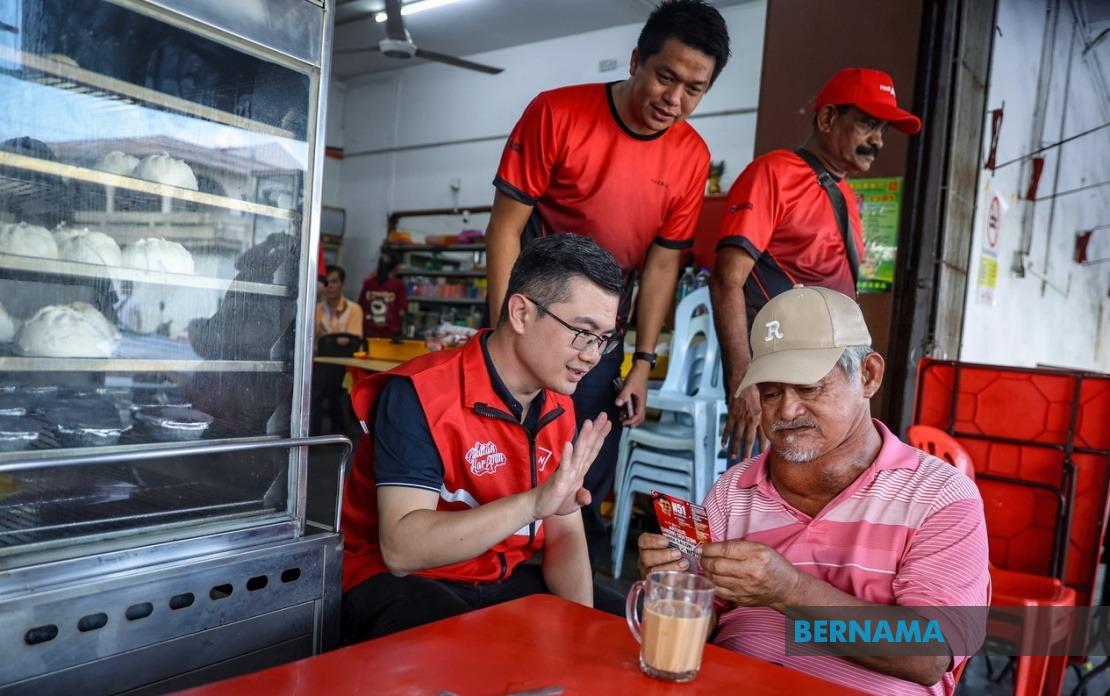
Arthur Chiong Sen Sern, the sitting Bukit Batu assemblyman, is pinning his re-election hopes on demonstrating tangible returns from his time in office, aiming to overturn his wafer-thin 2022 victory margin when voters head to the polls on July 11. The 36-year-old Pakatan Harapan representative won the seat by just 137 votes two years ago in a four-way race, a result that has evidently fuelled his determination to build a far stronger political foundation across the constituency's nearly 50,000 registered voters.
Chiong's strategy centers on highlighting his accessibility and willingness to tackle constituency problems regardless of the voter's political leanings. Since entering office, he has positioned himself as a hands-on legislator who frequently visits Felda settlements, engages with local non-governmental organisations, and responds to residents' concerns with direct action. His office has channelled resources toward community priorities, including RM20,000 for futsal court lighting in areas where young people congregate, investments he argues continue delivering value long after the original installation.
Flood management has emerged as a defining focus of Chiong's constituency work, particularly in two perennially vulnerable areas: Kampung Rahmat and Kampung Seri Paya. Working alongside the Department of Irrigation and Drainage, he has cultivated a reputation for being among the first responders when flash floods strike, a calculated attempt to translate disaster response into political capital. The visible improvements residents have observed in flood-prone zones represent, in his framing, evidence that his representation translates into practical outcomes rather than mere electoral promises.
The incumbent's confidence appears grounded in positive feedback from community interactions, though the 2022 result serves as a sobering reminder of political fragility in Bukit Batu. His narrow victory came despite contesting a four-way race where he secured 9,439 votes, edging out Datuk S. Suppayah of Barisan Nasional, Perikatan Nasional's Tan Heng Choon, and Warisan's Lee Ming Wen. That fractured opposition potentially aided his victory, a dynamic that may not necessarily repeat in the coming election.
The 2024 contest shapes up as equally competitive and complex. Chiong faces a resurging Barisan Nasional challenge from R. Kumaran, who holds the PKR Kulai chief position—indicating cross-party manoeuvring in the constituency. Ikatan Demokratik Malaysia fields M. Premanand, while the Bersama coalition has fielded G. Tamili, and independent candidate Kamaruzaman Ali completes a five-cornered contest. This expanded field fragments the anti-PH vote further, potentially benefiting Chiong, though predicting outcomes based on seat geometry alone obscures genuine voter sentiment.
Chiong has publicly expressed gratitude to Pakatan Harapan leadership, particularly Prime Minister Datuk Seri Anwar Ibrahim in his capacity as coalition chairman, for endorsing his candidacy. This acknowledgment serves both to reinforce his standing within the party machinery and to signal that federal resources and attention remain available to support his campaign. For PH, retaining Bukit Batu carries symbolic weight beyond one constituency, as losses in Johor would compound challenges the coalition already faces in peninsular Malaysia's heartland.
The Bukit Batu constituency itself reflects broader Johor dynamics: a mixed urban-rural composition with significant Felda settlements, younger voter demographics in township areas, and long-standing flood infrastructure issues that have vexed successive administrations. These structural characteristics mean that local, granular work can meaningfully influence outcomes, making Chiong's ground presence strategy rationally calibrated to constituency realities rather than mere political theatrics.
Early voting occurs on July 7, with the main poll taking place four days later. This compressed timeline offers limited opportunity for new issues to materially shift voter preferences, suggesting that the groundwork Chiong and his opponents have conducted over the preceding months will largely determine the result. His near-loss in 2022 demonstrates that even incumbents enjoying some visibility and service record cannot assume voter loyalty, particularly in constituencies where opposition remains organised and motivated.
For Malaysian political observers, Chiong's race encapsulates a broader contest playing out across Johor: whether PH can consolidate gains in state-level contests and establish durable, locally-rooted representation, or whether traditional coalitions can recapture ground lost in recent years. The state election results will carry implications for federal political dynamics, as Johor remains a crucial testing ground for competing visions of governance and coalition-building. Chiong's attempt to transform a marginal victory into a commanding majority will provide real-time data on whether consistent grassroots engagement and localized development projects can overcome the structural challenges PH faces in retaining power in Malaysia's southern states.

