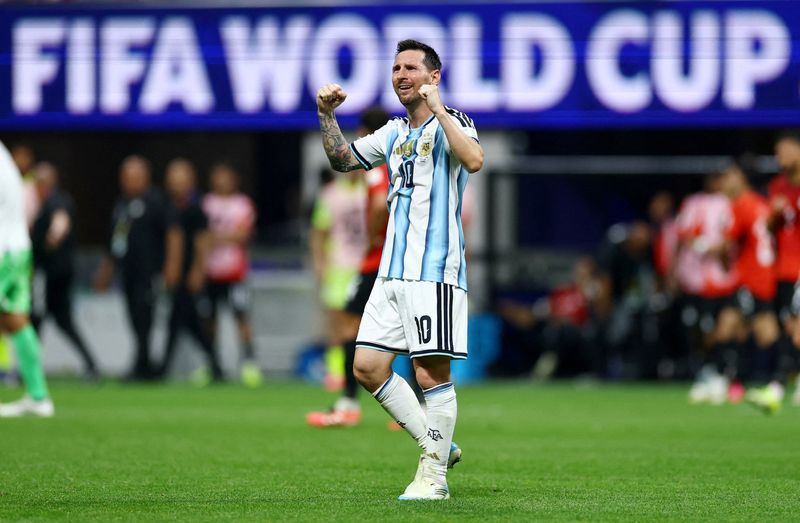
The defending World Cup champions have discovered an unexpected strength in their capacity to overcome adversity, staging a dramatic 3-2 comeback victory against Egypt in Atlanta on Tuesday that may well define their tournament trajectory should Argentina ultimately retain their title. What appeared an impossible situation at Atlanta's stadium with just eleven minutes remaining—trailing by two goals—transformed into another unlikely triumph through sheer determination and the inspiration of Lionel Messi. The result has propelled Lionel Scaloni's squad toward Saturday's quarter-final showdown with Switzerland in Kansas City, though the path to this fixture has proven considerably more treacherous than many anticipated when the tournament began.
Arguably no neutral observer envisioned the defending champions requiring extra time against Cape Verde or needing such a commanding second-half resurrection to dispose of Egypt, given Argentina's immaculate performance through the group stage. The South American outfit had navigated past Algeria, Austria and Jordan with what observers characterized as near-flawless execution, establishing themselves as overwhelming tournament favourites. The group-stage campaign suggested a team functioning at peak efficiency, yet the subsequent knockout encounters have exposed genuine fragilities in their defensive organization. This stark contrast between their earlier dominance and recent vulnerability has nonetheless catalysed something equally valuable: a hardened mentality forged through genuine pressure.
Former striker Carlos Tevez, commenting for ESPN Argentina immediately following the Egypt match, captured the essence of Argentina's emerging tournament identity by emphasizing not the sophistication of their football but rather the character demonstrated across ninety minutes of mounting tension. Tevez highlighted the psychological dimension that separates champion sides from merely talented ones—the refusal to accept defeat even when circumstances appear irretrievable. Such resilience, while perhaps not aesthetically pleasing, possesses historical significance in knockout football where single matches determine progression. Argentina's capacity to manufacture comebacks when conventional wisdom suggests elimination appears inevitable distinguishes their campaign from the group-stage exhibition that preceded it.
Messi articulated this mental framework following Tuesday's extraordinary recovery, noting that the collective mentality emphasises persistence regardless of scoreline. His observation that "this group never gives up and keeps trying until the end" reflected not merely post-match sentiment but apparent operational philosophy. Midfielder Leandro Paredes reinforced this interpretation, emphasizing that the squad never internally accepted the possibility of defeat despite the mathematical improbability of recovery with minutes remaining. These statements from senior players suggest Scaloni has cultivated psychological resilience extending beyond tactical preparation, embedding within the squad a tournament mentality where matches remain contested until their absolute conclusion.
The statistical profile of Argentina's knockout performances reveals concerning defensive weaknesses that nonetheless possess potential explanatory value. Across their two most recent matches, the defending champions conceded four goals, a troubling frequency when contrasted with their group-stage record of a single goal conceded across three matches. Context proves instructive here: that sole group-stage goal arrived against Jordan when Scaloni deliberately rotated personnel and rested key contributors, suggesting Argentina's primary defensive unit has deteriorated during knockout competition. Whether this deterioration reflects tactical adjustments by opposing coaches, accumulated fatigue, or simple variance across small sample sizes remains subject to interpretation, yet the objective vulnerability cannot be dismissed.
Scaloni's technical assessment provides nuance regarding the comparative performances against Cape Verde and Egypt. The manager observed that his team functioned considerably more effectively against Egypt despite the dramatic nature of the Egypt result, highlighting that Argentina created numerous scoring opportunities throughout the first half including a penalty conversion attempt by Messi. This perspective suggests the coaching staff perceives underlying performance quality disconnected from the match result's dramatic trajectory. Scaloni's insistence that Argentina "performed far better" against Egypt than Cape Verde implies that recent victories possess stronger foundational elements than the statistics alone convey, though such managerial commentary naturally requires healthy scepticism given its invested interest in morale maintenance.
The manager's refrain regarding his team's commitment—"until the final whistle, we don't give up on any ball and we keep playing the way we know how"—establishes a philosophical framework through which Argentina approaches remaining tournament fixtures. This mentality prioritizes continuity of approach over reactive adjustments, suggesting Scaloni believes his squad's fundamental methodology remains sound despite recent defensive complications. The emphasis on unwavering commitment regardless of circumstances or scoreline positions the manager as championing psychological consistency, potentially sacrificing tactical flexibility in service of maintaining collective belief and operational stability.
Swiss opposition represents the next examination of Argentina's capacity to sustain tournament momentum while addressing defensive vulnerabilities. Scaloni's characterization of Switzerland as possessing "an incredible World Cup tradition" and "outstanding players" with extensive tournament experience reflects appropriate respect for their quarter-final opponents. The Swiss confederation enters this fixture as the legitimate opponent of a defending champion that has demonstrated both imperious group-stage form and anxiety-inducing knockout performances. Switzerland's tournament trajectory and European pedigree suggest a more conventionally polished opponent than either Cape Verde or Egypt, though this observation carries implications for both sides' respective tactical approaches and pressure management.
The training schedule reconvening Wednesday evening in Kansas City provides limited time for Argentina to address defensive structures before confronting Switzerland. Tournament mathematics demand rapid recovery and preparation consolidation even when players require emotional processing and physical regeneration following dramatic matches. Scaloni's capacity to harness the psychological momentum derived from the Egypt comeback while simultaneously implementing defensive reinforcements will substantially influence Saturday's outcome. The challenge of maintaining confidence while correcting structural vulnerabilities represents perhaps the central coaching demand facing Argentina's technical staff across the remaining days of preparation.
Argentina's tournament narrative has evolved substantially from the comfortable group-stage exhibition toward something considerably more dramatic and uncertain. The defending champions have discovered that tournament victory frequently requires not merely superior technical execution but exceptional psychological resilience when circumstances become adverse. Whether this hardening process ultimately proves beneficial—as history suggests tournament experience can—or whether the exposed defensive weaknesses prove terminal remains the central dramatic question animating their campaign. Saturday's confrontation with Switzerland will provide considerable illumination regarding whether Argentina's remarkable capacity for late-match redemption represents sustainable strength or anomalous fortune.

