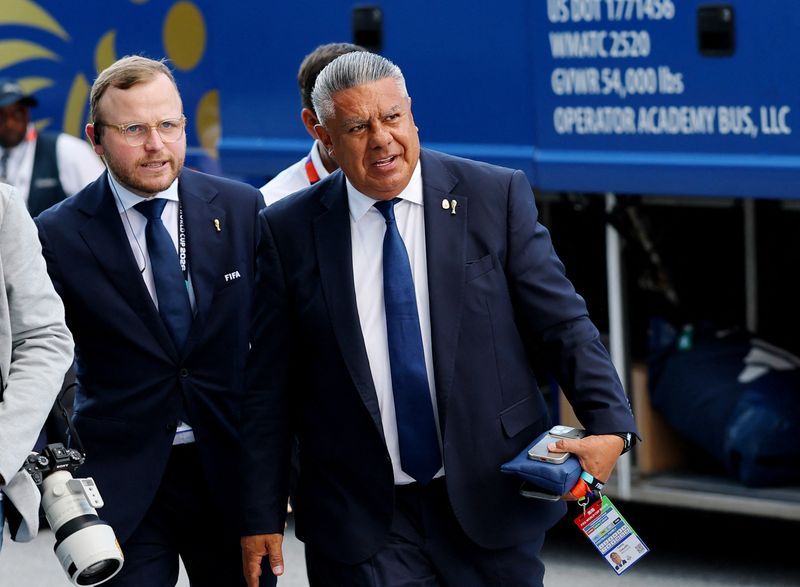
Argentina's football association moved to distance its leadership from a widening US federal investigation on Wednesday, flatly denying reports that president Claudio Tapia or treasurer Pablo Toviggino had been summoned to provide testimony before American courts. The categorical denial came after local media outlets reported confrontations between FBI agents and the two executives at New York's JFK Airport in the immediate aftermath of Argentina's World Cup victory last December.
The AFA's statement represented a carefully calibrated response that acknowledged the existence of American legal proceedings while insulating its top officials from direct involvement. The association confirmed that US authorities had indeed subpoenaed a third party to appear before a grand jury and potentially furnish evidence concerning multiple individuals with ties to the organization. However, the association declined to identify who this summoned party was or clarify the precise nature of their connection to AFA operations.
Accounts from witnesses present at JFK Airport painted a more confrontational picture than the AFA's measured public response suggested. According to those who observed events on the tarmac as Argentina's squad prepared to depart, federal agents detained both Tapia and Toviggino for approximately thirty minutes aboard a bus parked at the gate, subjecting them to questioning about their involvement in various AFA matters. The encounter occurred as Argentina's team was boarding a charter aircraft following their triumphant World Cup campaign.
Underlying the immediate airport incident is a broader investigation into commercial dealings spanning years of AFA governance. According to reports from the Infobae news outlet, American authorities are examining contracts valued at more than $300 million that have passed through the AFA's books. This monetary focus reflects growing international concern about financial flows within Argentine football, particularly since raids conducted in December by local investigators pursuing leads in a separate money-laundering inquiry.
The AFA's formal statement employed emphatic language to refute specific allegations, asserting it was "absolutely false" that either the president or treasurer had received court orders requiring their testimony. The association further denied that American authorities had seized Tapia's mobile telephone or any other electronic devices belonging to either executive. For readers following these developments, the precision of such denials was notable—the AFA felt compelled to address device seizure specifically, suggesting this had become a significant point of public discussion.
According to the association's legal characterization, the court document in question—presumably the grand jury subpoena—contained no personal obligations directed at Tapia or Toviggino, imposed no procedural requirements upon them, and authorized no confiscation of their property. This framing suggested that while an investigation was underway, the two men themselves were not the targets of enforcement action, at least not at the stage of grand jury proceedings. Whether this position would hold as the investigation progressed remained uncertain.
For Malaysian observers of international football governance, these developments highlight the increasingly complex intersection between sporting administration and financial crime enforcement. Argentina's football association, despite its sporting prominence, operates within jurisdictions and commercial frameworks that attract scrutiny from multiple law enforcement agencies. The involvement of American authorities underscores how football's commercial infrastructure—broadcast rights, sponsorships, licensing agreements—now falls within the scope of international financial investigation.
The investigation's focus on $300 million in contracts is substantial enough to suggest systemic concerns rather than isolated irregularities. Commercial arrangements of this magnitude typically involve multiple parties across different jurisdictions, creating potential vectors for money laundering or financial impropriety. The December raids mentioned in the AFA statement indicate that Argentine domestic authorities had already identified grounds for investigation, with American law enforcement subsequently engaging based on either the involvement of US persons or institutions, or on flows of capital through American financial systems.
The timing of the airport incident—occurring immediately after Argentina's World Cup victory when international attention on the team and association was at its peak—created unavoidable embarrassment for the AFA despite the organization's attempts at damage control. The image of federal agents questioning top officials aboard a tarmac bus, regardless of the legal characterization offered afterward, conveyed the impression of investigation and suspicion to global audiences. For Southeast Asian football administrators and governing bodies, the episode serves as a reminder that international commercial success in football brings corresponding exposure to multi-jurisdictional regulatory frameworks.
The AFA's decision to acknowledge a third-party summons while categorically denying direct targeting of Tapia and Toviggino suggests a strategy aimed at compartmentalizing the investigation. By confirming that some individual connected to the association faces legal obligations while insisting the top two executives do not, the AFA attempted to suggest limited institutional exposure. Whether this positioning reflected the actual scope of the investigation or represented aspirational messaging remained unclear from available information.
Moving forward, the trajectory of the American investigation will likely depend on what the third-party witness can establish regarding the nature and legality of the commercial arrangements in question. The grand jury process, once underway, typically proceeds over months or even years, with potential indictments emerging only after extensive examination of evidence and testimony. For Argentina's football administration, the investigation represents an ongoing cloud of uncertainty that could affect commercial negotiations, broadcasting agreements, and the association's international standing regardless of whether formal charges ultimately materialize.

