Arab League Secretary-General Nabil Fahmy has issued an urgent appeal to US President Donald Trump to curtail Israeli policies affecting Palestinians, warning that the Middle Eastern region stands on the precipice of a major breakdown. Speaking ahead of planned discussions between Trump and Israeli Prime Minister Benjamin Netanyahu scheduled for Washington, Fahmy stressed that tensions across the region have reached a critical juncture where multiple flashpoints threaten simultaneous escalation.
Fahmy attributed the dangerous trajectory directly to two interconnected crises: the prolonged stalemate surrounding Palestinian statehood and sovereignty, and what he characterised as reckless brinkmanship tactics that have destabilised the broader Gulf region. His statement underscores deepening Arab League frustration at what member states perceive as deliberate obstruction of peace pathways by hardline elements within the Israeli government, while international powers appear reluctant to exercise meaningful diplomatic pressure.
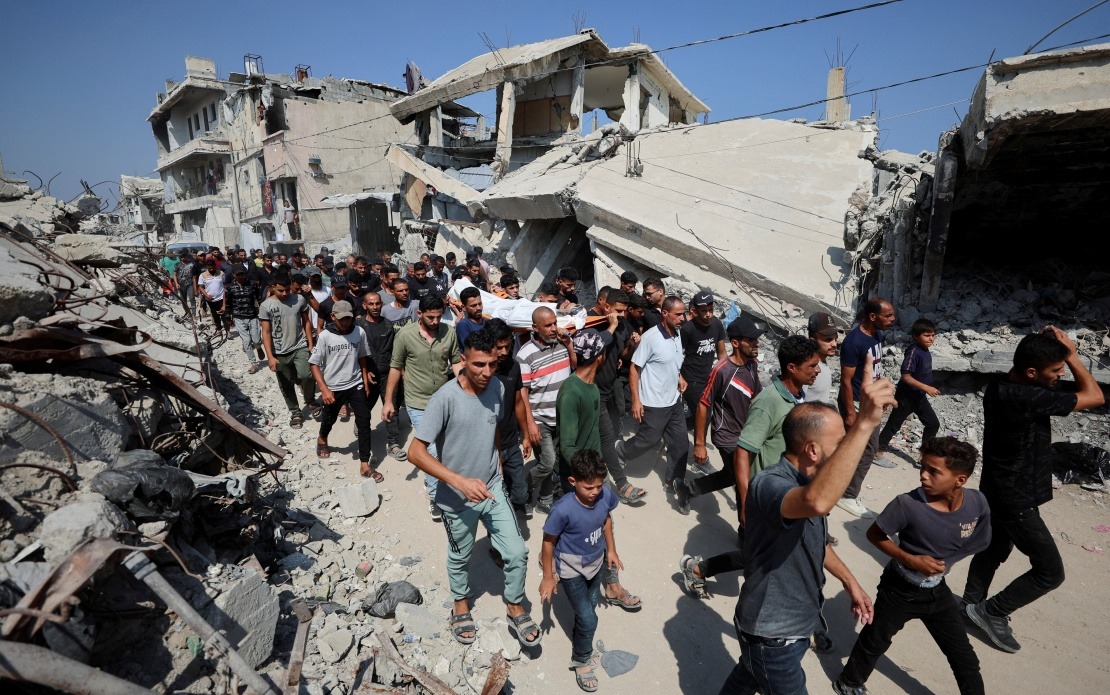
The statistical toll of recent military operations illustrates the scale of the humanitarian catastrophe underpinning regional anger. Since October 2023, Israeli military operations in Gaza have resulted in over 73,000 deaths and approximately 174,000 injured across the territory. Simultaneously, escalated Israeli operations in the occupied West Bank have claimed nearly 1,200 Palestinian lives during the identical period, demonstrating that violence extends far beyond Gaza into territories already under decades of occupation.
Regional tensions have been further inflamed by broader geopolitical confrontations. In February, coordinated Israeli and US military strikes against Iranian positions significantly heightened tensions, prompting Iran to launch retaliatory strikes targeting Gulf states that host American military infrastructure. This cycle of escalation and counter-escalation has created an environment where miscalculation or uncontrolled escalation by any party could trigger wider conflagration affecting shipping lanes and energy supplies critical to global commerce.
Fahmy articulated that all regional actors bear responsibility for maintaining security and stability, but he emphasised that Washington carries particular weight given its strategic partnerships, military presence, and diplomatic leverage in the region. The Arab League chief specifically urged Trump to use his influence to constrain what he described as extremist ambitions within the Israeli government that fundamentally obstruct peace initiatives, particularly those efforts outlined in Trump's own September 2025 Gaza proposal.
The Trump administration's 20-point plan, developed through previous negotiations, establishes a structured pathway incorporating several essential components: a comprehensive ceasefire, mechanisms for prisoner exchanges, phased Israeli military withdrawal from Gaza, establishment of transitional Palestinian administrative structures, and international commitment to reconstructing devastated areas in Gaza Strip. Fahmy's reference to this plan suggests the Arab League views it as a viable framework, though it requires enforcement mechanisms and genuine commitment from Israeli leadership to implement rather than circumvent.
Beyond Gaza, Fahmy demanded that Washington pressure Israel to cease what he termed repeated violations in East Jerusalem and end military operations against Palestinian populations in the West Bank. These demands reflect Arab League consensus that occupation policies, including expansion of settlements widely considered illegal under international law, constitute active barriers to any sustainable peace architecture. The Arab League chief directly accused the Israeli government of pursuing policies designed to eliminate Palestinian presence through systematic settlement expansion and displacement campaigns.
The broader strategic picture that Fahmy outlined encompasses not only Israeli-Palestinian dimensions but also the critical question of US-Iran relations. He called for swift restoration of understanding between Washington and Tehran and resumption of diplomatic channels specifically aimed at conflict resolution, regional stability restoration, and respect for state sovereignty. Fahmy also highlighted the critical importance of maintaining open maritime passage through the Strait of Hormuz and the Bab el-Mandeb Strait in the Red Sea—waterways essential for global energy supplies and commerce that remain vulnerable to disruption during periods of high regional tension.
For Malaysia and Southeast Asian nations, this regional instability carries significant implications. The Middle East remains a crucial market for Malaysian exports and a source of capital investment, while maritime security in contested waters affects shipping routes essential to intra-Asian trade. Further escalation could destabilise global energy markets, increase costs for petroleum-dependent economies, and potentially disrupt supply chains for electronics, manufacturing, and other sectors where Southeast Asian producers depend on international commerce.
The Arab League's public appeal to Trump also reflects calculation that the incoming or recently-returned US administration represents the most viable channel for restraining Israeli policies. Whether Trump will prioritise Arab League concerns or maintain traditional strong support for Israel remains uncertain, but Fahmy's statement indicates that Arab nations view diplomatic engagement as preferable to the alternative scenarios that looming regional explosion might precipitate. The framing of Middle Eastern dynamics as approaching a critical breaking point suggests that Arab leaders perceive time as increasingly constrained and decisions made in the coming weeks as potentially determining whether gradual deescalation becomes possible or whether structural breakdown becomes inevitable.

