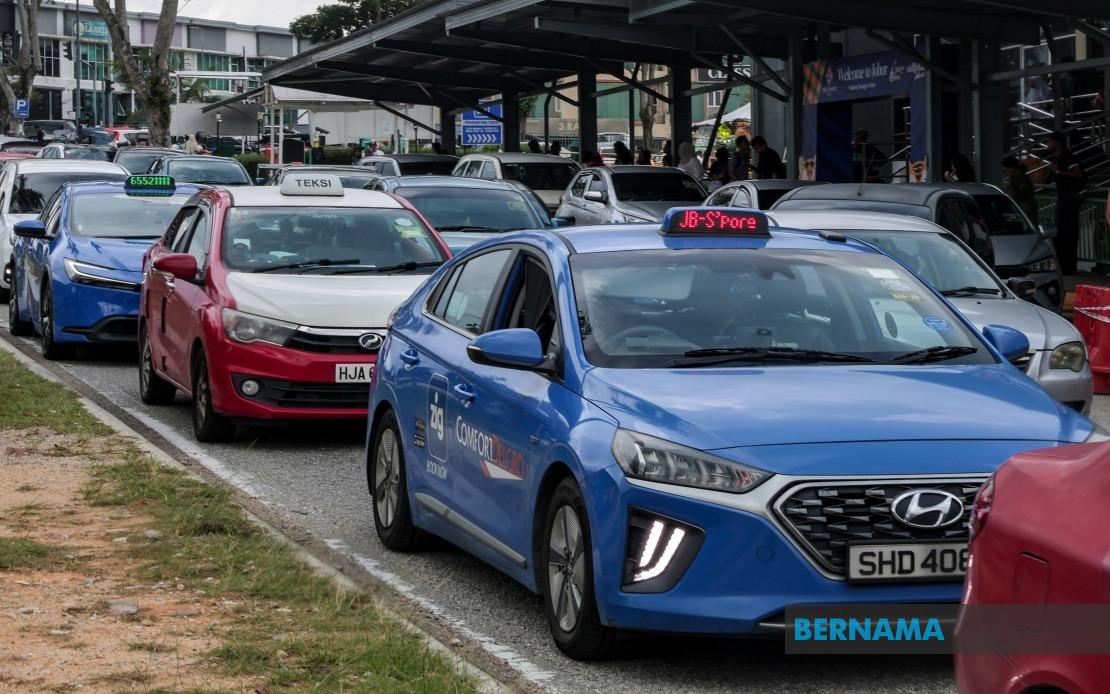
The Land Public Transport Agency (APAD) has introduced flexibility into the National MADANI Taxi Renewal Programme (Teksi MADANI), allowing taxi drivers to license or replace their vehicles with models other than the officially designated Proton S70. This departure from the original framework represents a pragmatic adjustment to accommodate drivers facing practical implementation challenges, particularly those who already operate existing vehicles or have encountered difficulties securing hire-purchase financing approvals.
When Transport Minister announced the scheme on April 23, the policy explicitly stated that all new applications and vehicle replacements would focus exclusively on the Proton S70 taxi package, establishing a uniform standard across the industry. However, this strict requirement has now been softened to address real-world circumstances affecting taxi operators. The revised approach acknowledges that a one-size-fits-all mandate, while administratively cleaner, can create undue hardship for drivers operating in various market conditions and personal financial situations.
The APAD clarified in its statement that drivers face two primary barriers justifying the exemption. First, applicants who already possess functioning vehicles may find the mandatory replacement requirement unnecessarily burdensome, particularly if their current vehicles remain roadworthy and operationally sound. Second, and perhaps more significantly, some drivers have been unable to secure hire-purchase financing approvals necessary to procure the Proton S70 under the programme's financial terms. This financial gatekeeping has effectively locked out a segment of the taxi operator community from accessing the scheme's intended benefits.
The Teksi MADANI programme, officially launched by Prime Minister Datuk Seri Anwar Ibrahim on July 3, fundamentally transforms taxi industry ownership structures by enabling drivers to become legal vehicle owners rather than perpetual lessees. This shift represents a significant departure from Malaysia's traditional taxi leasing model, which has historically concentrated vehicle ownership and control with large leasing companies while limiting driver autonomy and wealth accumulation. The ownership transition promises improved economic prospects for individual drivers and greater long-term financial sustainability.
Under the original framework, the Proton S70 sedan was carefully selected as the industry's official vehicle, reflecting contemporary design standards and technological integration. The vehicle's modern appearance eliminates the traditional rooftop identification signs associated with older Malaysian taxis, while a distinctive vehicle registration series beginning with letters "GET" provides immediate visual identification. This standardisation approach aimed to modernise the taxi sector's public image and facilitate unified regulatory oversight across all participating vehicles.
Importantly, APAD has confirmed that existing taxis not participating in the replacement programme remain permitted to operate until they reach the government-specified vehicle age limits. This provision protects drivers who cannot or choose not to participate while providing a staged transition timeline for the entire industry. Rather than forcing immediate wholesale fleet replacement, the regulatory framework allows organic market evolution where individual drivers migrate to the new system based on their financial capacity and personal circumstances.
The government has further sweetened the programme through substantial financial support. Prime Minister Anwar Ibrahim announced an additional RM10 million allocation specifically designated for the Old Vehicle Replacement Matching Grant Programme, targeting taxi drivers. This supplementary funding follows the initial RM10 million provision included in Budget 2026 for implementing Teksi MADANI. The expanded grant framework suggests strong government commitment to facilitating the transition despite acknowledging the substantial financial barriers individual drivers face when modernising their vehicles.
For Malaysian taxi drivers and the broader transport sector, this flexibility signals important policy adaptability. The modification demonstrates that even carefully designed national programmes may require practical adjustments when confronting implementation realities. Drivers facing financing obstacles now have viable pathways to participate in the scheme through alternative vehicle acquisitions, while those with existing vehicles can transition gradually rather than facing sudden replacement mandates.
The broader implications extend beyond individual driver circumstances to encompass the taxi industry's structural modernisation. By permitting alternative vehicles while maintaining the Proton S70 as the aspirational standard, APAD creates a managed transition period where the industry can evolve towards modern standards without precipitating economic crises for marginal operators. This balanced approach recognises that sustainable industrial transformation requires both clear direction and sufficient flexibility to accommodate diverse operator circumstances and regional variations in market conditions throughout Malaysia.

