Prime Minister Datuk Seri Anwar Ibrahim has used traditional Malay verse to convey a message about the enduring importance of cohesion and mutual respect, releasing a four-line pantun through his official Facebook page that speaks to friendship, discipline and collective purpose. The timing of the post reflects broader political messaging as Malaysia's two dominant coalitions navigate the complexities of competing fiercely at the state level while remaining bound by their partnership at the federal tier, a balancing act that defines the current political landscape.
The poetic offering, rooted in the classical Malay literary form, represents a deliberate choice of communication that carries deeper significance than mere social media content. By opting for pantun rather than straightforward political prose, Anwar appears to be invoking cultural touchstones familiar to Malaysians while elevating the discourse beyond partisan rhetoric. The post generated substantial engagement within hours, accumulating more than 11,500 likes and attracting over 1,700 comments, many of which users responded in kind with their own pantun compositions, suggesting the message resonated across demographic divides.
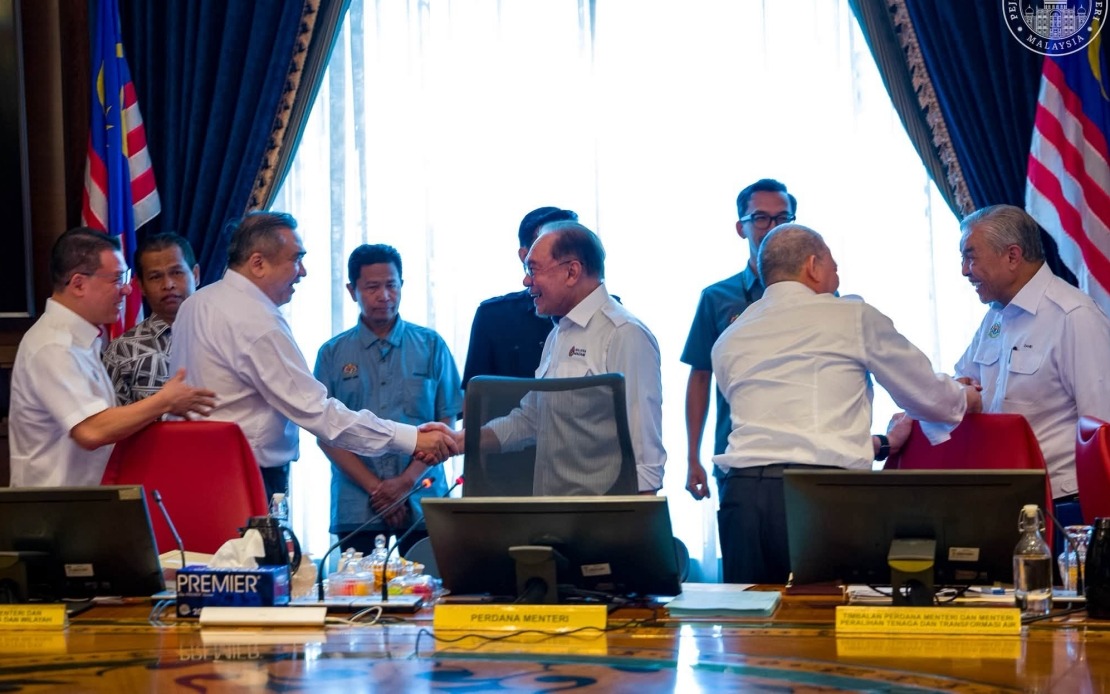
The Prime Minister supplemented his verse with photographs from a recent Cabinet meeting featuring Deputy Prime Minister Datuk Seri Dr Ahmad Zahid Hamidi and Transport Minister Anthony Loke among others, all displaying evident camaraderie and relaxed demeanour. This visual reinforcement served to underscore the textual message, presenting an image of government cohesion and collegiality at the senior ministerial level. The optics matter considerably in a political environment where questions about the durability of cross-coalition governance frequently surface in media commentary and public discourse.
The posting arrives at a particularly pertinent moment, as public scrutiny intensifies regarding the relationship between Pakatan Harapan and Barisan Nasional within the Federal Unity Government framework. These two coalitions, despite their historical antagonism, have maintained a functional partnership at the national level that has provided governmental stability since 2022. However, the upcoming Negeri Sembilan state election presents a genuine test of whether this arrangement can withstand electoral competition without fracturing the broader federal alliance.
In the Negeri Sembilan contest, Pakatan Harapan, led by Anwar, is mounting a comprehensive challenge by fielding candidates across all 36 state assembly seats. Barisan Nasional, under Ahmad Zahid's leadership, is contesting 25 constituencies whilst simultaneously forging a strategic pact with Perikatan Nasional in selected areas. This configuration transforms the election into a three-sided contest in some districts, complicating the electoral mathematics and potentially fragmenting anti-PH votes across multiple candidates. The state assembly was dissolved on June 5, with the Election Commission scheduling early voting for July 28 and general polling for August 1.
Observers have interpreted Anwar's pantun-based message as an intentional reminder about the importance of preserving governmental stability and maintaining cohesion within the ruling coalition. Political analysts have noted that such statements, particularly when expressed through culturally resonant mediums like pantun, serve multiple audiences simultaneously. They speak to ordinary Malaysians about universal values of unity and consensus whilst also signalling to coalition partners and within-government constituencies about the Prime Minister's commitment to holding the Federation Government intact despite electoral pressures at the state level.
The distinction between competing at the ballot box and collaborating in governance remains a central challenge for Malaysian politics. Unlike purely adversarial systems where competing parties occupy entirely separate governmental spheres until electoral outcomes change power, the current arrangement requires Anwar and Ahmad Zahid to maintain functional working relationships despite directing their respective political organisations toward conflicting outcomes in Negeri Sembilan. This necessitates sophisticated political management and clear communication about the boundaries between electoral competition and governmental cooperation.
Commentary across online platforms reflected broadly positive reception toward the Prime Minister's approach, with many users praising what they characterised as his statesmanlike conciliatory tone. The predominantly supportive response suggests that sections of the Malaysian public appreciate efforts to frame political competition within a broader narrative of national cohesion and institutional stability. This sentiment appears particularly pronounced among urban, digitally-engaged demographics that likely comprise the primary Facebook audience for official government communications.
The cultural significance of the pantun form extends beyond mere literary tradition. The classical verse structure carries associations with wisdom, restraint and elegance that carry particular weight in Malay-Muslim communities. By selecting this medium, Anwar aligned his unity message with cultural and spiritual values that transcend narrow partisan considerations. The response from commenters who replied in pantun form suggests the message successfully activated these deeper cultural resonances.
Looking ahead, the Negeri Sembilan election will provide crucial evidence about whether the Federal Unity Government can withstand genuine competitive pressure at the state level without deteriorating into open conflict. The two-week period between now and polling day will test whether Anwar's message about unity and consensus translates into disciplined campaigning that avoids the inflammatory rhetoric capable of destabilising the federal arrangement. Political success in this delicate balancing act could establish a template for how Malaysia manages future elections where PH and BN contest against each other whilst remaining governmental partners.
The broader implications extend beyond Negeri Sembilan itself. Successful navigation of this electoral competition whilst preserving the Federal Unity Government could enhance Malaysian political stability by demonstrating that rival coalitions can engage in vigorous competition without abandoning functional governance frameworks. Conversely, deterioration into acrimony or constitutional brinkmanship during the campaign period could embolden those within both coalitions who view cross-coalition partnership with suspicion. Anwar's positioning through traditional cultural messaging suggests calculated awareness that the coming weeks require not merely political tactics but careful stewardship of institutional relationships.

