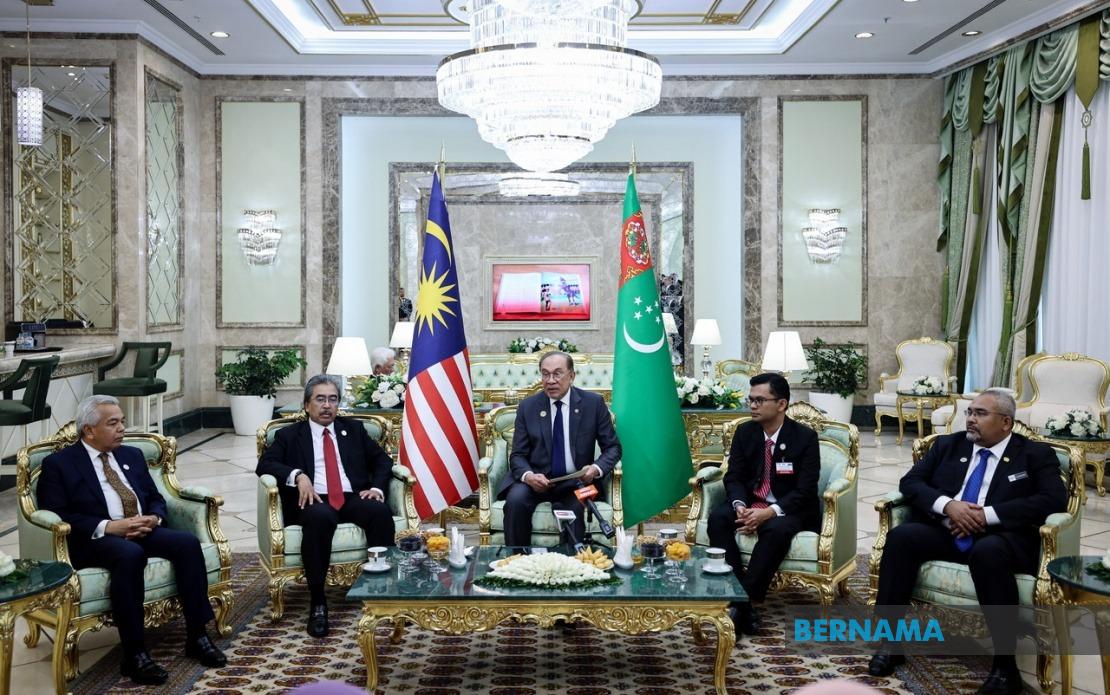
Prime Minister Datuk Seri Anwar Ibrahim has characterised his official working visit to Turkmenistan as a significant diplomatic milestone, highlighting substantial progress in fostering friendly relations and establishing a framework for strategic cooperation between Malaysia and the Central Asian nation. The two-day mission, which commenced on June 18, marks Anwar's first state visit to Turkmenistan since his appointment as Malaysia's 10th prime minister in November 2022, following a formal invitation from Turkmenistan President Serdar Berdimuhamedov.
In a social media statement, Anwar underscored that the visit had achieved its core objectives, with particular emphasis on expanding bilateral engagement across multiple sectors of mutual benefit. The Prime Minister extended his gratitude to President Berdimuhamedov and various stakeholders involved in hosting the Malaysian delegation, acknowledging the warmth and professionalism demonstrated throughout the programme.
The energy sector emerged as a central pillar of the discussions, with both delegations recognising substantial untapped potential for joint ventures and commercial partnerships. Given Malaysia's established expertise in petroleum exploration and downstream operations through PETRONAS, and Turkmenistan's position as one of the world's largest natural gas reserves holders, the convergence of interests offers compelling opportunities for technology transfer, investment partnerships, and resource development initiatives that could benefit both economies.
Anwar's delegation comprised a high-calibre team reflecting the strategic importance accorded to the mission. Minister of Investment, Trade and Industry Datuk Seri Johari Abdul Ghani and Minister of Economy Akmal Nasrullah Mohd Nasir accompanied the Prime Minister, alongside senior officials from the Prime Minister's Office and Foreign Ministry. The composition of the delegation signalled Malaysia's commitment to translating diplomatic goodwill into tangible economic outcomes, with ministerial representation enabling substantive negotiations on trade facilitation, investment frameworks, and sectoral cooperation.
The inclusion of PETRONAS representatives in the delegation underscores the practical dimension of the visit, positioning Malaysia's national oil and gas corporation to explore direct partnerships with Turkmenistan's energy infrastructure and production facilities. Such involvement at the highest diplomatic level typically precedes formal commercial negotiations and project feasibility studies, suggesting that concrete partnerships may materialise within coming quarters.
For Malaysia, strengthening ties with Turkmenistan carries broader geopolitical significance within the Central Asian region. Turkmenistan's strategic location along historic trade routes and its substantial hydrocarbon resources make it a valuable partner for diversifying Malaysia's energy sources and supply chains. As global energy markets experience volatility and traditional suppliers face increasing scrutiny over carbon emissions, developing relationships with new partners in energy-rich regions provides strategic flexibility and reduces dependency concentration.
From Turkmenistan's perspective, deepening engagement with Malaysia offers access to Southeast Asian markets and investment capital, while potentially benefiting from Malaysian expertise in downstream refining, petrochemical manufacturing, and liquefied natural gas operations. The relationship also carries diplomatic value, positioning Turkmenistan as an attractive destination for Malaysian business and governmental engagement, thereby elevating its profile within the Association of Southeast Asian Nations sphere of influence.
The characterisation of the visit as opening "a new chapter" in bilateral relations suggests that discussions extended beyond conventional diplomatic courtesies to encompass substantive frameworks for sustained cooperation. This language typically indicates agreement on working mechanisms, perhaps including joint commissions or task forces to develop specific project proposals and remove institutional barriers to commerce and investment.
Anwar's emphasis on the delegation's smooth functioning reflects attention to the administrative apparatus supporting high-level diplomacy. Recognition of the Malaysian Embassy in Ashgabat, security personnel, and media representatives indicates the comprehensive nature of modern diplomatic missions, where success depends on seamless coordination across multiple functions. Such acknowledgment also demonstrates respect for the institutional efforts that enable prime ministerial travel and bilateral engagement.
The timing of this inaugural visit carries symbolic weight, occurring well into Anwar's tenure as Prime Minister and suggesting deliberate strategic sequencing of foreign engagements. As Malaysia reasserts its role as a key Southeast Asian economy and diplomatic player, cultivating partnerships with resource-rich Central Asian nations aligns with broader objectives of economic diversification and enhanced international standing.
Moving forward, observers should monitor the translation of diplomatic declarations into concrete agreements. Typically, state visits of this nature generate follow-up mechanisms, with officials tasked to develop detailed partnership proposals across identified sectors. The energy dimension appears most developed at this stage, though discussions may have extended to areas such as technology cooperation, cultural exchange, and regional security matters affecting Central Asian stability and maritime commerce through adjacent regions.
For Malaysian stakeholders in energy, infrastructure, and investment sectors, the visit opens pathways for engagement with Turkmenistan's government and commercial entities. The high-level nature of the mission and explicit recognition of energy potential suggest receptivity to Malaysian participation in Turkmenistan's development agenda, potentially including liquefied natural gas infrastructure, renewable energy integration, and capacity building initiatives.
The successful completion of this visit positions Malaysia favourably for deepening Central Asian engagement as part of broader regional diplomacy. In an era where nations increasingly diversify partnerships and seek resilience through multiple international relationships, Anwar's visit to Turkmenistan exemplifies Malaysia's strategic approach to positioning itself as a connector between Southeast Asia and other dynamic regions, while advancing concrete national interests in energy security and economic growth.

