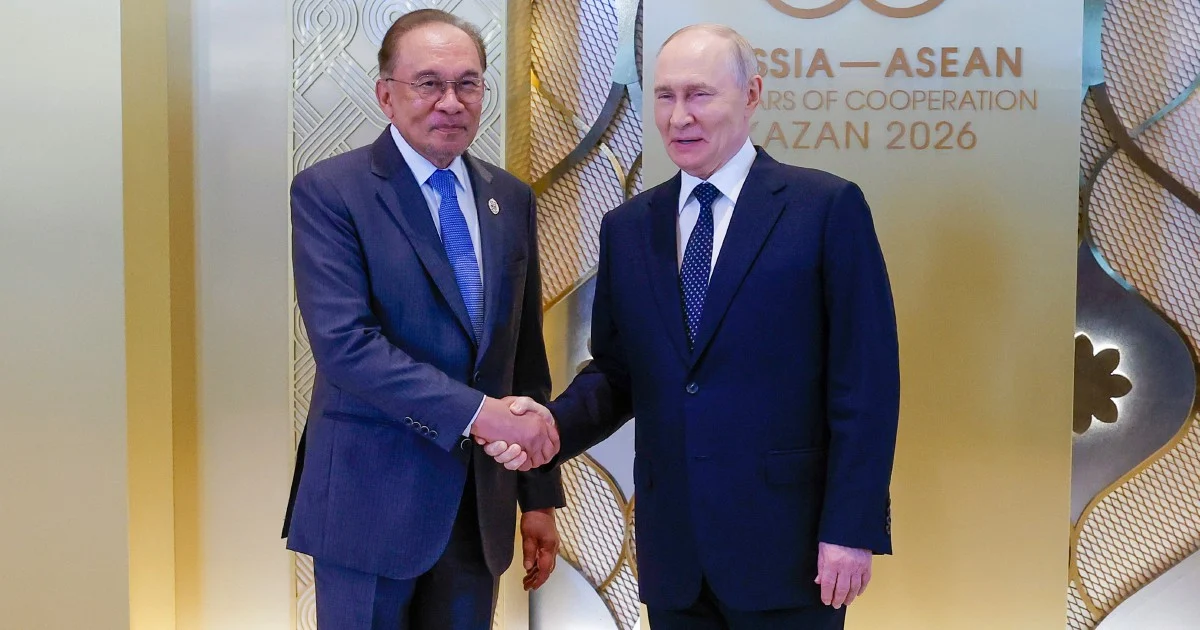
Prime Minister Datuk Seri Anwar Ibrahim's back-to-back official visits to Russia and Turkmenistan mark a significant diplomatic push to diversify Malaysia's energy sources and deepen ties with nations holding substantial hydrocarbon reserves. The missions, welcomed by policy groups including BRICS International Malaysia, represent a deliberate strategy to address Malaysia's medium and long-term energy demands through engagement with energy-rich partners beyond traditional suppliers.
The visits underscore a broader recalibration of Malaysia's foreign policy towards nations capable of meeting future petroleum and natural gas requirements. Both Russia and Turkmenistan possess substantial proven reserves, with Russia being among the world's largest energy exporters and Turkmenistan holding significant Caspian Sea reserves. For Malaysia, reducing over-reliance on single energy suppliers strengthens negotiating leverage and insulates the nation from price volatility or supply disruptions that could destabilise the economy.
Energy security remains a critical national imperative for Malaysia. As domestic oil and gas production decline—the Petronas-operated fields in Southeast Asia have witnessed natural depletion—securing reliable import channels becomes increasingly urgent. The Petronas LNG facilities in Sarawak continue to operate at substantial capacity, but feed stock constraints mean Malaysia will inevitably require greater import flows. Strategic partnerships with established suppliers like Russia and Turkmenistan provide structured pathways for long-term supply arrangements, potentially underpinned by preferential pricing or joint development agreements.
The diplomatic initiative also reflects Malaysia's recalibration within the BRICS framework and broader non-aligned geopolitical positioning. As regional tensions in the South China Sea persist and Western energy markets face structural transformation towards renewables, Malaysia's approach of cultivating multiple partnerships across ideological divides appears pragmatic. Engagement with Russia despite international sanctions demonstrates Malaysia's commitment to maintaining autonomous foreign policy decisions rather than conforming to Western restrictions on trade and energy cooperation.
Turkmenistan's significance extends beyond reserve volume. Located strategically between the Caspian Sea and Central Asian markets, Turkmenistan represents a potential transit route and supplier node that could service broader Southeast Asian demand. Strengthening bilateral ties with Ashgabat creates possibilities for pipeline or maritime LNG infrastructure that might eventually benefit not only Malaysia but neighbouring countries facing similar energy pressures. This regional dimension transforms bilateral energy agreements into potential subregional infrastructure frameworks.
The visits likely facilitated discussions on joint ventures and downstream cooperation. Beyond simple energy purchases, modern energy partnerships increasingly encompass technology transfer, workforce training, and investment in processing and refining capacity. Malaysian companies and Petronas may explore opportunities to participate in Russian or Turkmen upstream development, creating revenue streams and technical expertise beyond import dependency. Such arrangements align with Malaysia's aspirations to position itself as a genuine energy sector player rather than merely a consumer.
Economic partnership expansion complements energy cooperation. Both Russia and Turkmenistan possess manufacturing bases and consumer markets where Malaysian goods and services could find demand. Russia's technology sector and financial institutions could offer partnership opportunities for Malaysian firms seeking international diversification. Turkmenistan's reconstruction and development projects present procurement opportunities where Malaysian contractors and consultants could compete. The diplomatic missions therefore establish commercial frameworks enabling business engagement across multiple sectors.
The timing reflects Malaysia's pragmatic positioning amid global energy market restructuring. While international pressure mounts for transition away from fossil fuels, realistic assessments suggest hydrocarbons will remain essential for decades. Malaysian policymakers appear focused on securing affordable supplies during this extended transition rather than abruptly abandoning hydrocarbon energy. This stance positions Malaysia to maintain competitive industrial capacity while incrementally increasing renewable energy capacity—a balanced approach many Southeast Asian nations share.
The visits also carry geopolitical significance beyond energy. Russian and Central Asian engagement demonstrates Malaysian foreign policy independence from unilateral Western pressure. This positioning enhances Malaysia's status within ASEAN as a non-aligned voice capable of bridging competing regional interests. For Anwar Ibrahim specifically, successfully advancing energy diplomacy demonstrates competent stewardship of national strategic interests—a crucial domestic political message as Malaysia navigates economic challenges and internal political dynamics.
Turkmenistan particularly represents an underutilised partnership avenue for Malaysia. While Vietnamese, Thai, and Indonesian engagement with Central Asia has expanded substantially, Malaysian involvement remains modest. These diplomatic missions signal intention to increase Malaysian presence in Central Asian affairs, potentially through energy forums, investment initiatives, and cultural exchanges. Greater engagement might position Malaysia as an alternative partner for Central Asian nations seeking to diversify their own external relationships beyond China and Russia.
Looking forward, success metrics will involve concrete commercial outcomes rather than diplomatic rhetoric. Specific energy supply agreements, pricing terms, and contract durations will determine whether these visits generate tangible benefits. Equally important will be transparency regarding any agreements' fiscal terms and whether arrangements genuinely strengthen Malaysia's energy position or primarily serve narrow political purposes. Malaysian citizens ultimately measure diplomatic success through reliable, affordable energy supply that supports economic competitiveness and living standards.
The broader context involves Malaysia's transition energy strategy. These partnerships occupy middle ground between current hydrocarbon dependence and eventual renewable energy dominance. By securing stable, long-term supplies from reliable partners, Malaysia buys time for renewable infrastructure expansion while maintaining industrial capacity. The diplomatic missions therefore represent pragmatic, if incomplete, energy policy—acknowledging both energy realities and long-term sustainability imperatives.

