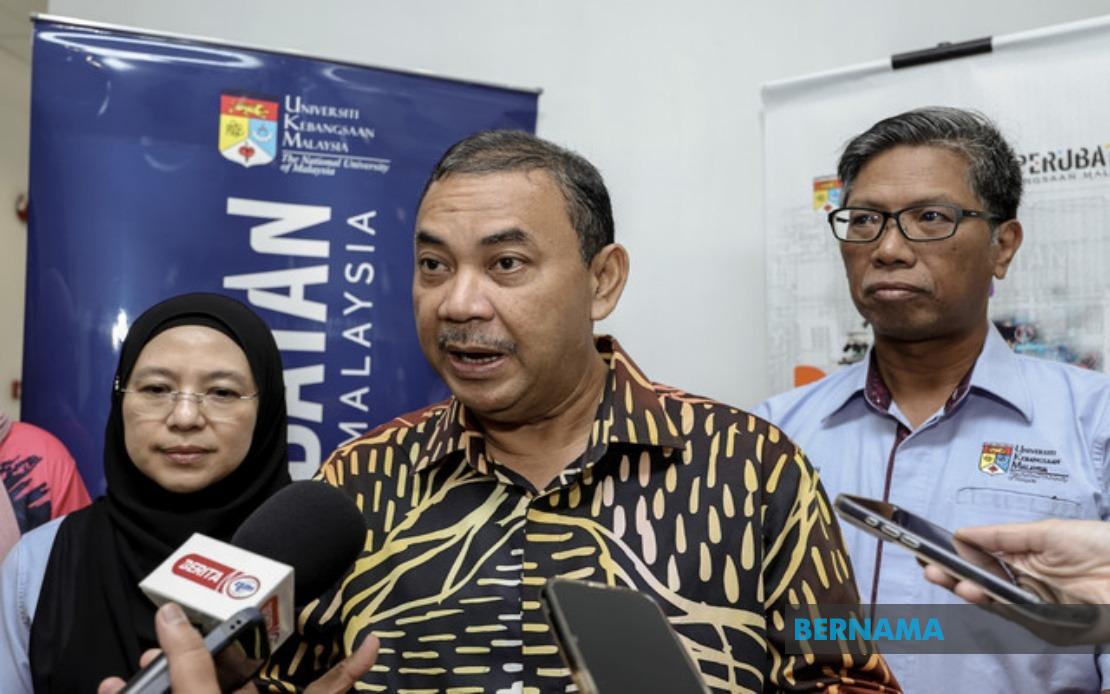
The MADANI Government's track record on investment, economic growth, and currency stability has attracted acknowledgement across multiple sectors, according to Datuk Azman Abidin, who serves as the Prime Minister's political secretary. Speaking at an event in Kuala Lumpur on Monday, Azman asserted that Datuk Seri Anwar Ibrahim's stewardship has established a credible foundation for voters to entrust the administration with another electoral mandate. This framing reflects the government's confidence in its record as it anticipates upcoming electoral contests, positioning recent economic gains as evidence of capable governance.
Azman's remarks come amid broader assessments from political observers who have noted the MADANI Government's demonstrated competence across multiple policy domains. The administration's ability to attract foreign and domestic investment, stabilise macroeconomic indicators, and strengthen the ringgit have not gone unnoticed by business communities, financial institutions, and international analysts tracking the Southeast Asian economic landscape. For Malaysian readers, this represents a potential shift in investor sentiment toward Malaysia compared to preceding administrations, with implications for job creation, wage growth, and consumer confidence in coming years.
The government is preparing to amplify its achievements through a series of strategic announcements expected before the National Day and Malaysia Day celebrations, as well as during the tabling of Budget 2027. These initiatives suggest a deliberate communication strategy designed to ensure voters understand the tangible benefits of government policies. By anchoring popular support in concrete economic outcomes rather than abstract political ideology, the administration seeks to build a persuasive narrative ahead of inevitable election campaigns.
Beyond immediate political messaging, Azman's confidence in voter discernment reflects broader democratic expectations in Malaysia. He expressed faith that citizens would evaluate government performance rationally and fairly when making electoral decisions. This appeal to voters' judgment underscores a competitive political environment where multiple coalitions will contest for public support, requiring all participants to demonstrate results and articulate compelling visions for the country's future.
During the same event—the STEM Exploration 2.0 programme at Universiti Kebangsaan Malaysia's Faculty of Medicine—Azman outlined the government's priorities in education and scientific development. The initiative, bringing together 200 Form Three students from the Klang Valley and Negeri Sembilan, aims to identify emerging scientific talent and cultivate interest in medicine and technology-related careers. Azman advocated for elevating STEM education from optional subject status to a compulsory component of Malaysia's national curriculum, reflecting global recognition that technological literacy has become essential for economic competitiveness.
The STEM programme encompasses hands-on learning experiences including laboratory experiments, microbiology exercises, anatomical studies of immune and circulatory systems, and demonstrations of three-dimensional printing applications in medical practice. By exposing secondary students to cutting-edge biomedical technology and research methodologies, the initiative provides early career exposure that may redirect educational choices and vocational aspirations. This pipeline-building approach addresses Malaysia's documented shortages in STEM-qualified professionals, a gap that constrains innovation capacity and high-value manufacturing sectors.
Azman framed scientific achievement as a process beginning with fundamental knowledge-seeking, drawing implicit parallels between individual learning pathways and national development trajectories. His emphasis on persistence and incremental progress—"statesmen and scientists are not made in a day"—carries particular resonance in Malaysia's context, where rapid development goals sometimes encounter implementation challenges. The message encourages students to view their participation in science programmes as foundational to personal ambition and national progress.
The expansion of this STEM initiative to nationwide scale represents a significant commitment to educational infrastructure diversification. Currently limited to Kuala Lumpur, Selangor, and Negeri Sembilan, broadening the programme would extend science enrichment opportunities to peripheral regions and smaller towns where specialized educational facilities remain scarce. Such geographic equity in talent development could help distribute intellectual capital beyond Peninsular Malaysia's urban centres, supporting long-term innovation ecosystems in underserved areas.
For Southeast Asian observers, Malaysia's emphasis on STEM education reflects regional competition for technological advancement and skilled workforce development. Singapore, Thailand, and Indonesia have similarly prioritized science and technology investments to position themselves within higher-value global supply chains. By intensifying early engagement with scientific methods and medical innovation, Malaysia signals commitment to competing effectively within this regional knowledge economy, potentially attracting multinational research and development operations that generate high-wage employment.
The government's dual messaging—simultaneously promoting economic achievements and investing in long-term human capital development—reflects an understanding that electoral mandates require both immediate material improvements and credible plans for sustained prosperity. While recent currency stability and investment growth offer tangible evidence of current performance, initiatives like STEM enrichment programmes demonstrate commitment to foundations supporting competitiveness across subsequent decades. This temporal layering of policy communications appeals to voters with diverse time horizons and priorities.
As Budget 2027 preparation advances, these STEM announcements may presage education-focused fiscal allocations reflecting the administration's stated priorities. Azman's public advocacy for scientific education suggests that upcoming budget allocations will likely include increased funding for laboratory equipment, teacher training in STEM disciplines, and expansion of specialized secondary programmes. Such budgetary commitments would translate political rhetoric into measurable resource allocation, converting aspirational messaging into concrete institutional change.

