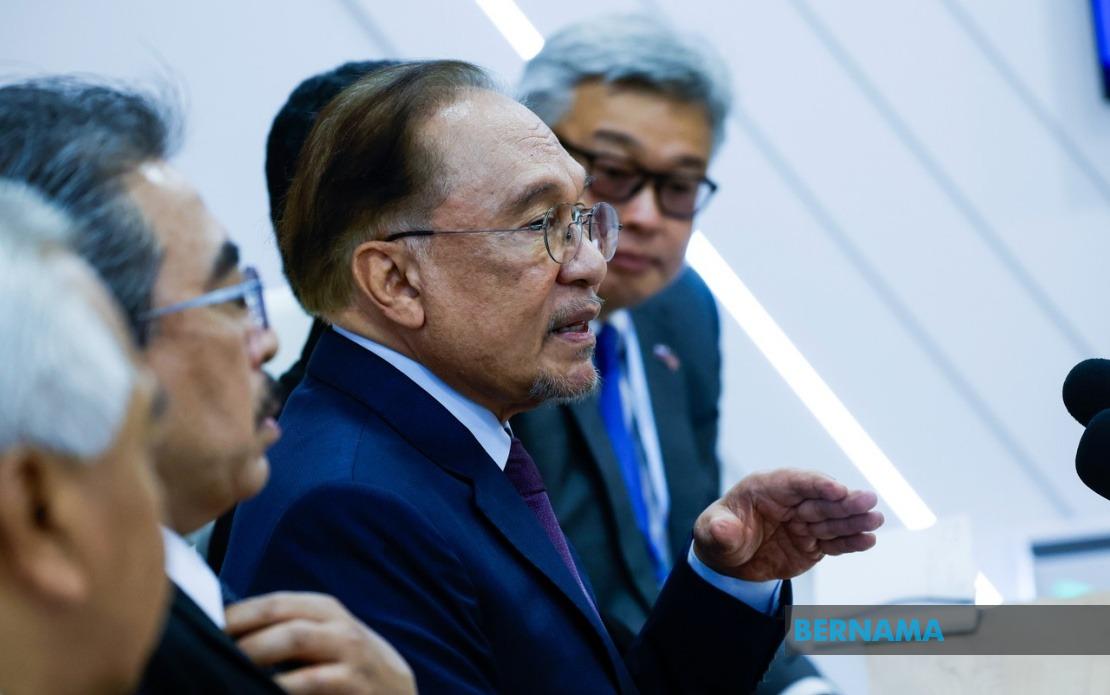
Prime Minister Datuk Seri Anwar Ibrahim's two-day working visit to Kazan has delivered a tangible win for Malaysia's energy security strategy. During the 35th ASEAN-Russia Commemorative Summit, Russia formally committed to guaranteeing long-term supplies of petroleum, oil, and gas to the country, moving beyond the conventional practice of annual or seasonal renewal cycles that have characterised energy relationships in the region. This represents a pivotal shift in how Malaysia approaches its energy partnerships, replacing short-term transactional arrangements with durable frameworks designed to insulate the nation from market volatility and geopolitical disruptions.
The scope of this commitment extends well beyond symbolic declarations. According to Anwar's statements at the closing press conference, both governments have already progressed substantially through the negotiation process. The foundational principles have been settled, drafts are prepared, and company representatives from both nations have convened to finalise the technical details. This indicates that Malaysia and Russia are not discussing hypothetical cooperation but rather implementing concrete arrangements that could begin flowing to Malaysian markets within months rather than years. The Prime Minister indicated that upon returning home, his administration would press Russian counterparts to expedite the final stages, emphasising the institutional momentum behind these negotiations.
This energy agreement represents only one dimension of a broader recalibration in Malaysia-Russia ties that Anwar has pursued since assuming office. The bilateral relationship has expanded to encompass investment frameworks, financial cooperation, and the halal economy alongside traditional energy partnerships. During his bilateral meeting with Rais of the Republic of Tatarstan Rustam Minnikhanov, both leaders identified multiple sectors for deepened engagement, including education, tourism technology development and talent mobility. Tatarstan's status as one of Russia's premier oil-producing regions makes it a natural partner for Malaysian energy firms, particularly Petronas, which has received explicit support from Russian President Vladimir Putin for expanded cooperation.
The timing of this energy diplomacy reflects Malaysia's strategic imperative to diversify and stabilise its hydrocarbon supply amid an increasingly uncertain global environment. Oil and gas markets have experienced pronounced volatility driven by interconnected geopolitical tensions, supply chain fractures and unpredictable price fluctuations. For a nation whose economy remains partially dependent on energy imports and whose energy-intensive industries require predictable input costs, long-term supply agreements with established producers like Russia provide crucial insulation against these shocks. This approach represents a more sophisticated understanding of energy security than simply stockpiling reserves or rotating between multiple suppliers.
Anwar has articulated a philosophical position that Malaysia must abandon excessive caution in pursuing economic partnerships with emerging markets and non-traditional partners. His public comments suggest frustration with what he perceives as an overly conservative approach to international economic engagement that has constrained Malaysia's capacity to capture opportunities in dynamic markets. This worldview positions Russia not as a peripheral player in Malaysia's economic strategy but as a significant partner whose resources and market position warrant sustained engagement. The visit itself embodied this stance, with the Prime Minister accompanied by Investment, Trade and Industry Minister Datuk Seri Johari Abdul Ghani and Economy Minister Akmal Nasrullah Mohd Nasir, indicating cabinet-level commitment to implementing the outcomes.
Beyond the energy sector, Anwar championed several facilitative measures designed to deepen people-to-people and commercial connections between Malaysia and Russia. He called for visa-free travel arrangements and the establishment of direct flight services between the two nations, recognising that logistical barriers historically constrain engagement between geographically distant countries. The lifting of visa requirements and introduction of direct flights would significantly reduce frictions for both business delegations and tourists, potentially stimulating substantial growth in bilateral flows. These recommendations emerged from recognition that energy cooperation alone, while valuable, cannot sustain a comprehensive relationship without supportive infrastructure for human movement and cultural exchange.
At the regional level, Anwar welcomed the formalisation of the ASEAN-Russia Strategic Programme on Trade and Investment Cooperation 2026-2035, characterising it as essential groundwork for the next phase of bloc-level collaboration. This ten-year framework provides strategic coherence to ASEAN-Russia engagement across multiple domains, moving beyond ad-hoc bilateral arrangements toward institutionalised cooperation. The programme's adoption signals that both ASEAN and Russia see value in structured long-term partnerships rather than episodic diplomatic encounters. For Malaysia, which holds significant influence within ASEAN's decision-making architecture, this framework creates opportunities to steer regional partnerships in directions that serve national interests.
Malaysia's trade relationship with Russia has expanded meaningfully, with the country ranking as Russia's ninth-largest European trading partner in 2025, with bilateral trade valued at RM8.72 billion. Malaysian exports to Russia centre on electrical and electronic products, machinery and equipment, and processed foods, while imports consist predominantly of petroleum products, minerals and chemicals. This composition underscores Malaysia's orientation as a consumer of Russian hydrocarbons and an exporter of value-added manufactured goods. At the broader ASEAN level, Russia trade totalled US$18.1 billion in 2024, while Russian foreign direct investment in ASEAN reached RM367.90 million, indicating that Russia remains a modest but persistent economic partner for the region.
Anwar's framing of the energy cooperation reflects deeper anxieties about Malaysia's energy future amid rapid global transition. While renewable energy adoption accelerates globally, the transition period will require substantial hydrocarbon inputs to maintain industrial production and economic growth. Long-term supply agreements with Russia diversify Malaysia's energy portfolio beyond traditional Middle Eastern suppliers, reducing concentration risk and providing negotiating leverage. Additionally, Russian oil and gas can reach Malaysian markets through established infrastructure networks, avoiding the construction delays and capital expenditures associated with developing new supply corridors.
The Kazan visit constitutes only the initial phase of Anwar's Central Asian energy diplomacy. Immediately following the summit, he travelled to Turkmenistan for a two-day official visit, suggesting that energy cooperation with Central Asian producers forms a coherent strategic initiative rather than isolated bilateral engagement. Turkmenistan possesses abundant natural gas reserves and has historically sought additional export markets beyond its traditional customers. The sequential nature of these visits indicates that Anwar has designed a coordinated regional strategy to secure commitments from multiple suppliers simultaneously, strengthening Malaysia's negotiating position and reducing dependence on any single source.
Anwar's emphasis on expanding cooperation in downstream activities, refining and petrochemicals alongside traditional upstream oil and gas exploration indicates sophistication in thinking about energy value chains. Rather than seeking merely to import raw commodities, Malaysia aims to develop regional production networks that capture value-added returns. This approach aligns with the country's economic positioning as a manufacturing hub capable of converting raw materials into finished products destined for regional and global markets. Russian participation in downstream Malaysian ventures could anchor additional foreign investment and create employment beyond the energy extraction sectors.
The Prime Minister also touched on geopolitical developments, expressing optimism that a potential memorandum of understanding between the United States and Iran could facilitate peace in West Asia. This comment reflects recognition that Middle Eastern stability directly affects energy supplies and prices, as regional conflicts threaten supply routes and production facilities. Malaysia's pivot toward Central Asian suppliers addresses this vulnerability by developing alternatives to Middle Eastern energy sources, reducing exposure to instability in the Persian Gulf region. The strategic diversification evident in Anwar's approach acknowledges that energy security encompasses not merely securing supplies but insulating Malaysia from geopolitical disruptions originating in any single region.
The visit concluded with Anwar characterising the outcomes as productive and successful, setting a positive tone for implementing the agreements reached. The phrase that the delegation would "expedite the process" upon returning home signals executive determination to move from declaration to execution. For Malaysian observers, the visit demonstrates a government actively engaged in securing tangible outcomes from high-level diplomatic engagement rather than conducting ceremonial exchanges. The contrast between the specificity of Anwar's statements regarding next steps—existing drafts, agreed principles, scheduled reviews—and conventional diplomatic vagueness suggests that substantive negotiations preceded the public announcement.

