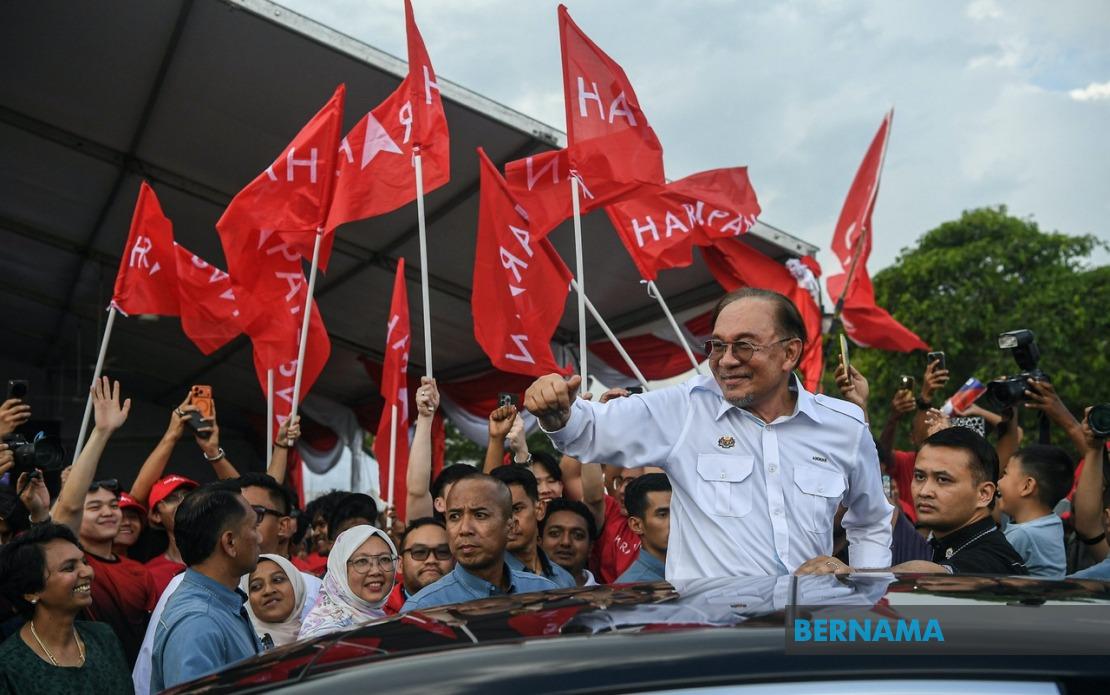
Prime Minister Datuk Seri Anwar Ibrahim's personal involvement in Pakatan Harapan's campaign machinery for the 16th Johor State Election has translated into palpable momentum for the coalition, according to senior party officials monitoring the race. The visible presence of the PH chairman at campaign events across the state has catalysed what observers describe as an unprecedented level of public engagement, signalling potential shifts in voter sentiment as polling approaches this Saturday.
Communications Minister Datuk Fahmi Fadzil, who accompanied the Prime Minister during multiple campaign stops, provided firsthand accounts of the reception encountered in constituencies across the Batu Pahat district. He described witnessing spontaneous demonstrations of support, noting that community members travelled considerable distances specifically to encounter the nation's leader. One particularly striking example involved an elderly resident who organised transportation via trishaw, bringing his wife to a campaign event in Senggarang—a telling indicator of the depth of public interest cutting across demographic boundaries.
Fahmi, who also serves as PH's director of communications, characterised these interactions as reflections of broader acceptance of the coalition's campaign messaging throughout the state. Rather than organised political theatre, he emphasised that these encounters represented authentic expressions of curiosity and engagement from ordinary Johoreans. The minister suggested that such enthusiasm, whether translating directly into votes or simply generating heightened awareness of the electoral stakes, works fundamentally in PH's favour during the final campaign phase.
The Prime Minister's campaign schedule during the weekend preceding the election proved particularly intensive, with Anwar attending 15 separate events across Johor on Saturday and Sunday alone. This concentrated effort served multiple strategic purposes: it allowed the coalition to energise its grassroots machinery in critical constituencies, provided visible support to individual PH candidates contesting their local races, and permitted the party leadership to calibrate messaging in response to voter concerns encountered on the ground.
For this election cycle, Pakatan Harapan is presenting candidates across the complete slate of 56 State Legislative Assembly seats available in Johor, representing a comprehensive commitment to contesting every available position. This total deployment of resources underscores the coalition's confidence in its prospects while acknowledging that every seat potentially represents a swing point in determining the final composition of the state government. The comprehensive candidacy strategy also prevents strategic vacuums that opposition parties might otherwise exploit.
The broader electoral context remains complex and multi-layered. Across the 56 constituencies, a total of 172 candidates from various parties are competing, fragmenting the vote in ways that conventional majority calculations cannot fully predict. This three-cornered or multi-way competition in numerous seats creates unpredictability that favours incumbents and well-organised campaigns capable of precision targeting. Pakatan Harapan's decision to contest universally suggests confidence in its organisational capacity to manage such fragmented contests.
For Malaysia's peninsular politics, Johor remains symbolically and practically significant. As the nation's southernmost state and a traditionally competitive electoral arena, Johor outcomes frequently signal broader national trends. Voter behaviour in this election may offer early indicators regarding the stability of Anwar Ibrahim's administration and the coalition's capacity to retain support despite the inevitable disappointments that accompany any government's tenure. Strong performance here could bolster PH's negotiating position ahead of the anticipated federal election cycle.
The timing of Anwar's personal campaign involvement also carries strategic weight. By deploying the Prime Minister during the final campaign fortnight, PH maximises his impact during the period when voter attention peaks and campaign messaging achieves maximum penetration. Early voting having commenced, the decision to intensify leadership visibility at this juncture suggests party strategists calculated that such involvement could influence voters making final electoral decisions.
Regionally, the Johor election occurs amid broader discussions about coalition stability and alternative political arrangements across Southeast Asia. Malaysia's experience with multi-party coalition governance carries lessons for other regional democracies navigating similar power-sharing arrangements. Strong performance by Anwar's coalition in Johor could strengthen the normative case for collaborative governance models, while conversely, electoral disappointment might invite reassessment of coalition viability.
The community responses Fahmi documented also hint at evolving voter priorities in post-pandemic Malaysia. The specific example of elderly constituents prioritising direct engagement with leadership suggests that conventional assumptions about voter motivations require periodic recalibration. Whether such engagement reflects substantive policy agreement, confidence in leadership capacity, or simply the theatrical appeal of political proximity remains an open analytical question.
As Saturday's polling approaches, the intensity of the campaign and the demonstrable public interest recorded across Johor suggest this election will generate substantial turnout and closely competitive contests in numerous constituencies. The effectiveness of Anwar's ground presence and the coalition's comprehensive candidate slate will ultimately be measured through ballot box outcomes, but preliminary indicators of community engagement suggest the election will not be decided by default or disengagement.

