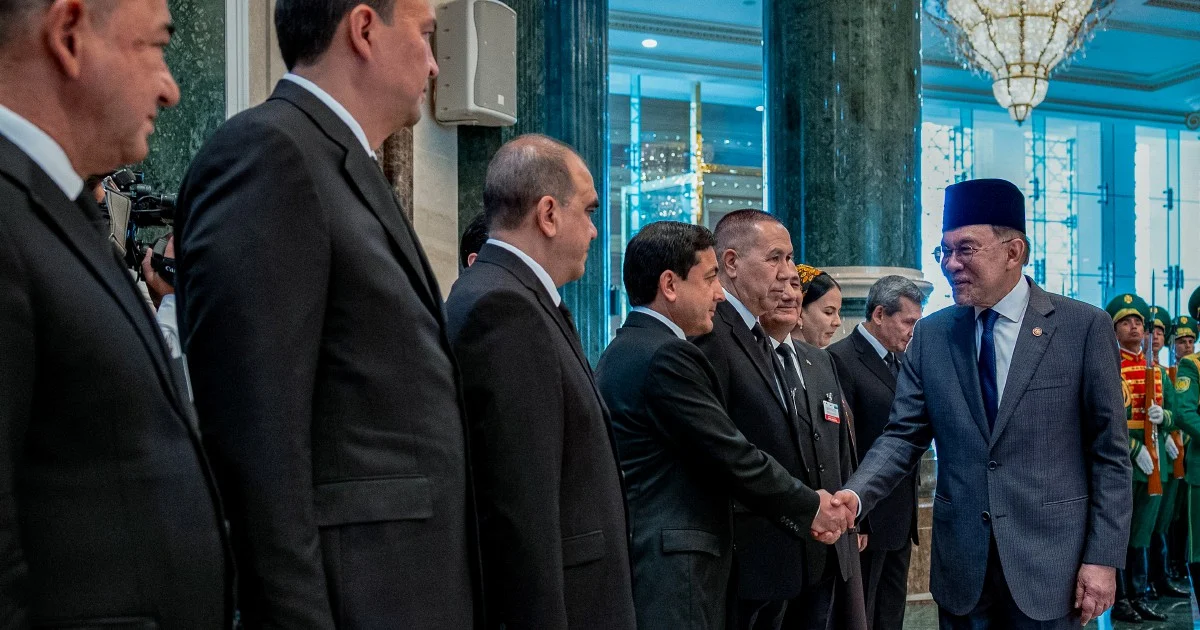
Prime Minister Datuk Seri Anwar Ibrahim's sustained diplomatic push across the international arena is being credited with creating fresh opportunities for Malaysia to strengthen its economic foundation and deepen strategic alliances at a moment when global markets face considerable instability. Academic observers suggest that the government's intensified engagement with foreign counterparts signals a deliberate approach to shield the Malaysian economy from external shocks whilst simultaneously unlocking new avenues for commercial expansion and capital inflows.
The timing of these diplomatic initiatives carries particular significance for Southeast Asia's third-largest economy. As supply chains continue to realign in response to geopolitical tensions spanning the Indo-Pacific region, and as trading blocs recalibrate their relationships, Malaysia stands to benefit substantially from cultivating strong bilateral and multilateral partnerships. Anwar's personal involvement in high-level talks demonstrates a commitment to positioning the nation as a reliable, forward-thinking participant in global commerce—a positioning that extends beyond ceremonial gestures to encompass substantive discussions on tariffs, investment frameworks, and technology transfer agreements.
The Prime Minister's diplomatic calendar has reflected an ambitious schedule encompassing visits to major trading partners and participation in regional forums designed to foster economic cooperation. These engagements serve multiple purposes: they reinforce Malaysia's relevance within established trade groupings, signal openness to investors seeking stable bases in the region, and create platforms for negotiating favourable terms on critical resource access and market entry. For a country whose economy depends substantially on commodity exports, international trade, and foreign direct investment, such proactive statecraft becomes essential machinery for economic management.
International business sentiment toward Malaysia has remained resilient partly because policymakers have sustained dialogue with key economic partners, avoiding the kind of policy unpredictability that can deter investment flows. Through sustained engagement, the government can communicate its economic vision clearly, address investor concerns about regulatory frameworks, and demonstrate political stability—factors that carry enormous weight when multinational corporations evaluate placement of manufacturing facilities or regional headquarters. Anwar's efforts in this regard reflect an understanding that modern economic competitiveness increasingly rests upon diplomatic credibility and international standing.
The geopolitical environment surrounding Malaysia presents both considerable risks and genuine opportunities. Tensions between major powers, competing claims in shared maritime spaces, and shifting trade alliance architectures create an unpredictable climate for business planning. Yet precisely within such uncertainty, nations capable of maintaining dialogue with multiple stakeholders gain considerable advantage. Malaysia's historical position as a bridge between different regional groupings and its reputation for pragmatic diplomacy furnish assets that, when deployed through active engagement led by senior government figures, can translate into concrete economic outcomes including new trade agreements, joint ventures in strategic sectors, and participation in infrastructure projects.
The diplomatic initiatives also carry importance for Malaysia's positioning within the Association of Southeast Asian Nations and broader Asian frameworks. Regional stability and economic integration depend partly upon central member states like Malaysia demonstrating commitment to multilateral cooperation and consensus-building. Through his diplomatic efforts, Anwar reinforces Malaysia's leadership credentials within these structures, potentially enhancing the country's influence over regional economic governance and dispute resolution mechanisms affecting Malaysian commercial interests.
For Malaysian exporters and investors, the strengthened international relationships cultivated through these diplomatic channels translate into practical benefits. Enhanced market access, reduced transaction costs through bilateral agreements, and greater policy predictability in partner nations all flow from sustained high-level engagement. Particularly in sectors where Malaysia seeks to develop competitive advantages—such as renewable energy technology, digital services, and value-added manufacturing—having government-backed diplomatic relationships facilitates technology partnerships and knowledge transfer arrangements that individual companies might struggle to negotiate independently.
The academic consensus on these initiatives reflects recognition that economic statecraft represents an increasingly critical component of national development strategy. Malaysia, lacking the resource endowments of Gulf petrostates or the manufacturing dominance of East Asian rivals, must differentiate itself through institutional quality, political reliability, and sophisticated engagement in international forums. The Prime Minister's visible involvement in diplomatic outreach sends clear signals to trading partners and investors alike that Malaysia's leadership treats economic partnership as a priority concern worthy of executive-level attention.
Looking forward, the sustainability of these diplomatic gains depends upon consistent execution and follow-through on commitments made during high-level talks. The window of opportunity created through international engagement must be converted into actual trade increases, secured investment pledges, and expanded market share for Malaysian companies. This requires coordination between the foreign service, trade ministries, and private sector bodies to ensure that diplomatic openings translate into measurable economic outcomes visible to Malaysian workers, businesses, and consumers.
The global economic environment will likely continue presenting volatility and uncertainty. Currency fluctuations, supply chain disruptions, and shifting investment patterns reflect structural shifts in the international system rather than temporary disruptions. Within this context, Malaysia's diplomatic positioning becomes part of its broader economic resilience strategy. Nations that maintain strong international relationships, clear communication with major partners, and demonstrated commitment to rules-based commerce are better positioned to navigate turbulence and capture opportunities when they emerge. Anwar's diplomatic activism, viewed through this lens, represents pragmatic economic management appropriately calibrated to contemporary conditions.

