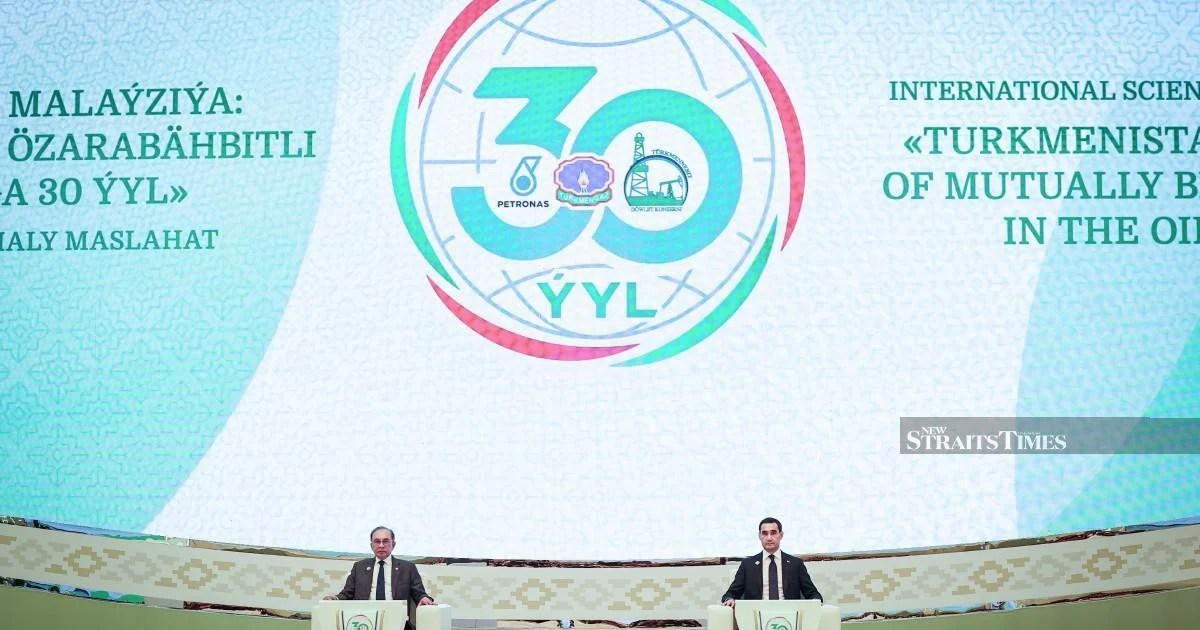
Prime Minister Datuk Seri Anwar Ibrahim's recent diplomatic missions to Russia and Turkmenistan have delivered substantive outcomes that merit careful analysis, particularly for Malaysia's long-term energy security and its positioning within the broader Asian geopolitical landscape. The journey represents more than symbolic engagement; it underscores Kuala Lumpur's deliberate strategy to diversify energy sources and forge strategic relationships beyond traditional Western-aligned partnerships.
Malaysia's energy picture has undergone significant strain in recent years. Domestic oil and gas reserves, once the foundation of national prosperity, face depletion pressures that have forced policymakers to reassess supply chains and international partnerships. The nation's liquefied natural gas (LNG) infrastructure, centered on Petronas facilities, remains crucial to both domestic power generation and regional energy markets. However, long-term planning requires securing additional upstream partnerships to maintain export volumes and satisfy growing domestic demand. Anwar's overtures toward Central Asia reflect this underlying necessity.
Russia, despite international sanctions following its 2022 invasion of Ukraine, remains a significant hydrocarbon producer with the world's largest natural gas reserves. Establishing energy partnerships with Moscow—even amid geopolitical tensions—provides Malaysia with alternative sourcing options and demonstrates sophisticated diplomatic flexibility. The nation cannot afford ideological positioning that compromises practical energy security. Many Southeast Asian economies, including Vietnam and Thailand, have similarly maintained energy relationships with Russia, recognizing the economic imperative beneath geopolitical rhetoric.
Turkmenistan occupies an equally strategic position in the regional energy calculus. Central Asia's second-largest gas producer possesses proven reserves exceeding 19 trillion cubic meters, with production capacity that significantly exceeds domestic consumption. The nation's gas has traditionally flowed westward through Russian pipelines or southward toward the Caspian Sea. Malaysian interest in accessing Turkmen resources suggests exploration of alternative routing mechanisms or long-term purchasing arrangements that could reduce dependence on Middle Eastern suppliers and diversify geographic risk.
The timing of these missions carries significance beyond the transactions themselves. Global energy markets remain volatile, with geopolitical uncertainties creating supply vulnerabilities. Southeast Asia, as a rapid-growth region with rising energy demands, faces competitive pressure to secure long-term contracts before rivals lock in favorable terms. Vietnam and Thailand have already expanded hydrocarbon partnerships throughout Central Asia and the Caucasus. Malaysia's delayed engagement risks leaving it disadvantaged in future negotiations.
For Petronas specifically, these diplomatic openings could translate into joint venture opportunities, exploration rights, or long-term purchase agreements that strengthen the national oil company's international portfolio. Petronas has historically been Malaysia's primary instrument for energy diplomacy, and deepening relationships in Russia and the Central Asian republics could yield competitive advantages in an increasingly contested market for upstream assets and LNG export capacity.
The energy angle also intersects with Malaysia's broader foreign policy objectives. The nation has positioned itself as a non-aligned player capable of maintaining productive relations across ideological divides—a posture that enhances diplomatic influence but requires consistent demonstration. Successful engagement with Russia and Turkmenistan reinforces this positioning and provides leverage in negotiations with other major powers seeking Malaysian cooperation or support on various regional issues.
Domestically, securing diversified energy supplies carries implications for electricity tariffs, industrial competitiveness, and economic growth. Malaysia's manufacturing sector depends on stable, affordable energy inputs. Petrochemical industries, petrorefining, and downstream manufacturing all face cost pressures from volatile energy markets. Long-term arrangements with Central Asian suppliers could stabilize input costs and provide the predictability essential for industrial planning and investment.
Regional dynamics deserve consideration as well. Southeast Asian nations maintain varied energy relationships and supply chains. While some ASEAN members prioritize renewable energy transitions, others—including Malaysia—recognize that fossil fuels will constitute the dominant energy source for decades. Regional cooperation on energy security, perhaps through ASEAN mechanisms, could strengthen collective bargaining power. However, bilateral arrangements like those under discussion with Russia and Turkmenistan reflect realities that regional consensus-building often produces delayed outcomes insufficient to address urgent energy security needs.
The investment implications warrant attention from observers of Malaysia's economic trajectory. Energy companies, infrastructure developers, and industries dependent on stable energy supplies stand to benefit from the certainty provided by long-term international partnerships. Financial markets may respond positively to news of secured supply agreements, particularly if they include pricing mechanisms protective against future volatility.
Challenges remain. International sanctions frameworks surrounding Russia create complications for partnership implementation and financing arrangements. Turkmenistan's political environment and infrastructure limitations demand careful due diligence. Currency considerations, payment mechanisms, and contract enforcement require meticulous negotiation. However, these obstacles are surmountable through patient diplomacy and structured commercial arrangements.
Anwar's diplomatic efforts signal that Malaysia intends active participation in reshaping Asian energy relationships. The visit demonstrates willingness to engage across traditional geopolitical boundaries in pursuit of concrete national interests—a pragmatism increasingly necessary as global systems fragment. Whether these initiatives translate into measurable commercial results will determine their ultimate significance, but the foundational diplomatic work appears genuinely accomplished.

