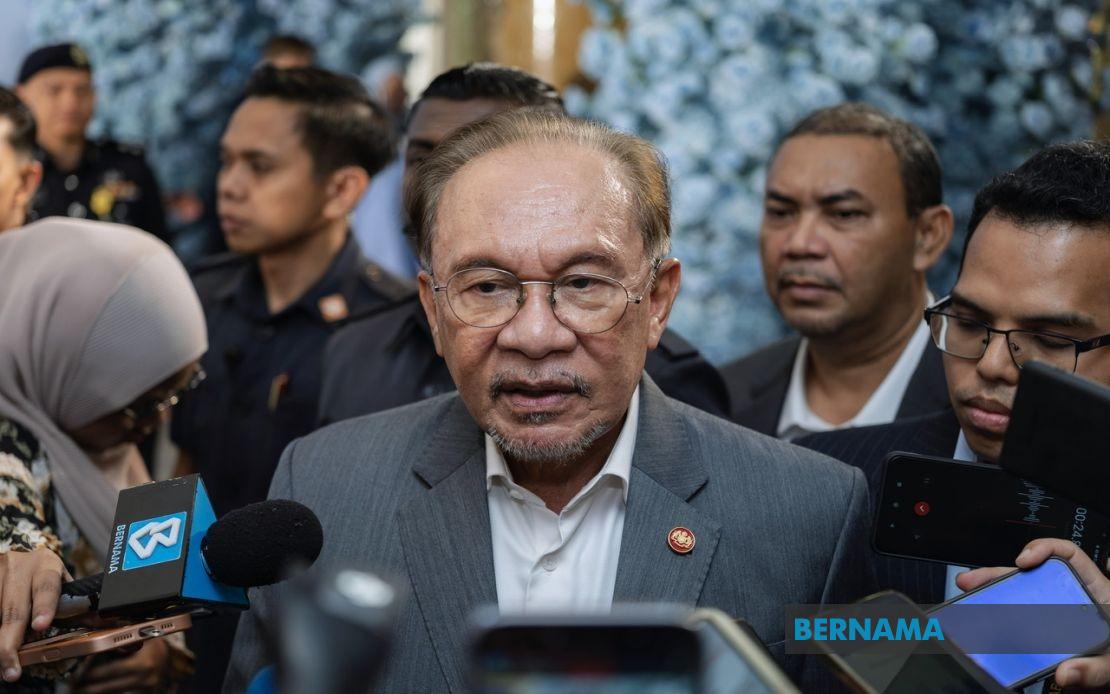
Prime Minister Datuk Seri Anwar Ibrahim has acknowledged that no formal briefing has reached his office regarding the internal turmoil surrounding four Melaka DAP state representatives who abruptly exited the state government. Speaking to journalists in Kuala Lumpur on July 15, the Pakatan Harapan chairman indicated that the coalition's senior leadership structure would initiate discussions and take appropriate action in the coming period, though he offered no timeline for such deliberations.
The four assemblymen—Allex Seah Shoo Chin (PH-Kesidang), Low Chee Leong (PH-Kota Laksamana), Leng Chau Yen (PH-Banda Hilir) and Kerk Chee Yee (PH-Ayer Keroh)—announced their immediate withdrawal from the Melaka state administration on July 14. Their departure came immediately after the State Legislative Assembly approved constitutional amendments that would permit the appointment of nominated assemblymen, a mechanism long viewed with suspicion by reformist elements within the coalition who argue it undermines democratic principles and concentrates executive power.
The timing of the resignations reflects deeper anxieties within DAP's Melaka contingent about the trajectory of state governance. The constitutional amendments essentially expand the Chief Minister's discretionary authority to appoint legislators without electoral mandate, a development that runs counter to the transparency and accountability messaging that has characterised Pakatan Harapan's political identity since its 2018 election victory. For the four representatives, this represented a fundamental compromise of the coalition's foundational values, prompting their decision to sever ties rather than remain complicit.
Anwar's absence of prior information suggests a significant communication breakdown within the coalition's decision-making apparatus, raising questions about the effectiveness of internal party mechanisms and the cohesion of Pakatan Harapan's multi-party structure. The Prime Minister's acknowledgement that he had not been consulted before the assemblymen's public announcement indicates that DAP's state leadership moved unilaterally without coordinating with the federal government or the coalition's apex decision-making bodies. This dynamic illustrates the friction that periodically emerges between national coalition directives and state-level party autonomy.
Just hours before the assemblymen's formal withdrawal announcement, Anwar had publicly encouraged Melaka DAP to reconsider its decision, urging the party to abandon its plans and concentrate instead on developmental priorities and constituent welfare. His intervention was notably unsuccessful, suggesting that sentiment among the four representatives had crystallised well before the Chief Minister's appeal reached them. The disconnect between federal leadership preferences and ground-level party sentiment underscores the challenges facing Pakatan Harapan as it attempts to maintain ideological coherence across multiple jurisdictions and organisational layers.
The Melaka situation carries particular significance for federal stability because DAP holds crucial seats within the coalition's parliamentary majority. Any erosion of DAP's state government participation reduces the party's leverage in internal coalition negotiations and potentially weakens its capacity to defend coalition interests during moments of political flux. With Anwar's government relying on slim parliamentary margins, deterioration of coalition unity at the state level inevitably creates reverberations at the centre.
From a broader governance perspective, the constitutional amendments that triggered the resignations represent a troubling precedent that Southeast Asian observers have noted with concern. Nominated rather than elected representatives weaken electoral accountability and create opportunities for patronage-based governance structures that undermine the rule of law. Malaysia's various state governments have periodically experimented with such mechanisms, but doing so under a supposedly reform-oriented federal administration sends contradictory signals about the commitment to institutional strengthening and democratic deepening.
The issue also highlights the vulnerability of coalition governments in Malaysia's federal system, where state administrations operate with considerable autonomy and state governments led by coalition members sometimes pursue policies misaligned with national coalition priorities. Pakatan Harapan's experience in Melaka mirrors comparable tensions in other coalition-governed states, where the competing demands of multiple parties and the expectations of respective party bases create genuine governance challenges that do not yield to centralised command-and-control approaches.
Anwar's commitment to follow-up action suggests that Pakatan Harapan's leadership recognises the seriousness of the situation and the necessity of achieving some reconciliation or at least clarifying the boundaries of acceptable state-level action. However, the absence of immediate intervention or crisis communication apparatus indicates that the coalition's response mechanisms may require strengthening. In contemporary Malaysian politics, where political narratives shape voter perception and media coverage drives opinion formation, the gap between event and coordinated response carries tangible costs.
The broader implication for Malaysia's political trajectory centres on whether coalition governments can effectively manage ideological and operational tensions while maintaining functional unity. The Melaka DAP withdrawal tests whether Pakatan Harapan possesses sufficient institutional maturity and dispute-resolution capacity to address such conflicts without permitting them to escalate into coalition-threatening crises. As Anwar's government approaches mid-term, its ability to manage such internal difficulties will increasingly determine whether it can sustain voter confidence and parliamentary stability through the remainder of its mandate.

