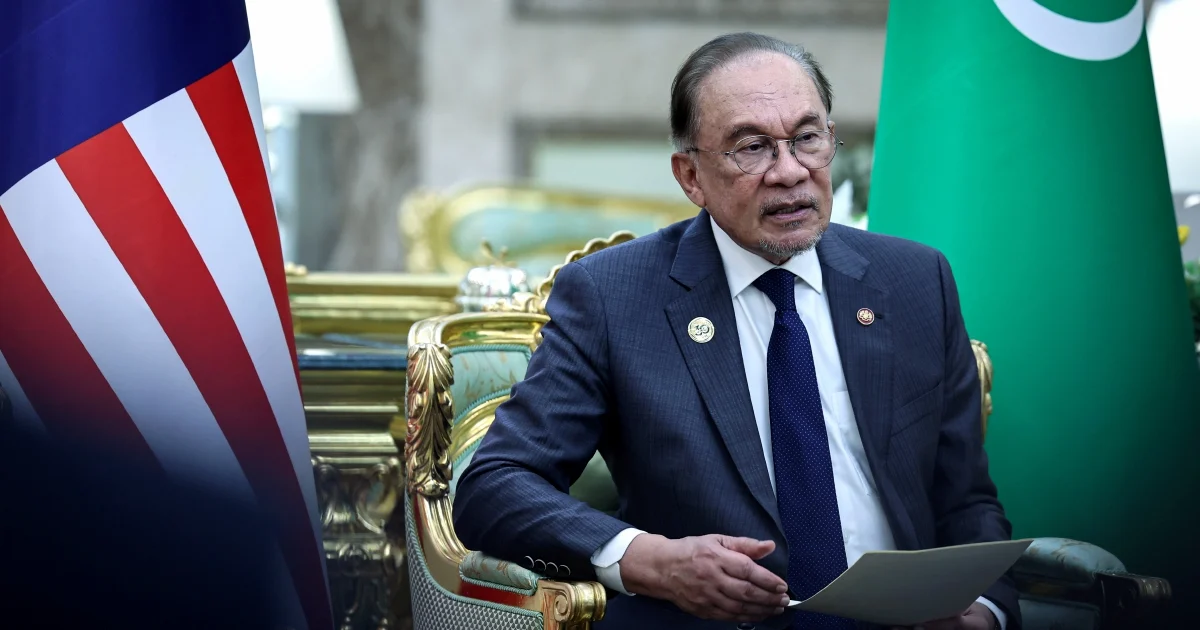
Prime Minister Datuk Seri Anwar Ibrahim has expressed cautious optimism over reports of a preliminary accord between the United States and Iran, characterising the development as encouraging news with potential implications for regional and international stability. Speaking at Batu Kawan, Malaysia's top political leader signalled that his government views diplomatic engagement between the two long-standing adversaries as a necessary step toward de-escalation in an increasingly volatile Middle East.
The Malaysian premier's remarks reflect a broader strategic position adopted by many Southeast Asian nations, which have long sought to maintain balanced relations with both Western powers and Middle Eastern actors. For Kuala Lumpur, any reduction in US-Iran tensions carries direct significance, as heightened conflict in the Persian Gulf region could disrupt shipping lanes, affect energy prices, and destabilise the wider geopolitical environment on which Malaysia's economy partially depends. Anwar's public endorsement underscores Malaysia's preference for multilateral dialogue and rule-based international frameworks over confrontational approaches to resolving interstate disputes.
The timing of Anwar's comments is noteworthy given Malaysia's position within the broader Muslim world. As a predominantly Islamic nation with significant diplomatic and economic ties across the Middle East, Malaysia occupies a unique diplomatic space. While maintaining strong security partnerships with Western nations including the United States, Malaysia also maintains cultural and religious connections to various Middle Eastern states. This dual positioning has historically required careful navigation, and Anwar's cautious welcome of US-Iran progress demonstrates continued commitment to pragmatic engagement rather than ideological partisanship.
The potential agreement between Washington and Tehran, if formalised, could reshape several critical aspects of international relations that directly affect Malaysia. Energy markets would likely stabilise, as reduced hostilities typically ease concerns about potential disruptions to crude oil supplies from the Gulf region. Malaysia's oil and gas sector, along with its broader economy, remains sensitive to crude price volatility. Furthermore, reduced US-Iran tensions could lower the likelihood of proxy conflicts across Iraq, Syria, and Yemen, which have created humanitarian crises and regional instability that ultimately reach Southeast Asia through refugee movements and security challenges.
Anwar's statement also carries domestic political implications. By positioning himself as a leader who welcomes diplomatic solutions and international cooperation, the Prime Minister reinforces his government's commitment to responsible global citizenship. This messaging appeals to Malaysia's educated urban constituencies and international business community, both audiences that value stability and predictable governance. Additionally, in Malaysia's fractious domestic political environment, emphasising shared interests in global peace and prosperity can serve as a unifying narrative that transcends local partisan divisions.
The broader context of this breakthrough warrants consideration. Years of escalating tensions between the United States and Iran, punctuated by economic sanctions, military posturing, and occasional direct confrontations, have created an unpredictable international environment. For developing economies like Malaysia, such uncertainty complicates long-term planning and investment decisions. A shift toward diplomatic channels, even if incremental, offers the possibility of greater predictability in global markets and reduced risks of unintended escalation that could draw in other powers.
However, Anwar's welcome of the breakthrough comes with implicit recognition that such agreements require sustained commitment from both parties and, critically, must lead to genuine, lasting improvements rather than temporary truces. The Malaysian premier's emphasis on hopes for enduring peace rather than merely provisional arrangements suggests awareness that previous attempts at US-Iran rapprochement have sometimes foundered when political circumstances changed. Malaysia's experience with regional conflicts and peace processes, including historical disputes with neighbouring nations, has provided valuable lessons in the fragility of agreements that lack robust implementation mechanisms and genuine commitment to underlying grievance resolution.
The statement reflects Malaysia's broader foreign policy orientation under Anwar's leadership, which has emphasised constructive engagement, support for multilateral institutions, and preference for resolving differences through dialogue rather than coercion. This approach aligns with ASEAN principles of non-interference and peaceful settlement of disputes, doctrines that have served Southeast Asia reasonably well despite the region's occasional tensions. By publicly backing the US-Iran agreement, Anwar signals that Malaysia views adherence to diplomatic norms and international cooperation as compatible with national interest, a stance that positions the country as a responsible stakeholder in global affairs.
Looking forward, Malaysia will likely monitor the implementation of any finalised agreement carefully. The success or failure of US-Iran rapprochement will inform Malaysian calculations regarding regional security partnerships, trade relationships, and investment strategies across the Middle East. Given Malaysia's growing economic connections to Gulf states and continued reliance on international maritime trade passing through waters adjacent to Iranian territory, the practical effects of improved US-Iran relations will be watched closely by policy makers in Putrajaya.
Ultimately, Anwar's welcome of the US-Iran breakthrough represents more than simple diplomatic pleasantry. It articulates Malaysia's genuine interest in a more stable, predictable international order in which regional disputes are resolved through negotiation rather than confrontation. In a period marked by great power competition and regional volatility, Malaysia continues positioning itself as a nation that values peace, respects international law, and believes that dialogue, however difficult, remains preferable to escalation.

