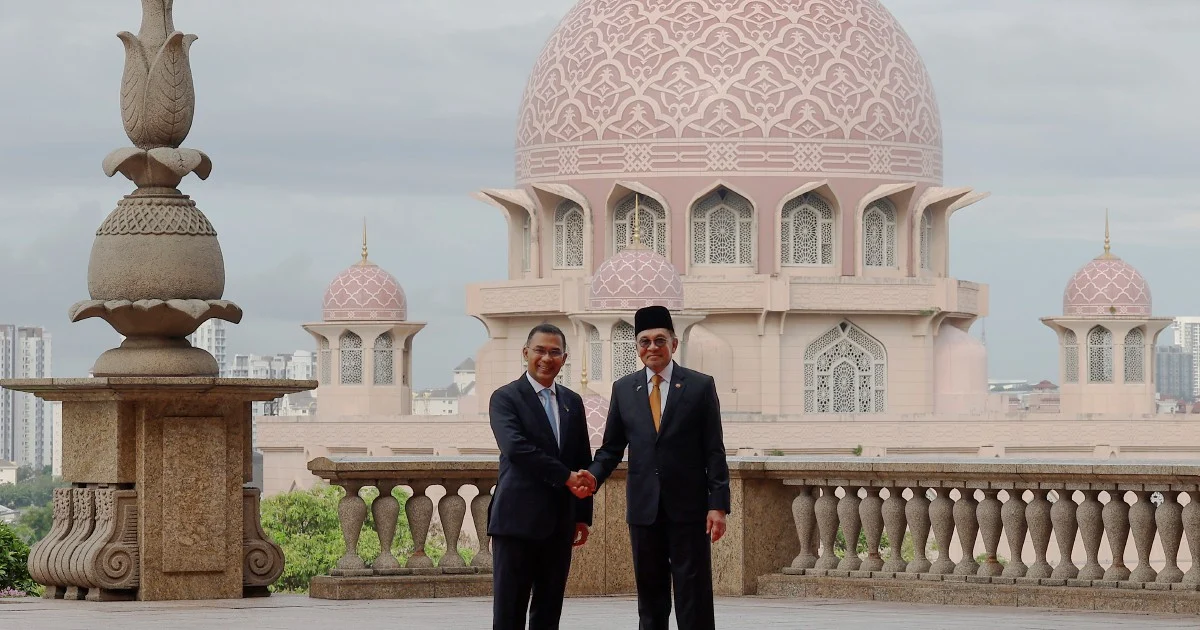
Prime Minister Anwar Ibrahim hosted Bangladesh Prime Minister Tarique Rahman at the Perdana Putra Complex in Putrajaya today, extending an official welcome ceremony as part of a significant two-day diplomatic engagement between the two nations. The reception underscored Malaysia's commitment to strengthening bilateral relations with its important South Asian neighbour, particularly during a period of regional strategic repositioning.
Tarique Rahman's visit to Malaysia carries considerable weight given Bangladesh's evolving political landscape and its increasing importance to the broader South Asian and Southeast Asian economic ecosystem. The timing of this official visit reflects renewed momentum in Malaysia-Bangladesh relations, with both governments signalling their intent to deepen cooperation across multiple sectors ranging from trade and investment to cultural and educational exchanges.
The official reception at Perdana Putra, the seat of Malaysia's Prime Minister's Office, represents protocol recognition of Bangladesh's status as a key diplomatic partner. Such ceremonial gestures in Malaysian diplomatic practice typically precede substantive discussions on bilateral and regional matters, suggesting that both leaders have prepared a comprehensive agenda for their interactions during the visit.
Bangladesh, with a population exceeding 170 million, holds strategic importance for Malaysia's regional engagement strategy. The South Asian nation serves as a crucial link in Malaysian businesses' broader Indo-Pacific expansion plans, while also representing a significant market for Malaysian goods and services. Beyond commerce, the two nations share common interests in maritime security, regional stability, and the advancement of shared development agendas within forums such as the Organisation of Islamic Cooperation.
The visit occurs within the context of Malaysia's broader diplomatic outreach across Asia. Prime Minister Anwar Ibrahim has made strengthening regional partnerships a cornerstone of his administration's foreign policy, recognising that economic interdependence and cultural understanding create durable foundations for long-term cooperation. Bangladesh's participation in Malaysian-led initiatives and platforms amplifies Malaysia's soft power and regional influence.
For Bangladesh, engagement with Malaysia offers opportunities to diversify its international partnerships and gain access to Southeast Asian markets and expertise. The relationship also provides avenues for Bangladesh to participate in regional security discussions and development initiatives. Given Bangladesh's significance as a major apparel exporter and emerging manufacturing hub, enhanced ties with Malaysia could facilitate technology transfer and industrial cooperation.
The ceremonial reception format, with its formal protocols and symbolic gestures, serves multiple purposes in diplomatic communication. It signals respect for visiting dignitaries while simultaneously conveying to domestic and international audiences the priority each government assigns to bilateral relations. The Perdana Putra Complex, as the formal setting, elevates the significance of the engagement and provides an appropriate venue for high-level discussions.
During the visit, both sides are likely to explore mechanisms for enhancing trade flows, which have fluctuated in recent years. Malaysian investors maintain presence in Bangladesh's thriving textiles and manufacturing sectors, while Bangladeshi entrepreneurs increasingly look toward Malaysia as a gateway to Southeast Asian opportunities. Removing trade barriers and facilitating business-to-business connections often feature prominently in such high-level diplomatic visits.
Educational cooperation represents another dimension of potential expansion. Malaysian universities host significant numbers of Bangladeshi students, fostering people-to-people connections that strengthen cultural ties and create networks of future leaders familiar with both nations. Expanding scholarship programmes and academic partnerships typically features in bilateral discussions at this level.
The security dimension of the relationship, though less visible in public discourse, likely occupies a portion of the leaders' agenda. Both nations face transnational challenges including human trafficking, maritime security concerns, and counterterrorism cooperation. Strengthening intelligence-sharing protocols and coordinating regional security responses benefits both governments and contributes to broader Southeast Asian stability.
Cultural and religious dimensions also characterise Malaysia-Bangladesh relations meaningfully. Both nations are Muslim-majority democracies, and both governments recognise the value of interfaith dialogue and cultural exchange programmes in building mutual understanding. Such initiatives often receive emphasis during official visits, reflecting the values both societies prioritise.
The two-day duration of this official visit suggests a carefully structured programme encompassing formal ceremonies, bilateral meetings, potential state dinners, and possibly visits to development projects or cultural sites. Each component serves to deepen understanding between the two leaderships while demonstrating to their respective domestic audiences the importance assigned to the bilateral relationship.
Looking forward, this visit establishes groundwork for enhanced cooperation frameworks that will likely extend across the remainder of this decade. Whether through renewed trade agreements, expanded educational initiatives, or deepened security cooperation, the engagement between Anwar and Tarique Rahman signals that Malaysia-Bangladesh relations are entering a phase of renewed vitality and expanded scope.

