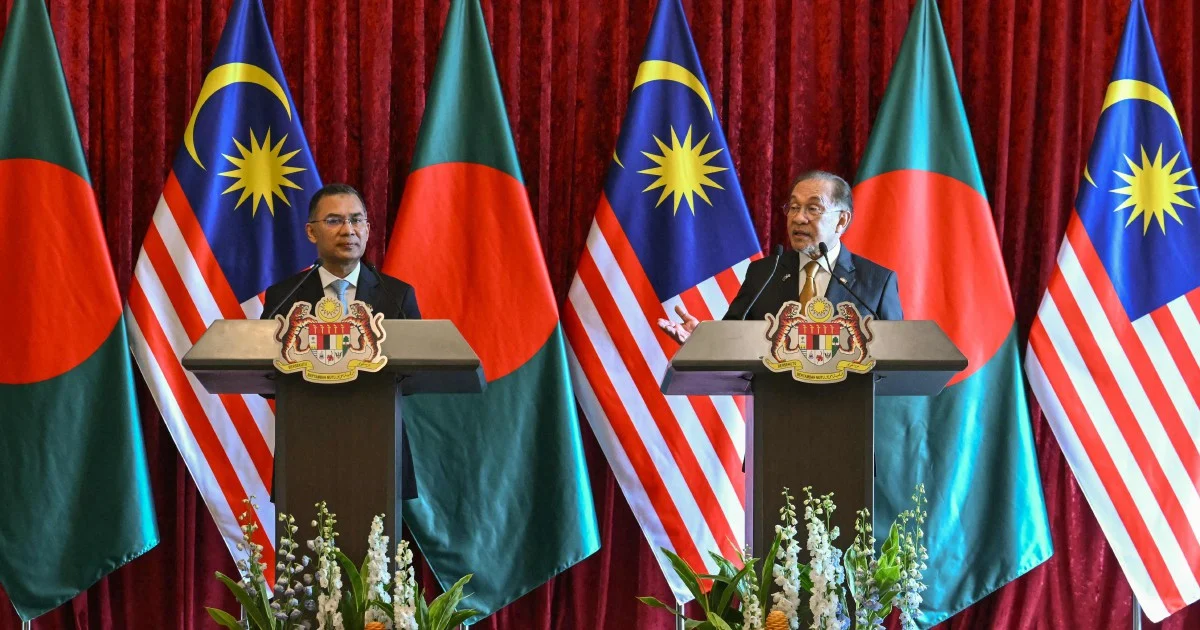
Prime Minister Datuk Seri Anwar Ibrahim has committed to combating the systematic exploitation of Bangladeshi migrant workers, recognising the demographic group as fundamental to Malaysia's continued economic development and industrial growth. The pledge signals a shift in how the government intends to approach labour protection within the migrant worker framework, moving beyond rhetoric to promised enforcement mechanisms targeting unscrupulous employers and labour brokers who profit from worker vulnerability.
Bangladeshi nationals constitute a substantial portion of Malaysia's foreign labour force, concentrated in manufacturing, construction, domestic work, and service sectors where they fulfil critical manpower shortages that domestic workers have not addressed. Their contribution extends beyond merely filling vacancies; these workers maintain productivity in industries that would otherwise face acute bottlenecks. The Prime Minister's characterisation of their labour as economically indispensable reflects acknowledgment that Malaysia's competitive positioning in regional and global markets depends significantly on maintaining a reliable foreign workforce under reasonable conditions.
The timing of Anwar's commitment arrives amid mounting international scrutiny and domestic activism concerning worker mistreatment. International labour organisations, diplomatic missions, and civil society groups have documented patterns of wage theft, unsafe working conditions, contract fraud, and physical abuse affecting substantial numbers of Bangladeshi migrants. These documented abuses have generated diplomatic tensions and reputational costs for Malaysia, particularly regarding perceptions of labour standards internationally. For Malaysian policymakers, addressing these concerns represents both a humanitarian imperative and a pragmatic economic interest in preserving bilateral labour relations and Malaysia's standing as a responsible migration destination.
Exploitation mechanisms targeting Bangladeshi workers typically operate along predictable lines. Labour brokers demand excessive placement fees that workers repay through wage deductions extending across months or years. Employers confiscate travel documents, restrict movement, and impose working conditions diverging substantially from employment contracts. Wage violations including unpaid overtime, arbitrary deductions, and withheld salaries remain endemic. Unsafe working environments lacking proper protective equipment and sanitation facilities expose workers to injury and illness. These systemic abuses thrive partly due to information asymmetries, language barriers, and workers' dependence on employer sponsorship for legal residence status, creating leverage that unethical employers exploit systematically.
The Prime Minister's pronouncement suggests intentions to strengthen enforcement of existing labour laws while potentially introducing additional protections specifically addressing migrant worker vulnerabilities. Malaysia maintains legislative frameworks theoretically prohibiting wage theft, unsafe conditions, and document confiscation, yet enforcement remains inconsistent across jurisdictions and industries. Examining comparable regional approaches offers instructive examples: Singapore's targeted inspections in dormitory facilities and employer workplaces, Thailand's enhanced penalties for trafficking and forced labour, and Indonesia's skill certification requirements all demonstrate mechanisms other nations employ to strengthen worker protection. Whether Malaysia will adopt similarly robust compliance mechanisms remains subject to implementation capacity and political will across different government levels.
The economic dependency argument advanced by Anwar carries particular resonance in Malaysia's development context. Unlike nations with population surpluses enabling workforce flexibility, Malaysia faces demographic constraints limiting domestic labour availability, particularly for lower-wage positions requiring physical labour. This structural reality means migrant workers are not peripheral to the economy but foundational. Healthcare and aged care sectors increasingly rely on imported domestic workers as Malaysia's own population ages and fewer citizens accept such employment. Construction projects scheduled for completion within specified timelines depend on importing workers capable of maintaining project momentum. Manufacturing sectors competing with international competitors cannot pause operations while awaiting domestic recruitment. Recognising this dependency theoretically creates stronger political space for implementing worker protections without arousing employer resistance framed around labour unavailability claims.
Regional dimensions also inform the Prime Minister's positioning. Bangladesh represents a significant source of foreign direct investment in Malaysia's textile and apparel sectors, with Bangladeshi entrepreneurs establishing manufacturing operations that employ both Bangladeshi expatriates and Malaysian workers. Deteriorating treatment of Bangladeshi workers could trigger diplomatic complications, consumer boycott campaigns, or Bangladesh government restrictions on labour migration to Malaysia, thereby disrupting these economic relationships. Additionally, larger Southeast Asian competition for migrant worker populations intensifies; Thailand, Singapore, and other regional economies actively compete for skilled and semi-skilled workers from Bangladesh and similar source nations. Countries developing reputations for worker abuse risk losing access to preferred labour sources as workers and source governments exercise selection among competing destinations.
Implementation effectiveness will ultimately determine whether Anwar's commitment translates into meaningful worker protection or functions primarily as political messaging. Malaysian enforcement agencies responsible for labour inspections, occupational safety, and immigration oversight require adequate resourcing, training in migrant worker issues, and operational independence from employer pressure. Whistle-blower mechanisms enabling workers to report violations without jeopardising employment status have proven essential in other jurisdictions. Penalties must reach levels where violations become economically irrational rather than cost-benefit calculations for violating employers. Coordination between federal labour authorities, state enforcement bodies, and immigration departments frequently fragments enforcement efforts, allowing violations to persist across administrative boundaries.
The pledge also reflects evolving Malaysian political sensibilities regarding labour standards. Worker protection increasingly features in domestic political discourse, with labour activism growing alongside civil society organisation focusing on migrant issues. Political leaders recognising shifting public concern about exploitation can gain domestic political benefit from positioning themselves as worker advocates. Simultaneously, explicit alignment with worker protection may create friction with employer associations and industrialists accustomed to less regulated labour environments. Managing these competing pressures while translating commitments into substantive change constitutes a central governance challenge facing the administration's labour agenda moving forward.

