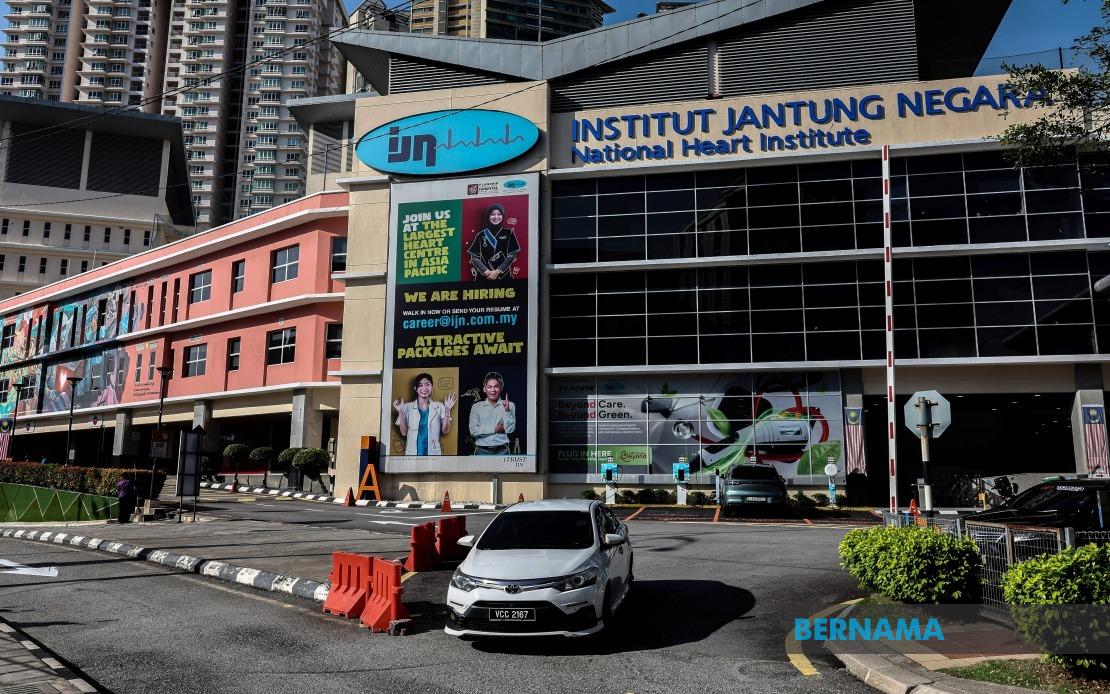
Prime Minister Datuk Seri Anwar Ibrahim made courtesy visits to two senior political figures undergoing treatment at the National Heart Institute in Kuala Lumpur, reflecting the upper echelons of Malaysian politics' concern for the wellbeing of their colleagues. Accompanying the Prime Minister was his wife, Datuk Seri Dr Wan Azizah Wan Ismail, as the pair called on Deputy Prime Minister Datuk Seri Fadillah Yusof and former Prime Minister Datuk Seri Ismail Sabri Yaakob, both of whom are currently patients at the prestigious cardiac facility.
Anwar shared positive news regarding Fadillah's condition through a social media post, indicating that the Deputy Prime Minister's health trajectory had shown encouraging signs during their face-to-face encounter. The Prime Minister underscored that while Fadillah's situation was improving, the medical team had recommended continued rest to facilitate fuller recovery. This assessment appears calibrated to reassure both the public and government stakeholders about the continuity of leadership at a critical juncture, given Fadillah's role in the administration's functioning.
The visits carry particular significance for Malaysian governance, as the Deputy Prime Minister remains integral to cabinet operations and policy implementation. Any extended absence of senior figures at this level can create operational vacuums and questions about decision-making authority during their recuperation periods. By publicly confirming Fadillah's positive trajectory and continued medical oversight, Anwar sought to instil confidence in the government's administrative capacity and institutional stability at a moment when public anxiety about leadership succession or interruption might otherwise surface.
Ismail Sabri, who previously served as Malaysia's Prime Minister before the formation of the current administration, is similarly receiving care at IJN and remains under ongoing clinical observation. Although he no longer holds the country's highest office, Ismail Sabri continues to wield considerable influence within his political bloc and party structure. His health situation thus carries implications beyond merely personal welfare, given his standing as a former head of government and his continued role in shaping political dynamics within the ruling coalition.
The simultaneous treatment of both figures at the same institution reflects the growing prevalence of cardiovascular health challenges among Malaysia's political leadership, a demographic typically composed of individuals in their sixties and beyond. The National Heart Institute, as Malaysia's premier cardiac care facility, frequently treats high-profile patients, and the concentration of senior politicians receiving treatment there underscores both the effectiveness of the facility and the health vulnerabilities of advancing age within positions of substantial responsibility and stress.
Anwar's public acknowledgement of these visits, coupled with his detailed commentary on health trajectories and medical advice, demonstrates a deliberate communication strategy aimed at transparency and stakeholder confidence. In Malaysian politics, where rumours about leadership health can rapidly destabilise markets and public sentiment, such forthright disclosure serves multiple purposes: it counters speculation, demonstrates compassion among the political elite, and reinforces the notion that institutional mechanisms continue functioning smoothly despite temporary absences of key personnel.
The inclusion of Wan Azizah in the visits adds a ceremonial and humanistic dimension to what might otherwise remain purely administrative acknowledgement. As the Prime Minister's spouse and a former political figure in her own right, her participation signals that these are not perfunctory state visits but genuine expressions of concern from the leadership hierarchy. Such gestures carry weight in Malaysian political culture, where personal relationships and displays of unity among the elite influence perceptions of government cohesion.
For both the Deputy Prime Minister and the former Prime Minister, their treatment at IJN and the attendant public knowledge of their conditions becomes part of the broader political narrative. Fadillah, as the current Deputy Prime Minister, must demonstrate sufficient recovery to resume full duties without creating governance gaps. Ismail Sabri, though no longer in office, maintains relevance through his political influence, and his health status factors into calculations about future political alignments and succession planning within his party and coalition.
The prayers and wishes for speedy recovery articulated by Anwar represent not merely personal sentiment but also serve as reassurance to the broader Malaysian public that leadership remains unified and concerned for institutional continuity. In a nation where political transitions can be unpredictable and where questions about succession frequently surface, confirmation that senior figures receive quality healthcare and maintain supportive collegial relationships contributes to perceptions of stability and orderly governance. The Prime Minister's explicit mention of both figures' ability to continue serving the country and its people frames recovery not as a private matter but as an issue of national importance.

