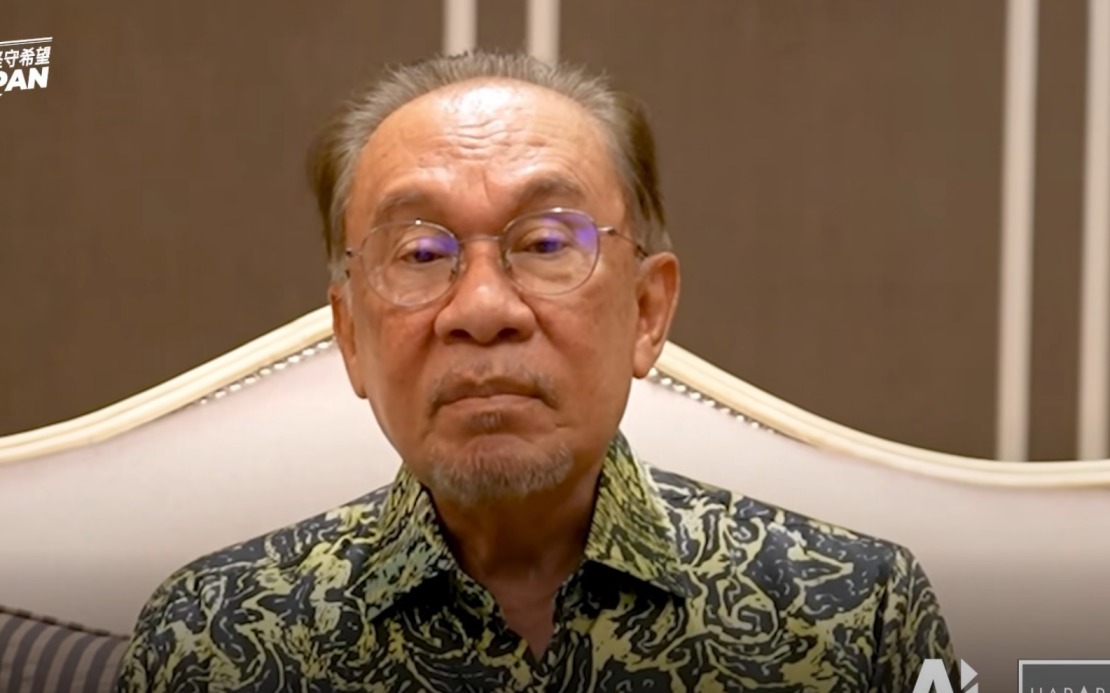
Prime Minister Datuk Seri Anwar Ibrahim has made a direct appeal to members of the Malaysian Armed Forces and Royal Malaysia Police, as well as their spouses, to cast their ballots for the Pakatan Harapan candidate during early voting in the 16th Negeri Sembilan State Election. In a video message distributed through Facebook, the PH chairman framed his request as part of a broader commitment by the federal government to advance the interests and wellbeing of security personnel who form the backbone of the nation's defence and law enforcement apparatus.
Anwar's appeal comes as the Negeri Sembilan state election enters its final stretch, with polling day scheduled for August 1. The early voting period on Tuesday will provide uniformed personnel and their families with an opportunity to participate in the electoral process before the main election date, recognising the logistical constraints and operational demands that often prevent members of the security forces from voting on regular polling days. This accommodation reflects longstanding practice in Malaysian elections to ensure all citizens can exercise their democratic rights.
The Prime Minister's message emphasised the coalition government's track record in addressing the welfare concerns of military and police personnel. He highlighted improvements and initiatives that his administration has pursued, including enhanced salary structures, improved access to basic facilities, housing assistance programmes, educational support for children, and healthcare provisions for parents. Additionally, Anwar referenced targeted cash assistance schemes such as Sumbangan Tunai Rahmah and Sumbangan Asas Rahmah, which form part of the government's broader social safety net.
However, Anwar's framing also contained a subtle acknowledgment that despite these efforts, significant gaps remain. By stating that "there is still room for improvement," he signalled that the welfare agenda for security forces remains incomplete and requires continued commitment and resources. This candid admission suggests recognition within the government that defence and police personnel have historically faced challenges in terms of compensation, living conditions, and family support relative to their demanding roles and sacrifices.
The appeal to security forces carries particular significance in Malaysian politics, as military and police personnel represent a substantial voting bloc with distinct interests and concerns. Their voting patterns can influence electoral outcomes, especially in state-level contests where margins are often narrow. By directly courting this demographic, Anwar demonstrated awareness that securing their support is essential for maintaining PH's political momentum heading into the state election and beyond.
Anwar's message stressed the interconnection between electoral outcomes and policy outcomes, arguing that continued voter support would translate into a stronger mandate for the government to pursue welfare improvements for security personnel and their families. This framing transforms the election not merely into a contest between competing political visions but into a referendum on whether voters trust the incumbent coalition to maintain and expand its commitment to those who serve in uniform. The psychological appeal embedded in this messaging—that voting for PH represents an investment in one's own wellbeing and that of one's family—forms a standard element of electoral appeals directed toward interest groups.
The scale of early voting participation from security personnel is substantial. According to the Election Commission, approximately 16,884 military personnel and their spouses are eligible to vote during the early voting period, alongside 5,455 police personnel. These voters will cast ballots at 38 designated early voting centres distributed across Negeri Sembilan. In aggregate, this represents more than 22,000 votes—a significant proportion of the electorate in a state election context, where individual contests can be decided by margins of only a few hundred votes.
The geographic distribution of voting centres across the state reflects the Election Commission's effort to provide equitable access to security force personnel stationed in different areas. This logistical framework acknowledges that military and police installations are dispersed throughout Negeri Sembilan, and providing multiple voting locations facilitates participation without requiring personnel to travel excessive distances or take extended leave from their postings.
Anwar's appeal also carries implications beyond the immediate state election. Negeri Sembilan represents one of several state-level contests that will ultimately shape the broader political landscape in Malaysia. The electoral performance in this state will provide early indicators of voter sentiment toward the federal government and may influence calculations within Anwar's coalition regarding political strategy and resource allocation in subsequent contests. Furthermore, the approach taken toward security force voters in Negeri Sembilan may set a template for engagement with this demographic in future elections.
The welfare concerns raised in Anwar's message reflect longstanding grievances within Malaysia's security forces. Personnel in the military and police have historically advocated for improved remuneration, better housing, enhanced educational opportunities for their children, and more comprehensive healthcare coverage. While the PH government has introduced various initiatives addressing these concerns, including salary adjustments and expanded assistance programmes, security force unions and advocacy groups have continued to press for more substantial improvements, suggesting that the gap between current provision and perceived needs remains significant.
The timing of Anwar's appeal, immediately preceding early voting, demonstrates strategic political communication designed to maximise the salience of welfare commitments in voters' minds as they prepare to cast their ballots. By anchoring his message to concrete policies and acknowledging areas for improvement, Anwar attempted to present the PH coalition as responsive to security force concerns while simultaneously framing continued electoral support as essential to furthering the welfare agenda.
For Malaysian voters and observers, Anwar's appeal underscores the significance of the Negeri Sembilan election as a test of political confidence in the federal government. The response from security force personnel—reflected ultimately in voting patterns—will provide insight into whether welfare-focused messaging and policy initiatives have successfully built political capital within this traditionally important constituency. The August 1 polling day will reveal whether such appeals translate into electoral support for the ruling coalition.

