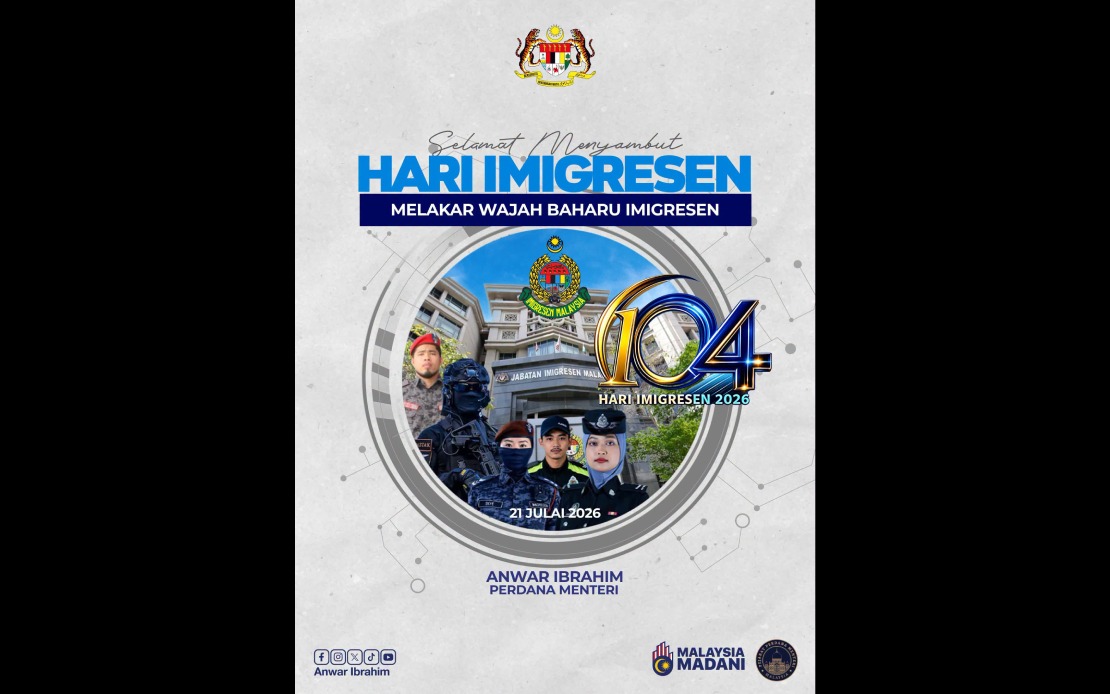
Prime Minister Datuk Seri Anwar Ibrahim has issued a direct appeal to all Immigration Department (JIM) staff members to execute their duties with unwavering integrity and steadfastly resist all manifestations of irregularities and corrupt practices. The call, delivered via social media in recognition of Immigration Day, signals renewed focus from Malaysia's highest office on ethical conduct within the nation's border management apparatus at a time when institutional credibility remains crucial to public confidence.
Anwar's message extends beyond mere condemnation of wrongdoing. He has emphasized that personnel must simultaneously cultivate compassion whilst delivering services that exemplify efficiency, courtesy, and professionalism. This dual emphasis reflects an understanding that anti-corruption efforts cannot exist in isolation—they must be paired with genuine commitment to public service excellence. The framing suggests that integrity and compassion are complementary virtues rather than competing priorities, a philosophical positioning that resonates with contemporary governance discourse emphasizing both accountability and citizen-centricity.
The Prime Minister's remarks gain particular significance within the context of ongoing efforts to restore institutional trust across Malaysia's public sector. The Immigration Department, which occupies a gatekeeping role in determining who enters and resides within Malaysian territory, represents an agency where lapses in integrity carry demonstrable consequences for national security and economic interests. Recent years have witnessed international scrutiny regarding human trafficking, irregular migration, and document fraud—vulnerabilities that create openings for corrupt officials to exploit their positions for personal gain.
Anwar's appeal incorporates implicit recognition that immigration management demands not merely technical competence but moral fortitude. JIM personnel make daily discretionary decisions affecting visa applications, border clearance, and enforcement actions. Without principled decision-making frameworks, such authority becomes susceptible to manipulation through bribery, favoritism, or extortion. By publicly anchoring expectations to integrity, the Prime Minister signals that ethical lapses will be treated as serious institutional failures rather than individual aberrations to be managed quietly.
The 2026 Immigration Day theme, "Charting a New Face for Immigration," suggests aspirational institutional renewal. This framing acknowledges that the department must evolve beyond historical practices that may have accommodated various irregularities. The theme implies reimagining immigration administration through contemporary standards—clearer procedures, enhanced transparency, technological modernization, and strengthened accountability mechanisms. Such institutional transformation cannot succeed without personnel genuinely committed to ethical operation.
For Malaysian business and civil society stakeholders, Anwar's intervention carries practical implications. Enterprises engaged in legitimate migration-related activities—recruiting foreign workers, processing investor visas, or managing business travel—depend on predictable, incorruptible border administration. When immigration officials engage in corrupt practices, transaction costs rise unpredictably, investor confidence deteriorates, and unlawful competitors operating outside formal channels gain unfair advantages. By visibly prioritizing integrity, government leadership creates political space for internal reform initiatives including investigation of misconduct, disciplinary action against offenders, and systematic procedure improvements.
The emphasis on serving the people and elevating Malaysia's international standing reflects recognition that immigration administration affects the nation's external reputation. Countries with corruption-plagued immigration systems face investor skepticism, brain drain as talented citizens seek opportunities elsewhere, and reputational damage in diplomatic contexts. Conversely, efficient, transparent immigration operations enhance Malaysia's competitive positioning for attracting skilled talent, fostering tourism, and deepening trade partnerships throughout Southeast Asia and beyond.
Anwar's call also operates within broader governmental anti-corruption strategy. The Malaysian Anti-Corruption Commission (MACC) has intensified investigations into public sector misconduct across multiple agencies. Immigration Department personnel represent a logical focus given the sector's vulnerability to corruption and the high-impact consequences of systemic failures. By publicly endorsing integrity standards, political leadership demonstrates commitment to investigations and disciplinary measures that MACC and internal oversight bodies may pursue.
The invocation of "safeguarding the nation's sovereignty" connects immigration integrity to fundamental state interests. Uncontrolled irregular migration, document fraud, and compromised border administration compromise Malaysia's ability to govern its territory effectively. When corrupt officials facilitate entry of individuals intended for exclusion, they undermine sovereignty. By linking integrity requirements to sovereignty protection, Anwar frames anti-corruption efforts as inherently nationalist endeavors rather than mere bureaucratic tidiness.
For Southeast Asian regional context, Malaysia's approach to immigration integrity carries relevance across borders. Corrupt immigration systems create regional externalities—human trafficking networks exploiting poorly supervised borders, irregular migration fueling social tensions in destination countries, and organized crime exploiting administrative gaps. Malaysia's emphatic commitment to integrity signals to regional partners and international organizations that the country takes its responsibilities seriously. This positioning strengthens Malaysia's diplomatic standing and capacity to negotiate bilateral agreements addressing shared migration challenges.
Moving forward, the substance of Anwar's appeal will be measured through concrete institutional actions. Personnel discipline records, investigation outcomes, and procedural reforms will indicate whether the Prime Minister's message translates into meaningful change. Civil society monitoring, parliamentary oversight, and MACC investigations will collectively determine whether this represents sustained anti-corruption commitment or rhetorical gesture. The credibility of Malaysia's immigration administration—and broader governmental integrity—depends on such follow-through.

