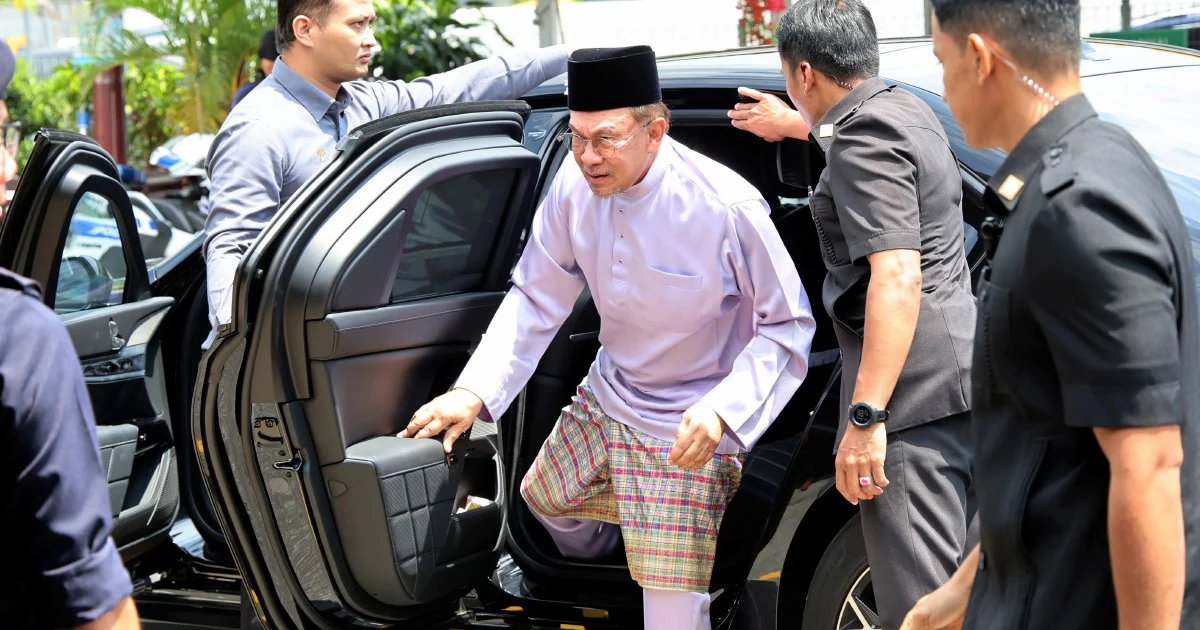
Seeking to set the tone for the Johor state election, Prime Minister Datuk Seri Anwar Ibrahim has issued a call for restraint and decorum among all parties vying for the state's leadership. Speaking in Dengkil, he stressed the importance of conducting campaigns that reflect respect for voters and the democratic process, urging political contestants to embody ethical standards rather than resort to tactics that might undermine public confidence in electoral integrity.
The prime minister's remarks represent a deliberate messaging strategy aimed at tempering political tensions ahead of a potentially competitive electoral battle in Johor, one of Malaysia's largest and strategically important states. His emphasis on avoiding arrogance suggests concern that campaigns could turn acrimonious or feature the kind of antagonistic rhetoric that has periodically characterised Malaysian electoral contests. By framing the election in terms of values and conduct, Anwar sought to elevate the discussion beyond mere party competition and position it within a broader narrative about Malaysia's democratic maturity.
Johor occupies a unique position within Malaysia's political landscape. The state has historically been a stronghold for the United Malays National Organisation, though recent electoral trends have shown greater competitiveness. An election in Johor therefore carries symbolic weight beyond state-level politics, potentially signalling shifts in voter preferences that could have ramifications for federal politics. Anwar's call for dignified campaigning can be read as an attempt to ensure that whatever the outcome, the state's political institutions emerge strengthened rather than fractured by divisive tactics.
The appeal to uphold good values reflects a broader discourse around democratic governance that has gained prominence in Malaysian political discourse. Anwar has positioned himself as an advocate for institutional reform and ethical leadership since assuming the prime ministerial position. By articulating expectations about campaign conduct before the election officially gathers momentum, he attempts to establish benchmarks against which voter behaviour and party actions can be measured. This proactive stance differs from reactive criticism of campaign tactics once they occur.
For Malaysian voters and observers, particularly those in Johor, the prime minister's exhortation carries implicit expectations about how parties should conduct themselves. In constituencies where multiple parties compete vigorously for votes, there exists inherent tension between aggressive advocacy and respectful discourse. Anwar's framing suggests that these need not be mutually exclusive—that parties can present compelling cases to voters while maintaining civility and avoiding condescension. This message holds particular relevance in Johor, where community cohesion and intercommunal harmony remain important considerations.
The regional context also matters. Southeast Asian democracies frequently grapple with questions about campaign ethics and the role of misinformation in electoral contests. By emphasising respect and good values, Anwar implicitly acknowledges that Malaysian elections operate within a broader environment where digital platforms enable rapid dissemination of unverified claims and inflammatory rhetoric. His call can be interpreted as tacit recognition that parties must be mindful of their responsibility in shaping the information ecosystem during campaigns.
From a practical standpoint, Anwar's intervention seeks to establish common ground among competing parties before divisive campaigning begins. Whether such appeals prove effective remains an open question in Malaysian politics, where partisan competition frequently generates heated exchanges. However, the formal nature of his statement, issued from a prominent location and carrying the weight of his office, signals that the prime minister considers campaign decorum sufficiently important to merit explicit public attention.
The timing of this appeal warrants consideration as well. Johor's state government faces pressures common to many Malaysian states, including questions about development, services, and economic management. By encouraging campaigns grounded in substantive issues and respectful presentation, Anwar arguably hopes to focus public discourse on these matters rather than on personal attacks or inflammatory rhetoric that deflects from policy considerations. This approach reflects a governance philosophy that emphasises accountability and performance as central to electoral legitimacy.
For political parties responding to Anwar's call, the statement creates both an opportunity and a constraint. Parties that embrace the call for respectful campaigns can position themselves as responsible actors committed to democratic norms. Conversely, any party perceived as violating this principle invites criticism not merely from opponents but from the prime minister's office itself, potentially damaging their standing with voters who value civil discourse. This dynamic could influence how campaigns actually unfold, even if parties differ on policy specifics.
Ultimately, Anwar's message reflects an understanding that elections are not merely mechanisms for selecting leaders but events that shape public trust in democratic institutions. The tone of campaigns, the rhetoric employed, and the values emphasised during electoral contests influence how citizens view their democracy's health. By urging all parties to campaign with respect and integrity, the prime minister has positioned himself as a custodian of democratic values, a stance that carries significance for how the Johor election will be perceived both domestically and regionally.

