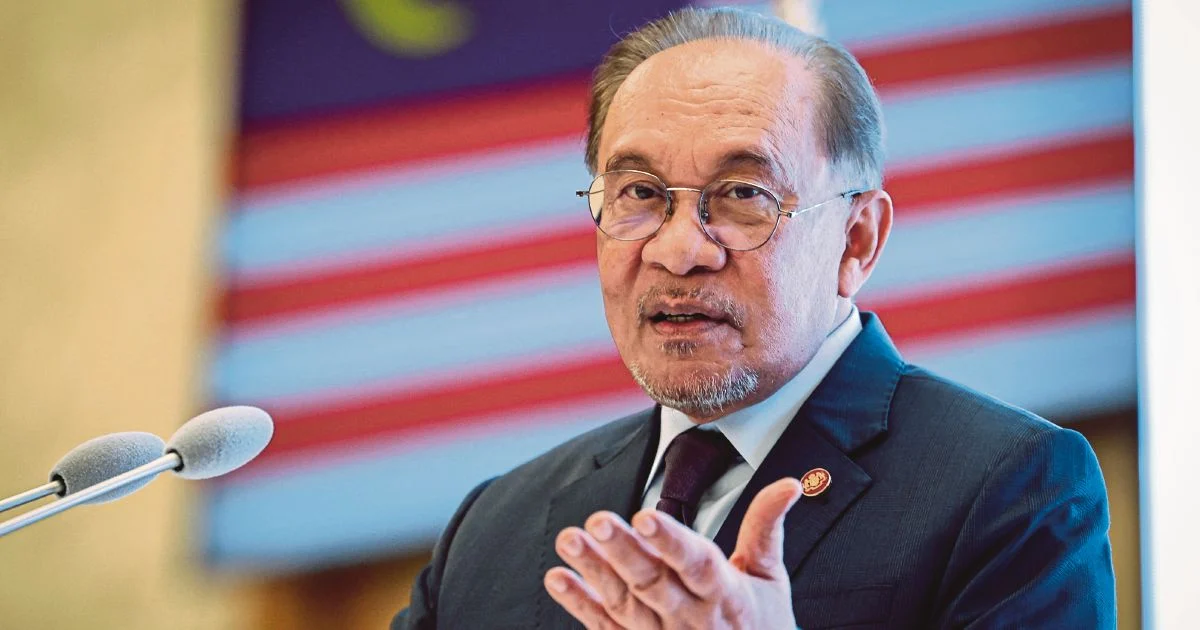
Prime Minister Datuk Seri Anwar Ibrahim has interpreted Turkmenistan's decision to bring Petronas into one of the world's largest gas reserves as a powerful endorsement of Malaysia's standing in the international business community. Speaking in Batu Kawan, Anwar framed the strategic partnership as tangible proof that global investors and energy-producing nations view Malaysia as a dependable, unified country capable of executing major economic initiatives.
The assignment of a stake in Turkmenistan's major gas field to Petronas represents a significant milestone for the Malaysian national oil company and carries implications well beyond energy production. International capital deployment decisions, particularly in the hydrocarbon sector, typically reflect deep assessments of geopolitical risk, institutional reliability, and long-term governance prospects. That a former Soviet republic with significant energy reserves chose Petronas as a partner suggests confidence in both the company's technical expertise and Malaysia's broader institutional environment.
From an economic perspective, access to Turkmenistan's reserves expands Petronas's portfolio and diversifies Malaysia's energy income sources beyond domestic fields. The Central Asian nation possesses some of the planet's most abundant natural gas, making partnership opportunities there highly sought after by international energy corporations. This positioning elevates Malaysia's role in global energy markets and strengthens Petronas's competitive standing against other national oil companies competing for similar assets.
Anwar's emphasis on stability and unity carries particular weight given Malaysia's recent political turbulence. The country experienced multiple changes of government between 2018 and 2023, creating uncertainty about continuity and policy direction. Foreign investors and state-owned enterprises from other nations typically view such instability cautiously, worrying that shifts in administration might affect contract terms or regulatory environments. The Turkmenistan deal therefore suggests that international actors now perceive Malaysia as having moved beyond that volatile period toward more predictable governance.
The confidence extended by Turkmenistan also reflects Petronas's hard-earned reputation as a technically competent and financially sound operator. The Malaysian company has built extensive experience across multiple offshore environments, from the shallow shelves of Southeast Asia to deep-water operations. This expertise makes Petronas an attractive partner for projects involving challenging geology or complex technical requirements, advantages that likely factored into Turkmenistan's selection decision.
For Malaysian policymakers, such international validation reinforces arguments that the country's political institutions have stabilised following years of considerable uncertainty. Economic growth depends substantially on investors' confidence that rules will remain consistent and contracts will be honoured. High-profile deals like the Petronas-Turkmenistan arrangement send reassuring signals to the broader investment community that Malaysia has restored the institutional credibility necessary for major long-term commitments.
The partnership also carries strategic dimensions beyond economics. Energy cooperation between Malaysia and Central Asia helps deepen ties across different regions of Asia. Southeast Asian nations have traditionally focused their international economic relationships toward Northeast and South Asia, with Central Asia remaining relatively peripheral. Petronas's expanded presence in Turkmenistan creates channels for broader Malaysian engagement in Central Asia, potentially opening doors for other Malaysian companies in sectors ranging from infrastructure to manufacturing.
For Petronas specifically, the arrangement adds to a portfolio already encompassing operations in numerous countries. The company has faced mounting pressure to deliver strong financial returns and maintain its position as one of Asia's leading energy corporations. Accessing productive assets in Turkmenistan strengthens Petronas's reserves base, ensuring the company can meet production targets and generate income streams for several decades. This long-term asset security supports Petronas's strategic planning and shareholder value creation.
The timing of Anwar's comments also matters. Coming as Malaysia positions itself to assume greater prominence in regional affairs and as the country seeks to attract foreign investment across multiple sectors, the Turkmenistan achievement provides welcome evidence of Malaysia's international appeal. Economic diplomacy increasingly underpins national influence, and successful business partnerships demonstrate that Malaysia remains a serious player in global markets.
For the broader energy sector in Malaysia, the deal underscores Petronas's continued dominance and the company's capacity to execute transactions at the highest international levels. Other Malaysian companies may view Petronas's success as an example of how Malaysian enterprises can compete effectively for major opportunities in distant markets. This demonstration effect potentially encourages other sectors to pursue comparable international expansion.
However, the broader significance extends to how Malaysia positions itself during a period of significant global energy transition. While gas remains important to energy portfolios, the long-term trajectory clearly points toward renewable energy and reduced hydrocarbon dependence. Petronas's involvement in traditional fossil fuel projects must ultimately be balanced against Malaysia's need to develop expertise and competitive advantages in clean energy technologies. The Turkmenistan deal provides immediate economic benefits, but Malaysia's long-term prosperity depends on successfully managing the transition to lower-carbon energy systems.
The partnership demonstrates that Malaysia remains capable of securing valuable international assets and forging strategic alliances with energy-rich nations. Whether this achievement translates into sustained economic advantage depends on how effectively Petronas manages the operational and financial dimensions of the arrangement. Nevertheless, Anwar's interpretation reflects genuine accomplishment: in a competitive global energy market, Turkmenistan's choice to include Petronas represents meaningful recognition of Malaysian capabilities and a vote of confidence in the nation's institutional reliability.

