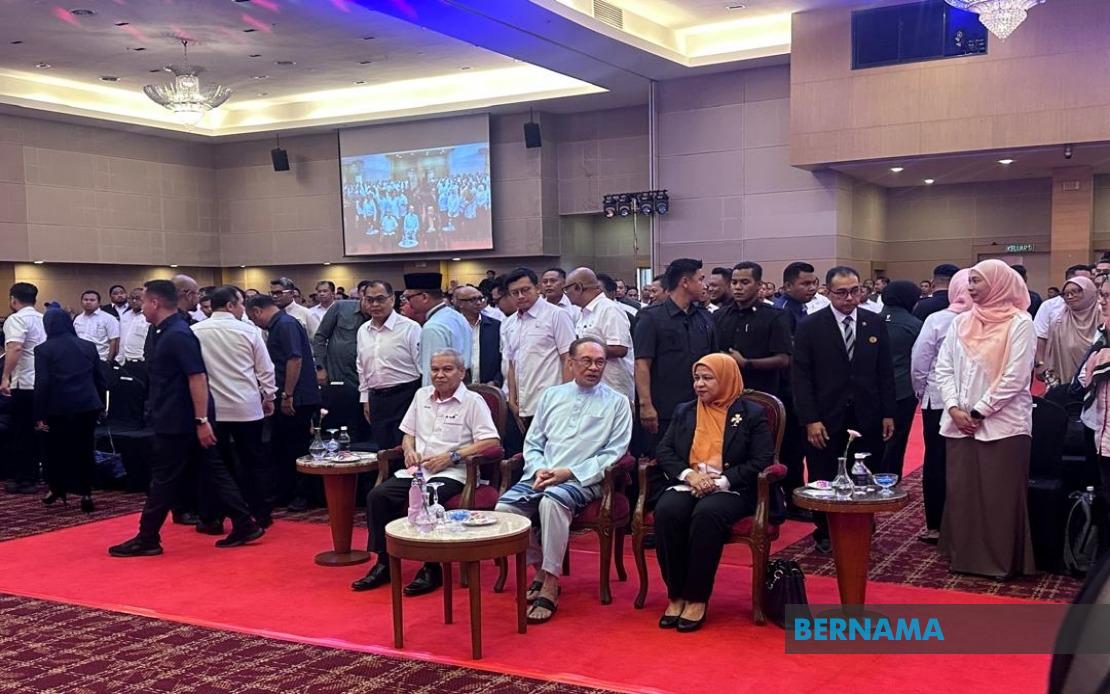
Prime Minister Datuk Seri Anwar Ibrahim has signalled his intention to withhold public comment on the Federal Land Development Authority until an ongoing investigation reaches completion, underscoring the government's methodical approach to addressing longstanding governance questions surrounding the agency. Speaking at Tenera Hotel in Bangi following a session with FELDA executives, Anwar emphasised that releasing premature findings would be counterproductive, stating instead that he would await the full investigation report from the Special Task Force before proceeding with any formal disclosure.
The investigation, which has already commenced its work, is expected to deliver comprehensive findings within months, according to earlier media reports. The scope encompasses multiple dimensions of FELDA's operations, from administrative frameworks and organisational structures to the identification of historical management shortcomings. However, Anwar placed particular emphasis on forward-looking reforms rather than dwelling exclusively on historical grievances. His remarks suggest that while accountability for past decisions remains relevant, the primary focus will be charting a corrective course for the future.
The timing of this investigation carries significant weight within Malaysia's political landscape. FELDA, a crucial institution affecting hundreds of thousands of smallholder farmers nationwide, has faced persistent scrutiny regarding land management practices, transparency, and financial stewardship. The establishment of the Special Task Force itself represents a tangible response to public concern and parliamentary pressure regarding the authority's operations. By committing publicly to release the completed report, Anwar has positioned transparency as a cornerstone of his administration's governance agenda.
Anwar's reference to the Royal Commission of Inquiry report on Tabung Haji Board operations provides an instructive parallel. That document, released following months of investigation, offered Malaysian citizens direct access to findings and recommendations concerning another statutory body plagued by management controversies. By invoking this precedent, the Prime Minister signals his intention to maintain consistency in how his government handles institutional accountability matters. The comparison suggests that citizens can expect similarly thorough documentation and reasoned analysis from the FELDA investigation.
The presence of FELDA chairman Tan Sri Ahmad Badri Mohd Zahir and director-general Datuk Dr Suzana Idayu Wati Osman at the Friendly Session underscores ongoing coordination between the Prime Minister's office and FELDA leadership. Such engagement, while maintaining the investigative process's independence, demonstrates that reform efforts are not adversarial but collaborative in nature. The inclusion of top management in these discussions signals an intention to build institutional buy-in for whatever changes emerge from the Task Force recommendations.
For Malaysian policymakers and development specialists, the FELDA investigation holds broader implications for how federal authorities manage agricultural sector engagement and land development. The authority remains central to rural economic policy, affecting smallholder livelihoods across multiple states. Any recommendations emerging from this investigation could reshape how FELDA allocates resources, structures governance, and reports to stakeholders. The ripple effects may extend to policy frameworks governing other statutory bodies operating within similar mandates.
Anwar's commitment to public disclosure, contingent upon investigation completion, reflects evolving expectations around institutional transparency within Malaysia. Citizens increasingly demand accessible documentation of how government bodies operate and how resources are deployed. By pledging to release the full report rather than merely summarising findings or withholding sensitive portions, the Prime Minister has acknowledged this democratic imperative. The decision aligns with broader governance reform narratives that have gained traction within the current administration.
The investigation's focus on both historical problems and contemporary management practices reflects nuanced understanding of institutional reform. Identifying past failures remains essential for accountability purposes, yet fixating exclusively on historical grievances can obscure present operational realities. By directing attention toward current management practices and future direction, the Task Force appears positioned to deliver actionable recommendations rather than purely retrospective analysis. This dual focus should yield findings with practical utility for stakeholders seeking improved performance.
For Malaysian agricultural sector observers, timing of the FELDA findings carries operational significance. The authority manages substantial landholdings, allocates development resources, and influences commodity production strategies affecting national self-sufficiency in key agricultural products. Any management restructuring recommended by the investigation could influence planting patterns, infrastructure investment priorities, and farmer support mechanisms. Understanding these recommendations will be essential for agricultural sector participants and development planners.
Anwar's measured approach to the investigation results, emphasising completion before announcement, demonstrates restraint that may frustrate those seeking immediate accountability measures. However, the deliberate pace serves important purposes. Rushing findings could invite accusations of incomplete analysis or politically motivated conclusions. By allowing the Task Force adequate time and committing upfront to full transparency, the Prime Minister creates conditions for findings that stakeholders across the political spectrum might accept as credible.
The investigation represents part of a broader institutional assessment that has characterised the current administration's early tenure. Beyond FELDA, scrutiny of how statutory bodies operate has become routine. This pattern reflects commitment to ensuring that public agencies operate with appropriate oversight and accountability. Whether focused on FELDA, Tabung Haji, or other institutions, such investigations serve to restore public confidence in government administration and demonstrate that no authority operates beyond democratic accountability.
Moving forward, the release of findings will likely trigger substantive discussion about necessary reforms. Whether recommendations involve structural reorganisation, policy reorientation, leadership changes, or resource reallocation remains unknown pending investigation completion. However, Anwar's advance commitment to transparency ensures that Malaysian citizens will access the same information that informs policy decisions. This commitment to public disclosure, if maintained consistently across other institutional investigations, could contribute meaningfully to restoring faith in government governance.

