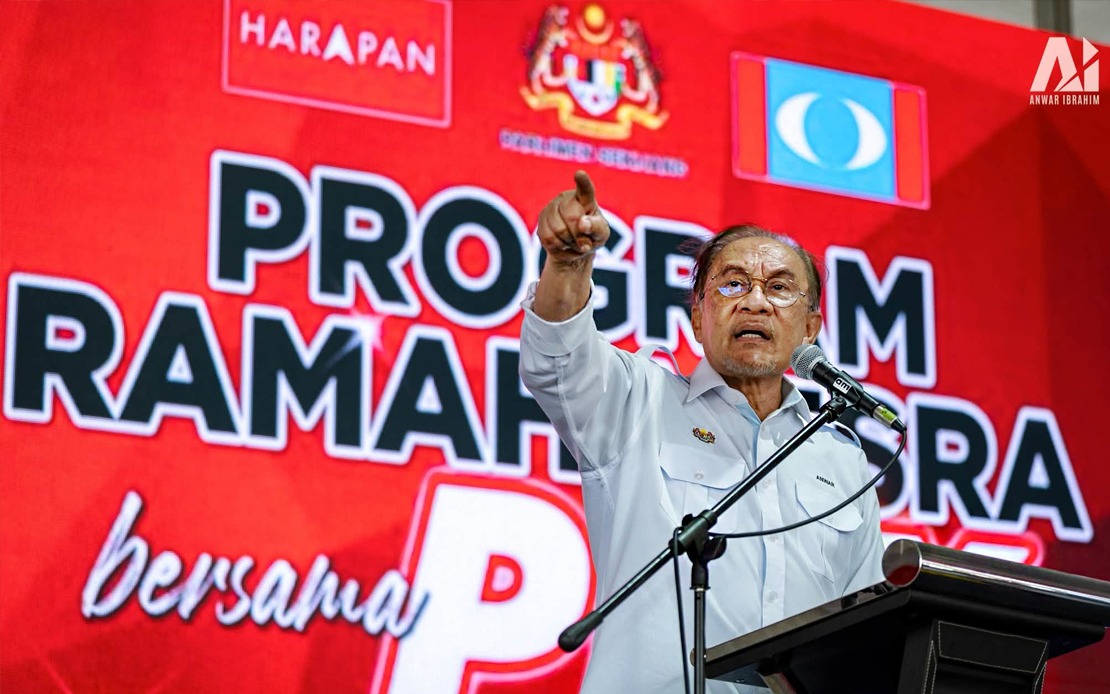
Prime Minister Datuk Seri Anwar Ibrahim has committed to directly addressing the deteriorating situation facing Malaysia's durian farming community during high-level diplomatic talks with Chinese Premier Li Qiang, pledging to leverage bilateral relations to unlock greater export opportunities. Speaking at a constituency gathering in Tangkak, Anwar indicated that the severe price contraction affecting growers across Peninsular Malaysia represents a priority issue that warrants intervention at the most senior levels of government. The simultaneous convergence of durian harvest seasons across multiple regions has flooded domestic and regional markets, creating downward pressure on prices and substantially eroding farmer incomes during what should be a profitable period.
The Prime Minister's public commitment signals the gravity with which the government now views the agricultural crisis. Anwar framed the challenge not merely as a supply-demand imbalance but as a strategic trade opportunity requiring diplomatic finesse. He acknowledged that China maintains rigorous standards for imported agricultural products, yet expressed confidence that negotiation and collaborative approaches could facilitate greater Malaysian durian penetration into the Chinese market. This represents a calculated strategy to redirect supply pressures by tapping into demand from one of the world's largest consumer bases, thereby absorbing excess inventory and supporting price recovery.
The political and economic implications of this commitment extend beyond immediate relief for durian cultivators. Malaysia's durian industry constitutes a significant agricultural sector, particularly in states such as Johor, Pahang, and Perak, where farming communities form substantial voting blocs and hold considerable cultural significance within their regions. The visible political engagement by Anwar—demonstrated through his personal advocacy and willingness to dedicate diplomatic bandwidth to the issue—underscores the electoral weight of agricultural constituencies within the Malaysian political calculus, particularly given the recent state-level elections and ongoing consolidation of Pakatan Harapan's support base.
From a trade perspective, expanding durian exports to China would represent a significant commercial breakthrough for Malaysian agriculture. China's rising middle class and increasing consumption of premium food products have created substantial demand for exotic fruits, with durian commanding premium pricing among affluent consumers. However, China's stringent phytosanitary requirements and quality certifications present genuine obstacles that have historically limited Malaysian durian's market penetration compared to Thai and Vietnamese competitors. The government's diplomatic intervention aims to streamline certification processes and negotiate preferential trading terms that would enhance Malaysian durian's competitive positioning within the Chinese marketplace.
Anwar's remarks also underscored a broader narrative regarding Malaysia's fiscal management and commitment to protecting domestic living standards. The Prime Minister directed particular emphasis toward fuel pricing policy, noting that Malaysia maintains among the world's lowest retail fuel costs through sustained government subsidy mechanisms despite considerable international pressure. The specific figures Anwar cited—RM3.37 per litre for RON95 and RM3.97 per litre for diesel at market rates, against subsidised prices of RM1.99 and RM2.10 respectively under the BUDI MADANI initiative—illustrate the substantial financial burden the government absorbs to shield consumers from volatile global petroleum markets.
This emphasis on fuel subsidies within the same public address as agricultural support reflects a deliberate political strategy emphasising the government's commitment to supporting multiple constituency groups simultaneously. Anwar framed subsidy maintenance as a principled policy stance that prioritises citizens' welfare over orthodox economic theory, arguing that automatic price increases would constitute an unjustifiable burden on ordinary households despite theoretical economic justifications. The rhetorical positioning suggests a government conscious of cost-of-living pressures affecting broad population segments and determined to demonstrate tangible mitigation efforts across multiple sectors.
The geopolitical context underpinning fuel price pressures adds further dimension to Anwar's governance narrative. He attributed petroleum market volatility to supply disruptions stemming from Middle Eastern tensions involving Iran and the United States—tensions that have indeed created genuine uncertainty within global energy markets throughout 2024. By acknowledging these external factors whilst simultaneously maintaining that Malaysia would not pass these costs to consumers, Anwar positioned the government as actively protecting Malaysia from international economic forces beyond its direct control. This messaging carries particular resonance in Southeast Asia, where concerns about external economic vulnerability remain culturally and politically salient.
The political gathering itself, attended by Pakatan Harapan leadership including Johor Election director Datuk Seri Amirudin Shari and Deputy Natural Resources Minister Syed Ibrahim Syed Noh, indicates coordinated messaging around agricultural support and economic protection. The presence of the Gambir state constituency candidate alongside senior party figures suggests deliberate construction of narratives linking national leadership commitment to constituency-level representation. This multi-layered political engagement demonstrates sophisticated awareness that rural and agricultural constituencies require personalised political attention beyond national policy announcements.
For Malaysian farmers and agricultural stakeholders, the practical implications of Anwar's pledge remain contingent upon successful negotiation outcomes during his scheduled China visit. Diplomatic commitments, whilst politically meaningful, do not automatically translate into regulatory changes or market access expansion. Chinese authorities maintain substantial discretion regarding import standards and quotas, and negotiations may encounter technical barriers that resist simple political resolution. However, the public nature of Anwar's commitment creates accountability expectations that will influence government pressure on relevant agricultural and trade authorities to pursue the matter vigorously.
The broader context reveals structural vulnerabilities within Malaysian agriculture regarding market diversification and price stability. The durian sector's heavy dependence on limited export markets—predominantly Singapore and regional Southeast Asian buyers—creates dangerous concentration risk that seasonal oversupply episodes expose repeatedly. Developing more resilient market relationships with major emerging consumer economies like China represents a logical long-term strategic imperative, yet implementation requires sustained diplomatic engagement alongside parallel efforts to improve supply chain coordination domestically.
Looking ahead, the success of Anwar's initiative will substantially influence government credibility with agricultural constituencies, particularly in key electoral states where farming communities retain demographic and political significance. If negotiations with Li Qiang produce tangible market access improvements, the government can rightfully claim responsive action that demonstrates senior leadership commitment to sector-specific challenges. Conversely, failure to achieve meaningful outcomes may feed perceptions that political promises toward rural constituencies lack substantive backing, potentially creating electoral vulnerabilities during subsequent state or general elections.
The interconnection between agricultural crisis management and broader fiscal policy—as exemplified through simultaneous discussion of durian support and fuel subsidies—suggests a government attempting to address cost-of-living pressures comprehensively across multiple population segments. Whether these interventions prove economically sustainable long-term remains an open question that economists and policymakers must continue monitoring. Nevertheless, the political commitment is unmistakably clear, with Anwar personally investing diplomatic capital in pursuing solutions that extend beyond conventional agricultural ministry channels into the highest levels of international relations.

