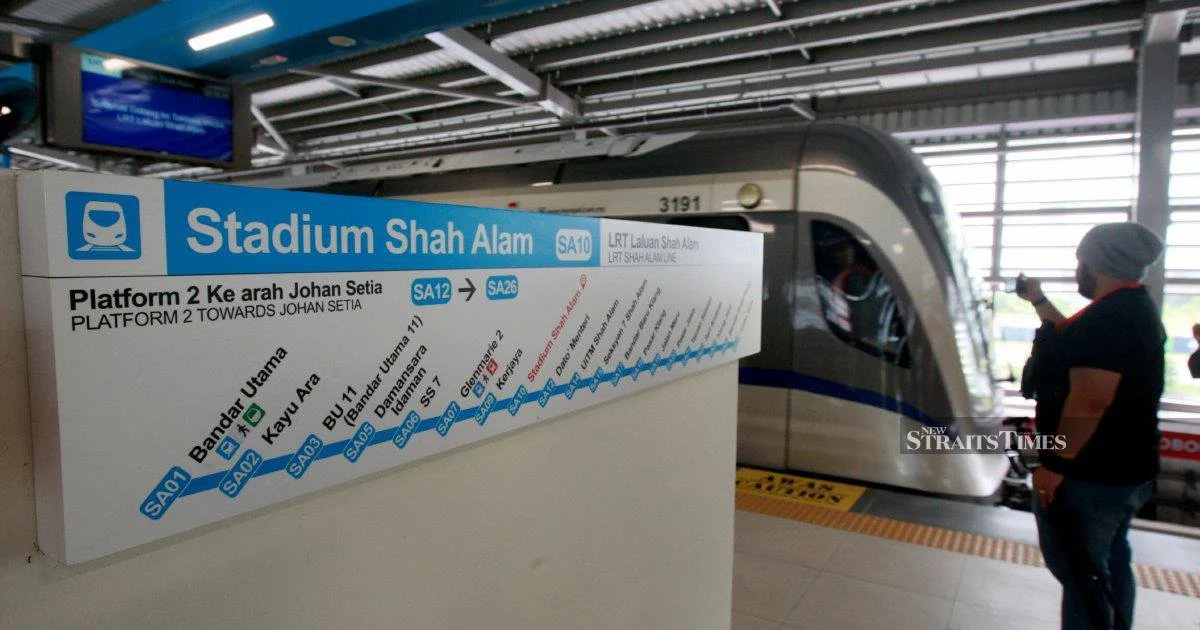
Prime Minister Datuk Seri Anwar Ibrahim is set to officially open the Light Rail Transit Line 3 Shah Alam extension on Sunday, marking a significant milestone in the Klang Valley's public transportation infrastructure. The newly extended line will begin commercial operations for passengers on Monday, further expanding the rapid transit network that serves Malaysia's economic heartland.
The LRT3 Shah Alam line represents a substantial investment in regional connectivity, designed to alleviate congestion and provide commuters with an efficient alternative to road travel. The extension enhances the broader LRT3 system, which currently connects the city centre with key residential and commercial nodes throughout the Selangor region. For residents of Shah Alam and surrounding municipalities, the new line promises reduced travel times and improved access to employment centres and commercial districts.
The timing of the launch reflects the government's commitment to advancing public transport infrastructure across the Klang Valley. Datuk Seri Anwar Ibrahim's administration has prioritised improving integrated transportation networks as part of its broader economic and social development agenda. The Shah Alam extension demonstrates continued investment in mass rapid transit systems that can support long-term urban growth and sustainability objectives in one of Malaysia's most densely populated regions.
For Malaysian commuters and observers of transport policy, this launch carries implications beyond immediate passenger convenience. The expansion signals government momentum on infrastructure projects that can reduce traffic congestion, lower transportation costs for working families, and support economic activity by improving urban mobility. The LRT3 network has become increasingly critical as the Klang Valley population continues to grow, with demand for reliable public transit outpacing current capacity.
The Shah Alam line extends the LRT3 network to serve a major industrial and residential hub in Selangor. The extension connects multiple stations within the municipality, providing direct access to commercial zones, residential areas, and business parks. This geographical expansion strengthens the integration of Shah Alam with the broader Klang Valley economic ecosystem, potentially encouraging investment in areas along the new corridor.
The LRT3 system itself has undergone significant development since its initial phases. The addition of the Shah Alam extension represents years of planning, construction, and investment by both public and private entities involved in the project. The successful completion of this phase demonstrates Malaysia's capacity to execute large-scale infrastructure projects, despite the complexities inherent in rapid transit construction within established urban environments.
For daily commuters and businesses operating in Shah Alam, the operational commencement on Monday provides tangible benefits. The new line promises to reduce journey times between Shah Alam and other parts of the Klang Valley, offering particular advantage to workers and students who currently rely on road-based transportation. Businesses along the route may experience improved accessibility for customers and employees, potentially supporting economic vitality in the corridor.
The launch also reflects evolving transport planning strategies across Southeast Asia. Malaysia's investment in modern rapid transit systems places it alongside regional peers pursuing similar infrastructure modernisation. The LRT3 expansion, combined with ongoing developments in other transit modes, contributes to the region's broader shift toward integrated public transportation networks capable of supporting urban development at scale.
Prime Minister Anwar Ibrahim's participation in the official launch underscores the political significance attached to infrastructure completion. Government leaders across the region have increasingly recognised that visible progress on transport projects resonates strongly with urban voters and demonstrates administrative effectiveness. The Sunday ceremony will provide an opportunity to highlight the administration's commitment to delivering completed projects and improving quality of life for Klang Valley residents.
Looking forward, the Shah Alam extension sets the stage for potential further developments within the LRT3 system and complementary transit initiatives. The success of this phase, measured in passenger adoption rates and operational efficiency, will likely inform decisions regarding future expansion plans and resource allocation within Malaysia's public transport sector. Regional observers will monitor passenger uptake and integration with other transport modes to assess the broader effectiveness of the Klang Valley's rapidly evolving transit infrastructure.
The operational commencement next week marks the transition from project completion to real-world service delivery. Early passenger experiences and system performance during the initial operational period will be crucial indicators of whether the extension successfully achieves its design objectives. For Malaysian commuters seeking alternatives to road-based transportation, the LRT3 Shah Alam line represents a concrete manifestation of infrastructure investment aimed at improving urban mobility and supporting the country's long-term development goals.

