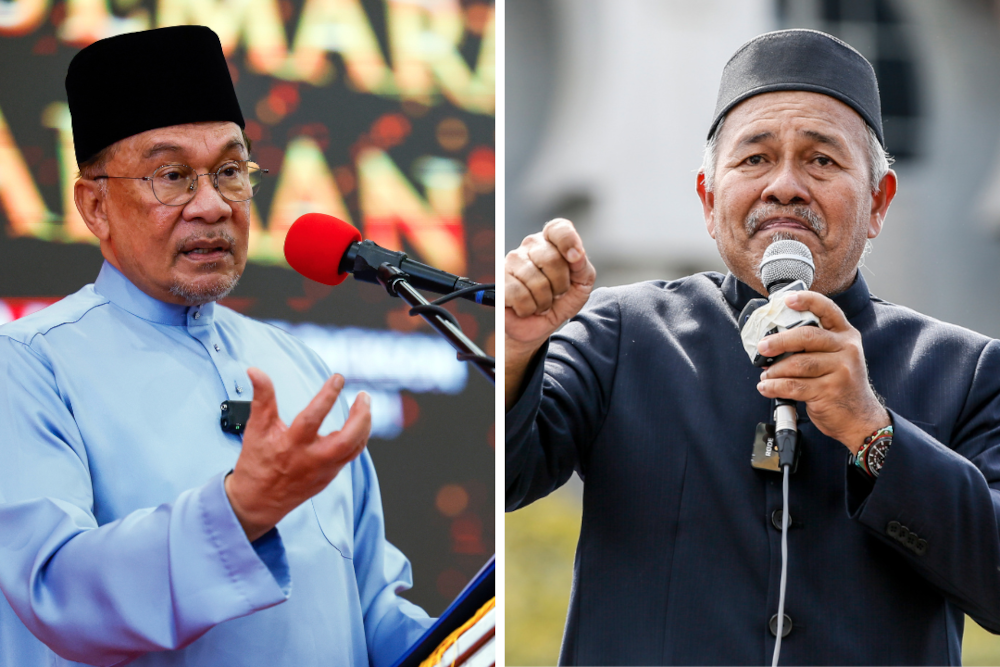
Prime Minister Datuk Seri Anwar Ibrahim has escalated tensions with the Pan-Malaysian Islamic Party by threatening legal action against its deputy president Datuk Seri Tuan Ibrahim over alleged defamatory statements. Through his legal representatives, Anwar has issued a formal 48-hour ultimatum demanding a response, with the implicit warning that failure to comply will trigger a defamation lawsuit.
The confrontation marks a significant hardening of political rhetoric between the Prime Minister and senior PAS leadership, reflecting deepening fractures within Malaysia's political landscape despite both figures operating within coalitional structures at federal and state levels. The precise nature of the allegations remains undisclosed, though such legal threats typically arise from public statements deemed to damage reputational standing or contain false factual claims capable of causing material harm.
Defamation litigation in Malaysia represents a powerful political tool, albeit one fraught with procedural complexity and uncertain outcomes. The civil burden of proof requires plaintiffs to demonstrate that statements were false, communicated to third parties, and caused measurable damage to reputation. Tuan Ibrahim and PAS would likely contest any allegations of defamatory intent, potentially invoking qualified privilege protections available to politicians engaging in parliamentary or public debate on matters of political significance.
The timing of this confrontation carries particular weight given PAS's evolving role within Malaysian politics. The party maintains simultaneous influence across multiple state governments while navigating its relationship with Anwar's Pakatan Harapan coalition at the federal level. Such internal tensions, when they erupt into legal spheres, risk destabilizing the fragile political equilibria that have characterized Malaysian governance since 2020.
Anwar's decision to pursue legal remedies rather than engage in political counter-messaging suggests the Prime Minister views the statements in question as sufficiently serious or damaging to warrant judicial intervention. This approach differs markedly from the verbal sparring and public rebuttals that typically characterize political disputes, indicating genuine concern about reputational consequences or strategic calculation regarding messaging effectiveness.
PAS deputies and senior party members have historically maintained combative public stances toward Anwar, often criticizing his leadership, governance decisions, and political alliances. Religious and ideological differences between PAS's Islamist orientation and Anwar's centrist positioning have frequently surfaced in parliamentary proceedings and public statements. However, escalating these disputes into formal legal frameworks introduces new dynamics and potential consequences for both parties.
The defamation threat also reflects broader Malaysian political volatility, where alliance formations remain unstable and opportunistic. Though PAS and Anwar's coalition partners cooperate on certain legislative matters, substantive policy divergence and competing political ambitions ensure recurring friction. Legal action, once initiated, becomes difficult to contain and can entrench positions on both sides, making eventual reconciliation more challenging.
For Tuan Ibrahim and PAS, the 48-hour response window presents a genuine dilemma. Capitulation through retraction or apology risks undermining party credibility with its base supporters who expect leadership to maintain assertive political postures. Conversely, allowing the deadline to expire without substantive response invites expensive litigation that could consume party resources and occupy leadership attention during critical political periods.
The potential defamation case would likely proceed through Malaysian civil courts, with discovery processes potentially exposing both sides to uncomfortable revelations. Legal costs for both parties would accumulate rapidly, and the judicial timeline for such cases typically extends across multiple years, ensuring prolonged reputational uncertainty. Such prolonged litigation also risks becoming a persistent campaign issue affecting electoral calculations in future contests.
Moread context matters considerably here. Malaysian defamation jurisprudence has evolved unevenly, with courts sometimes applying protective interpretations favoring free political speech and other times adopting restrictive readings limiting public critique. The specific factual foundation underlying Anwar's claim—whether involving concrete false statements, insinuation, or contextual distortion—will substantially determine litigation prospects and ultimate judicial outcomes.
From a Southeast Asian perspective, this confrontation illuminates persistent challenges within regional democracies regarding the intersection of political competition, legal systems, and power consolidation. Malaysia's constitutional framework provides mechanisms for both unfettered political expression and reputational protection, yet their practical interaction remains contested and politically consequential.
For Malaysian political observers, the coming 48 hours will determine whether this dispute moves toward legal resolution or achieves negotiated settlement. Either pathway carries implications for coalition stability, parliamentary dynamics, and the broader trajectory of Malaysian governance moving forward. The incident also reinforces questions about whether political disagreements are increasingly being channeled through legal mechanisms rather than resolved through conventional political negotiation.

