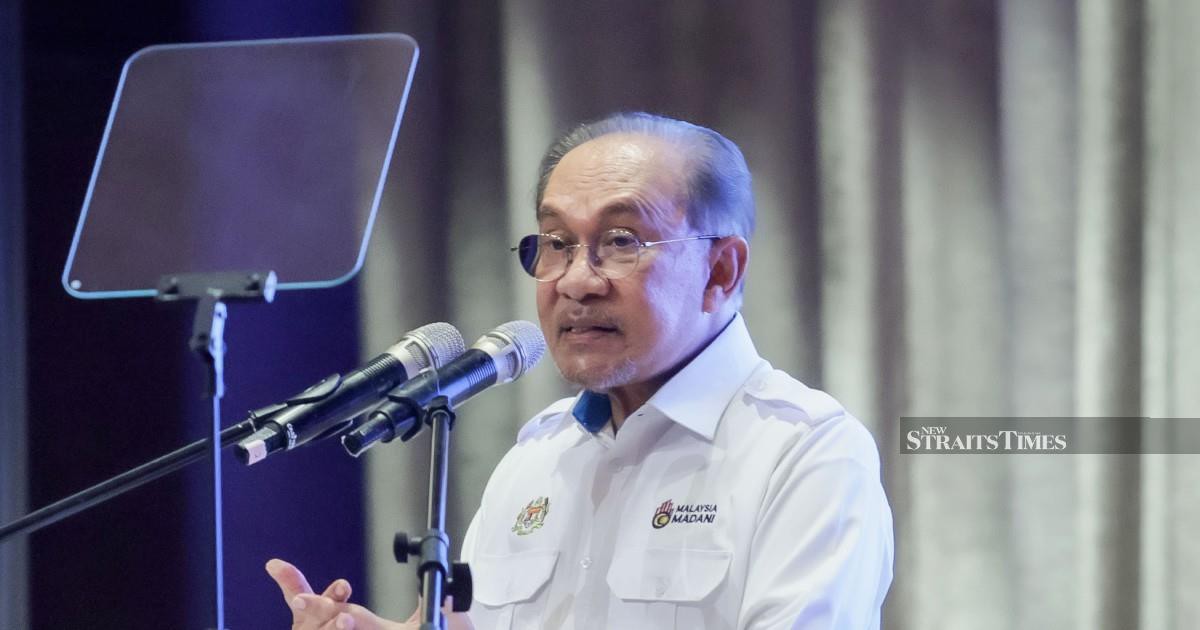
Prime Minister Datuk Seri Anwar Ibrahim sought to reframe the significance of the Tabung Haji Royal Commission of Inquiry report, emphasising during remarks in Seremban that its release represents a forward-looking exercise rather than an exercise in historical accountability. The clarification comes as the long-awaited report enters public discourse, following months of anticipation within financial and political circles regarding its findings on Malaysia's principal Islamic pilgrimage financing institution.
The Tabung Haji inquiry was commissioned to investigate operational and governance issues at the fund, which manages savings and pilgrimage arrangements for hundreds of thousands of Malaysian Muslims. The institution has faced scrutiny in recent years over its investment strategies and financial performance, particularly following substantial losses that affected depositors' returns. By positioning the report as a constructive document rather than a retrospective analysis of failures, Anwar appears intent on steering public attention toward remedial action and systemic improvements.
Tabung Haji occupies a unique space within Malaysia's financial ecosystem, combining the functions of a savings bank and pilgrimage facilitator. Its governance structures and investment approaches have long attracted debate among observers concerned with Islamic finance standards and consumer protection. The Royal Commission of Inquiry process itself represented an acknowledgment by the government that institutional questions required formal investigation, signalling a commitment to transparency that extends beyond routine regulatory oversight.
Anwar's framing of the report as prospective rather than retrospective reflects a broader political calculation. Accountability for previous management decisions could implicate figures from earlier administrations, potentially reopening divisions within the political establishment. By emphasising future-oriented reforms, the Prime Minister creates space for constructive dialogue around solutions without necessarily triggering contentious debates over culpability and consequences for past actors. This approach mirrors strategies employed across multiple sectors where reform initiatives balance institutional improvement with political feasibility.
The timing of the report's release intersects with broader concerns about confidence in Malaysia's financial institutions. Tabung Haji's difficulties reverberated beyond its direct stakeholder base, affecting public perception of fund management generally and contributing to broader conversations about governance standards across government-linked entities. How the government chooses to present findings and chart corrective paths carries implications for public trust in institutional reform more broadly.
For the pilgrimage fund's depositors and prospective pilgrims, the substantive contents of the inquiry remain paramount regardless of framing. The report presumably contains specific findings regarding governance lapses, investment decisions, and operational challenges. Whether the government implements recommendations comprehensively will ultimately determine whether the inquiry fulfils its institutional purpose. Framing rhetoric matters for political narrative management, yet tangible systemic changes remain the ultimate measure of the inquiry's value.
The inquiry process itself underscores Malaysia's commitment to formal investigation mechanisms for addressing institutional controversies. Unlike settings where such concerns might generate only behind-closed-doors deliberations, the establishment of a Royal Commission of Inquiry provides at least theoretical access to systematic fact-finding. However, the translation of investigative findings into concrete reforms depends substantially on political will and bureaucratic capacity to implement recommendations, neither of which is guaranteed regardless of how positively official statements frame the process.
Within Southeast Asia's financial landscape, Malaysia's experience with Tabung Haji reflects broader challenges facing Islamic financial institutions as they navigate complex investment environments and regulatory requirements. The inquiry's conclusions and the government's response could offer instructive lessons for peer nations managing similar institutions, particularly regarding governance structures appropriate for entities combining savings and religious functions.
Anwar's comments signal that the government anticipates the report containing material that could prove embarrassing or controversial for previous administrations. By establishing expectations that the document serves forward-planning rather than blame assignment, official messaging attempts to inoculate against potential political fallout. Whether this framing succeeds depends partly on report contents and partly on how opposition figures and media commentators interpret and amplify specific findings.
For Malaysians with money held in Tabung Haji, practical questions about fund security, return prospects, and governance reforms matter most. The institutional legitimacy that the government seeks to preserve through its messaging approach ultimately depends on demonstrable improvements in management and performance. Rhetorical positioning can shape immediate political dynamics, but sustained public confidence requires evidence that the inquiry catalysed meaningful institutional change.
The release of the Royal Commission of Inquiry report represents a critical juncture for Tabung Haji's trajectory and, by extension, for public confidence in major government-linked financial institutions. While Anwar's emphasis on future-oriented reform may serve immediate political purposes, the enduring significance of the inquiry will ultimately be determined by the seriousness with which recommendations are pursued and the substantive improvements they generate within Malaysia's pilgrimage financing system.

