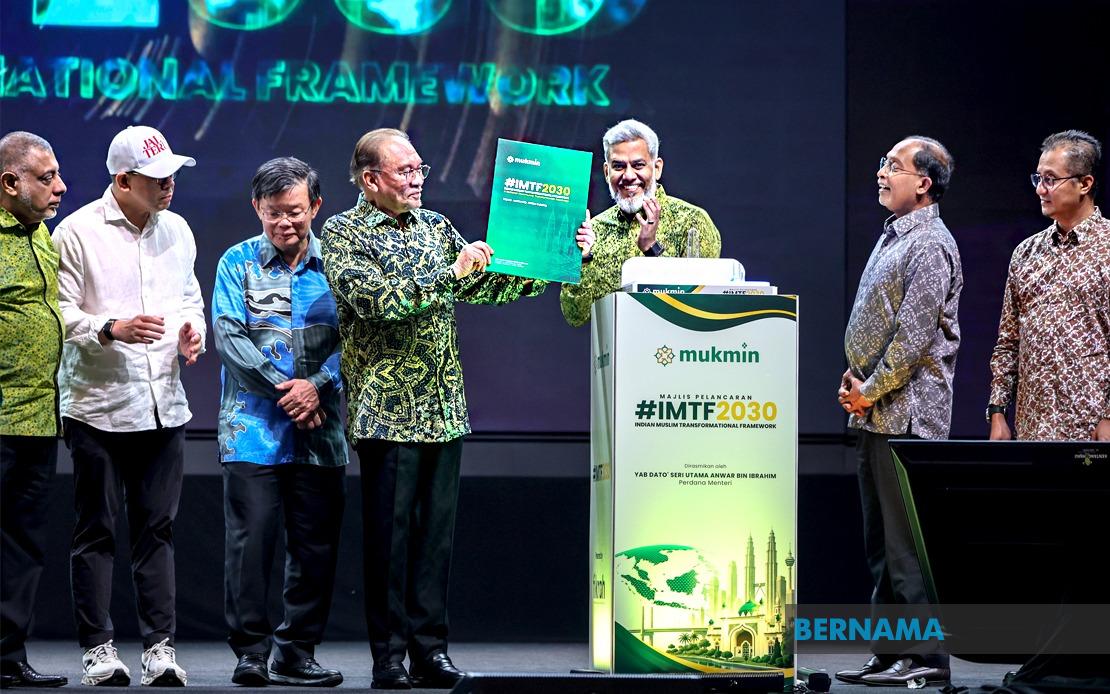
Prime Minister Datuk Seri Anwar Ibrahim has instructed relevant government ministries and departments to clear the backlog of foreign worker employment applications within a single month, with particular emphasis on expediting approvals for the restaurant industry. Speaking at the launch of the Indian Muslim Transformational Framework 2030 in Butterworth on July 24, Anwar acknowledged the sector's acute staffing crisis while signalling that the government would balance labour market needs against broader immigration concerns.
The restaurant industry has emerged as a focal point in Malaysia's ongoing debate over foreign worker policies. Operators across the country have reported significant difficulties in filling vacant positions, with applications languishing in government bureaucracy. Anwar's directive represents a tangible response to industry pressure, though it comes with the caveat that any expansion in foreign worker intake must remain controlled and strategic rather than a blanket opening of labour market access.
Anwar's comments reveal the central tension at the heart of Malaysia's foreign worker policy. While acknowledging the genuine operational constraints faced by restaurant owners, he cautioned against allowing the country to become overly dependent on foreign labour, particularly unskilled workers. The Prime Minister emphasised that Malaysia already hosts a substantial migrant workforce, and policymakers must carefully weigh expansion requests against broader economic and social considerations. This stance reflects the government's attempt to maintain a delicate equilibrium between employer demands and labour market protections.
The government's existing framework establishes clear numerical targets for foreign worker employment. Under the 12th Malaysia Plan, foreign workers cannot exceed 15 per cent of the national workforce. More ambitiously, the 13th Malaysia Plan targets reducing this proportion to just 10 per cent by 2030. These figures underscore the government's intention to shift Malaysia toward greater self-sufficiency in labour supply, even as certain sectors face immediate shortages. The one-month deadline for resolving application backlogs must therefore be understood within this broader strategic context.
Communications Minister Datuk Seri Fahmi Fadzil, acting as government spokesman, had previously indicated that the Cabinet would review foreign worker recruitment requirements across multiple sectors beyond restaurants, including construction. This suggests that Anwar's focus on restaurants reflects a priority ordering rather than exclusive attention to that industry. The government appears to be adopting a sectoral approach, evaluating which industries face the most acute staffing crises and which can justify exceptions to the broader policy of restraint.
The timing of this announcement carries significance for Malaysia's economic recovery trajectory. The restaurant and hospitality sectors have faced persistent challenges in recruiting and retaining workers since pandemic-era disruptions. Labour-intensive service industries across Southeast Asia are grappling with similar workforce deficits, making this a regional issue rather than an isolated Malaysian problem. How successfully the government executes its one-month resolution plan could set a precedent for other nations in the region facing comparable pressures.
Anwar, who holds both the Prime Minister and Finance Minister portfolios, also used the Butterworth occasion to announce additional government support for vulnerable communities. An allocation of RM2 million to Pertubuhan Gabungan MUKMIN Nasional was designated for welfare and educational programmes serving children from low-income families. This announcement, though distinct from the foreign worker discussion, underscores the government's multi-pronged approach to addressing workforce and social development challenges simultaneously.
The Indian Muslim Transformational Framework 2030 launched at the event represents a comprehensive five-year strategy targeting excellence in education, entrepreneurship, and leadership within that community. The framework acknowledges that addressing labour shortages cannot occur in isolation from broader investments in human capital development, education access, and skills training. By allocating resources to educational initiatives for disadvantaged children, the government signals recognition that long-term labour market solutions depend on upstream investments in workforce capability.
The one-month timeline Anwar imposed constitutes a meaningful pressure point on the bureaucratic machinery. Government agencies responsible for processing foreign worker permits have historically struggled with caseload management, contributing to the backlog that prompted industry complaints. By establishing a specific deadline and making it a public commitment, Anwar has elevated accountability. Ministries now face reputational risk and potential administrative consequences should they fail to deliver results within the specified timeframe, creating direct incentives for accelerated processing.
For Malaysian businesses operating in labour-intensive sectors, the directive offers qualified hope. Rather than a complete liberalisation of foreign worker policies, which would contradict the government's stated long-term labour market objectives, the one-month resolution represents a pragmatic accommodation of urgent sectoral needs. Restaurants facing immediate staffing crises can expect streamlined application processing, though approval rates may remain constrained by the numerical limits established in Malaysia's broader labour plans.
The announcement also carries implications for the region's labour market dynamics. As Malaysia adjusts its foreign worker intake, recruitment patterns across Southeast Asia may shift. Workers who might have sought employment in Malaysia could instead direct applications toward Thailand, Singapore, or other regional destinations. Similarly, Malaysian employers unable to secure foreign workers through official channels might be tempted by informal recruitment networks, a development the government likely hopes to prevent through responsive policy adjustments.
Looking ahead, the success of this initiative will be measured not merely by whether the one-month deadline is met, but by whether the streamlined processes established during this period prove sustainable. If government agencies respond to the pressure by creating permanent improvements in application processing efficiency, the arrangement could establish a new operational standard. Conversely, should agencies revert to slower processing once the deadline passes, the restaurant industry will have gained only temporary relief rather than structural improvement.
Anwar's approach reflects an emerging recognition within Malaysian policymaking that labour market policy requires flexibility and responsiveness alongside long-term strategic discipline. The Prime Minister is neither capitulating to business pressure for wholesale labour market opening nor rigidly adhering to numerical targets regardless of sectoral realities. Instead, he is attempting to calibrate policy by addressing immediate bottlenecks while maintaining overarching commitments to reducing foreign worker dependency by 2030. Whether this delicate balancing act proves sustainable will become evident as the one-month deadline approaches and agencies report on their progress.

