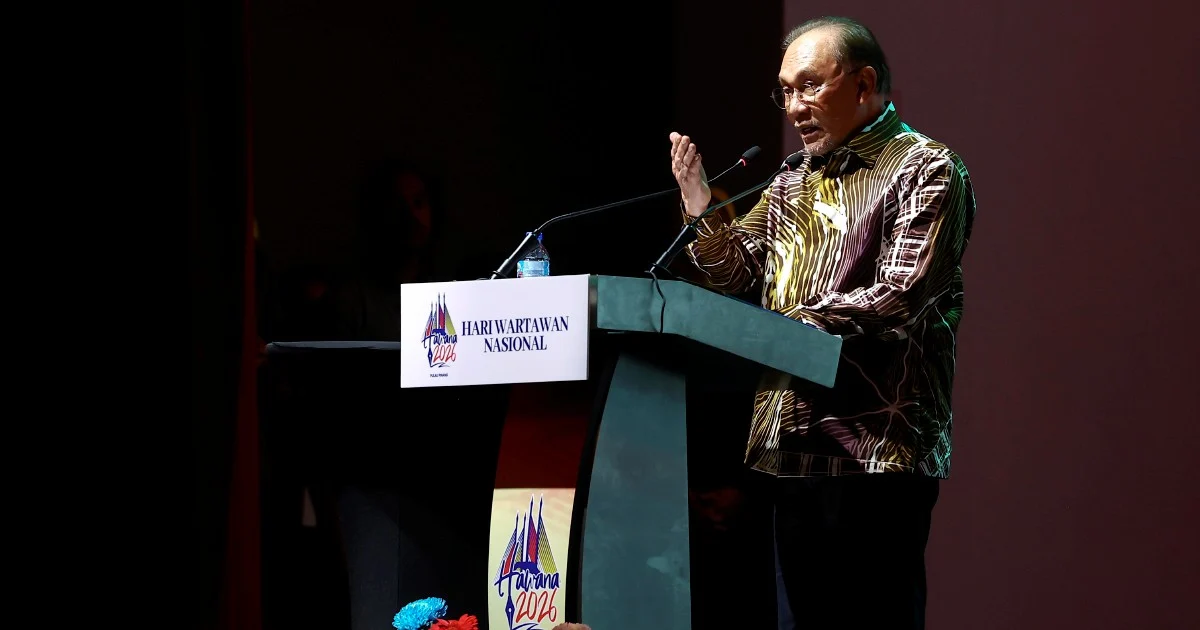
Datuk Seri Anwar Ibrahim, leading the Pakatan Harapan coalition, is poised to unveil the party's complete roster of candidates for the Johor state election during an event at Bukit Gambir tomorrow. The announcement represents a pivotal moment in the opposition alliance's campaign strategy, as the coalition prepares to mount its challenge against the incumbent administration in one of Malaysia's most politically significant states.
The decision to hold the candidate announcement in Bukit Gambir carries strategic implications for the broader Johor contest. This constituency has traditionally been a bellwether for state-level performance, and selecting it as the venue for the formal candidate reveal suggests the coalition views it as a critical battleground. The location choice often reflects where opposition strategists believe their strongest candidates and messaging will resonate most powerfully with voters.
Packatan Harapan's approach to candidate selection for Johor has been subject to intense speculation within political circles for weeks. The coalition must balance competing demands: rewarding long-serving party members with winnable seats, promoting fresh faces to energise grassroots supporters, and ensuring ethnic and religious representation that appeals to Johor's diverse electorate. The composition of the final list will signal how seriously the opposition alliance takes its prospects in the state.
Johor holds particular strategic weight within Malaysia's political landscape. As the second-largest state by population and economy, control of its assembly directly influences the national political narrative. A strong performance or failure in Johor can reshape perceptions of momentum heading into any future national election, making the stakes significantly higher than a typical state poll. For Pakatan Harapan, demonstrating competitiveness here is essential to maintaining credibility as a viable alternative government.
Anwar's personal involvement in the candidate announcement underscores the importance attached to this exercise. As Prime Minister and PH chairman simultaneously, his presence lends considerable weight and gravitas to the proceedings. This dual role positions him as both the national leader seeking to legitimise the coalition's slate and the coalition chairman defending the party structure's decisions, a balancing act that carries both symbolic and practical significance.
The coalition has faced recurring challenges in candidate selection processes across previous elections, with complaints from members about perceived favouritism or exclusion creating friction between various party wings. By having Anwar personally deliver the announcement, Pakatan Harapan signals that it has worked to resolve internal disputes beforehand and presents a united front to the electorate. Any lingering discontent within the coalition is unlikely to become publicly apparent once the candidates are formally introduced.
Johor's political composition has shifted considerably over recent years, with different blocs and alliances emerging in response to local concerns ranging from development priorities to religious and ethnic sensitivities. The opposition's candidate selection process would have necessarily taken into account these evolving dynamics, considering both which individuals can connect authentically with their communities and which ones possess credible platforms on issues that matter to Johor voters.
The timing of the announcement reflects broader election campaign mechanics in Malaysia. Revealing candidates well in advance allows parties to conduct grassroots mobilisation, introduce candidates to voters through media appearances, and build narrative momentum. It also permits time for any unexpected developments or controversies involving candidates to emerge and be managed before actual polling occurs. The lead time between announcement and election day is therefore carefully calculated to maximise advantage.
Regionally, Johor's election result carries implications beyond state boundaries. The state shares borders with Singapore and serves as a crucial economic hub for Southeast Asia. Performance by different political coalitions in Johor can influence business confidence, investment decisions, and the state's ability to manage complex transnational issues affecting the region. International observers sometimes monitor state-level Malaysian elections as indicators of broader political stability.
For Pakatan Harapan supporters, tomorrow's announcement will offer their first comprehensive picture of whether the coalition has fielded candidates capable of delivering meaningful gains. Party loyalists will scrutinise the list for signs of renewal and reform, while sceptics will seek evidence of tokenism or unchanged power structures. The composition of the slate will be analysed intensively by political commentators seeking to assess the coalition's genuine confidence in its chances.
As the opposition alliance enters the formal campaign phase, the quality and credibility of its candidates will become one of the defining factors determining voter behaviour. Johor residents will ultimately decide whether the coalition has presented a compelling alternative vision, and the candidates announced tomorrow will be the human embodiment of that proposition. The stakes involved in getting the candidate selection right are therefore considerable for both Pakatan Harapan and the voters who will ultimately judge their offerings.

