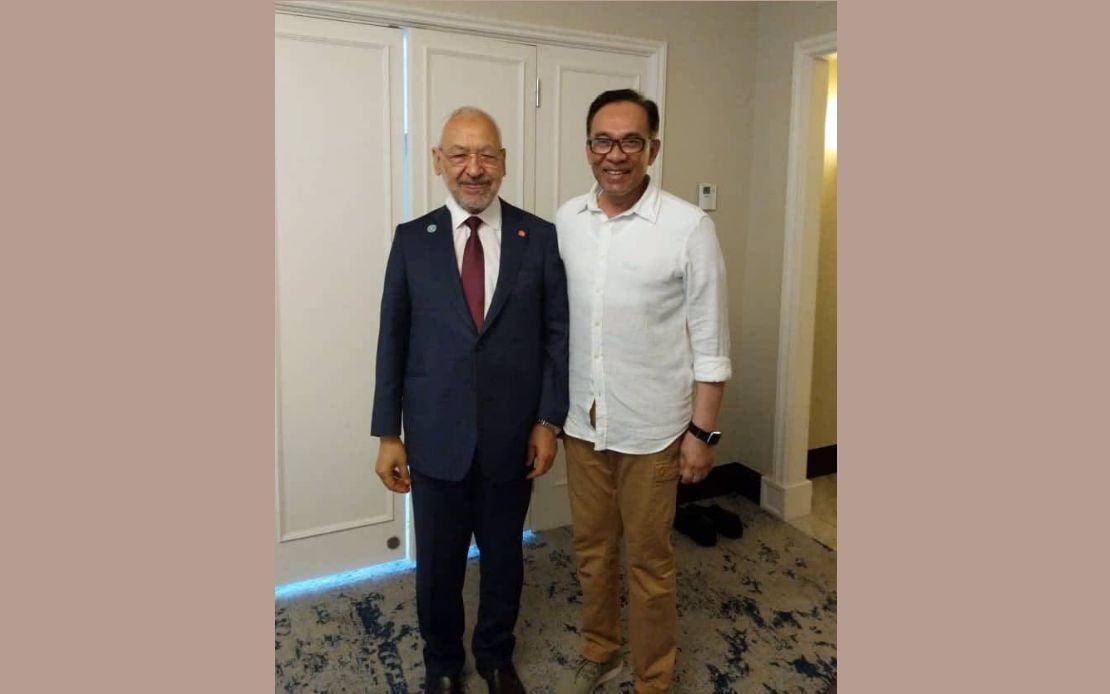
Prime Minister Datuk Seri Anwar Ibrahim has made a direct appeal to Tunisia's leadership for the release of Sheikh Rached Ghannouchi, dispatching a personal letter to President Kais Saied that prioritises humanitarian considerations over the political complexities surrounding the detained political figure. The move reflects Anwar's willingness to engage in quiet diplomacy on behalf of the octogenarian whom he characterises as a personal friend, signalling Malaysia's interest in the outcome of a high-profile detention case that has drawn international attention.
Ghannouchi, now 84 years old, remains in custody in Tunisia, where his detention has become a focal point for discussions about the balance between state security concerns and the treatment of ageing political detainees. Anwar's intervention underscores the gravity with which he views the situation, citing health deterioration as a pressing reason for reconsideration. The Prime Minister has emphasised that his appeal rests entirely on compassionate grounds rather than any broader political agenda, a careful framing that allows Malaysia to weigh in without appearing to challenge Tunisia's sovereign right to manage its own judicial affairs.
In his letter to President Saied, Anwar explicitly requested consideration of Ghannouchi's advanced age and medical condition as relevant factors in any decision regarding the prisoner's fate. The appeal invokes fundamental human values, with Anwar asserting that compassion, mercy, and human dignity should guide how nations address the circumstances of elderly detainees. This language reflects a broader international humanitarian discourse that has gained prominence as ageing populations worldwide challenge governments to reconsider detention policies for older individuals with health complications.
The timing of Anwar's intervention speaks to deepening diplomatic engagement between Malaysia and Tunisia on bilateral issues. As a fellow Muslim-majority nation with a functioning parliamentary democracy, Tunisia represents an important counterpart in North Africa for Malaysian foreign policy considerations. Anwar's move also reflects Malaysia's positioning as a nation concerned with Islamic and Arab world affairs, extending its diplomatic reach beyond Southeast Asia into the broader Middle Eastern and North African contexts that shape global Muslim-majority solidarity networks.
Ghannouchi's detention has been contentious internationally, with various human rights organisations and political figures questioning both the legal basis for his continued imprisonment and the conditions he faces. By framing the appeal in purely humanitarian terms rather than addressing the substantive charges against Ghannouchi, Anwar navigates a diplomatic path that acknowledges Tunisia's authority while advocating for mercy. This approach allows Malaysia to demonstrate concern for human welfare without appearing to second-guess Tunisia's judicial system or interfering in its internal political dynamics.
The appeal also carries implications for Malaysia's broader role as an advocate for Muslim causes and a voice for nations in the Global South. Anwar has positioned himself as a reformist Islamic leader who champions democratic values and human rights, and his intervention on behalf of Ghannouchi aligns with this self-presentation. For Malaysian observers, the move demonstrates how Anwar seeks to balance Malaysia's strategic interests with its aspirations to be a principled actor on the international stage, particularly regarding matters affecting Islamic communities and political figures.
Tunisia's response to Anwar's letter remains to be seen, but the appeal itself represents an important moment in Malaysia-Tunisia relations and in the broader question of how nations address the detention of aging political figures. Tunisia has faced its own pressures from international bodies regarding detention practices and legal procedures, making humanitarian appeals potentially more persuasive than direct political criticism. The Saied administration, which has consolidated significant executive power since 2021, may view compassionate releases as a way to demonstrate governance maturity while managing internal political sensitivities.
For Malaysian domestic audiences, Anwar's intervention signals his commitment to Muslim solidarity and his view that Malaysia has both the standing and responsibility to advocate for its allies abroad. This approach reflects the pluralistic foreign policy that Anwar championed during his earlier career, emphasising dialogue and moral persuasion over confrontation. The explicit statement that Malaysia respects Tunisia's sovereignty and legal processes demonstrates diplomatic sophistication, ensuring that the appeal cannot be dismissed as interference or hypocrisy.
The broader context of Ghannouchi's detention involves Tunisia's complex political history, his role in the Ennahda Movement, and the country's evolving relationship with Islamist politics following its post-2011 transition. Anwar's appeal, by focusing narrowly on health and age rather than engaging with these deeper political questions, offers Tunisia an opportunity to resolve the matter on humanitarian grounds without reopening contentious debates about political ideology or governance. Whether this calculated restraint will prove persuasive remains uncertain, but it reflects a considered diplomatic strategy appropriate to Malaysia's position as a concerned but non-interfering friend.

