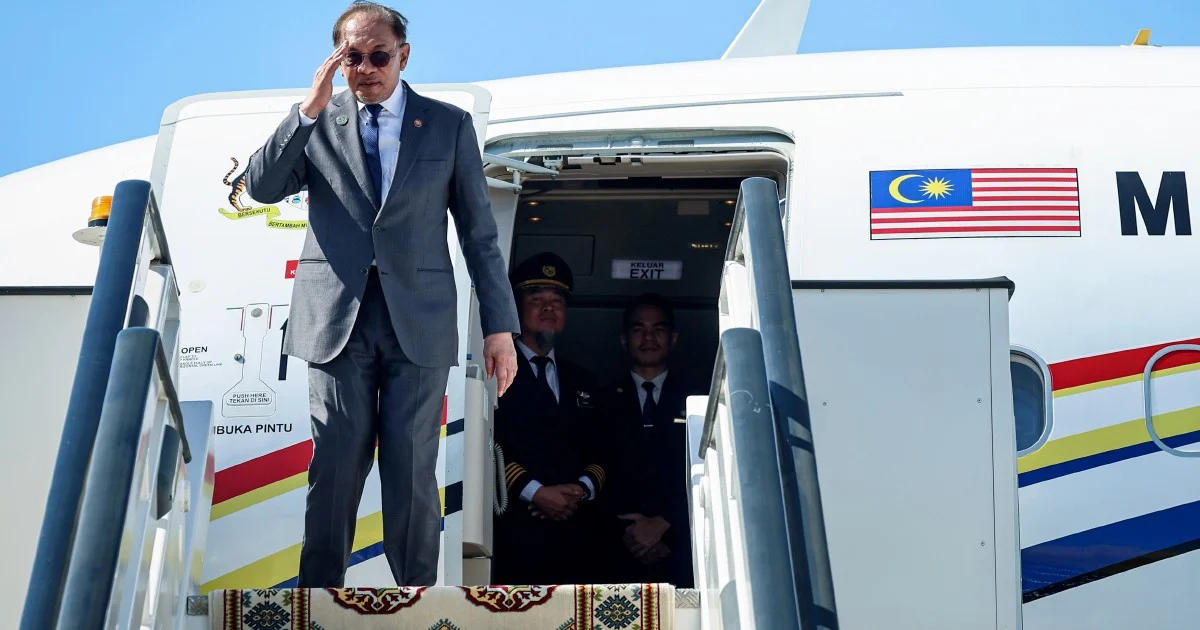
Prime Minister Datuk Seri Anwar Ibrahim touched down in Penang today after wrapping up his official engagement in Turkmenistan, signalling a busy schedule of domestic commitments as Malaysia continues to position itself as a hub for regional economic development and media excellence. The premier's swift transition from Central Asia back to the northern Malaysian state underscores the government's attempt to balance international diplomatic relations with pressing domestic priorities, particularly in the northern corridor.
Anwar's visit to Penang centres on the National Journalists' Day (Hawana) 2026 grand finale, an annual celebration that recognises the contribution of Malaysia's media professionals to the nation's democratic discourse and public information ecosystem. The event represents more than ceremonial acknowledgment—it reflects the government's commitment to supporting press freedom and independent journalism at a time when media landscapes across Southeast Asia face mounting pressures from digital disruption, misinformation, and shifting business models.
The timing of Anwar's participation carries symbolic weight. By personally attending Hawana immediately after international state business, the Prime Minister sends a signal that Malaysia values its domestic media institutions and the journalists who operate within them. This approach contrasts with some neighbouring countries where government engagement with the press has become more fraught or transactional. For Malaysian newsrooms, many of which have struggled with advertising revenue decline and digital competition, visible top-level support can provide both moral affirmation and potential policy pathways to sustainability.
Beyond the journalists' celebration, Anwar's Penang sojourn encompasses investment-related activities that carry significance for northern Malaysia's economic trajectory. Penang has long positioned itself as Malaysia's leading technology and manufacturing hub outside the Klang Valley, and any prime ministerial visit typically involves announcements or discussions surrounding foreign direct investment, industrial development, or infrastructure initiatives. The state's strategic location along major Southeast Asian trade corridors makes it a focal point for government efforts to attract and retain multinational enterprises seeking regional bases.
The Turkmenistan visit that preceded the Penang leg likely involved trade discussions, potential energy or resource partnerships, and diplomatic alignment—areas where Malaysia has increasingly sought to diversify its external relations beyond traditional Western partners. Central Asian nations, while geographically distant, represent emerging markets and strategic outposts along China's Belt and Road Initiative corridors. Malaysia's engagement there reflects both an effort to maintain balanced foreign policy and to explore bilateral opportunities in energy, connectivity, and technology sectors.
Anwar's rapid repositioning from Turkmenistan to Penang demonstrates the demanding nature of modern prime ministerial responsibilities, requiring seamless transitions between international diplomacy and domestic engagement. The physical and mental demands of such travel schedules, compounded by jet lag and time zone shifts, underline the intensity of the premiership in an era of globalised commerce and instantaneous communications.
For Penang specifically, the Prime Minister's presence may also signal government commitment to the state's development agenda, particularly given ongoing discussions about infrastructure projects, industrialisation goals, and the state's role in Malaysia's digital economy aspirations. Penang's Chief Minister and state government typically leverage such visits to showcase achievements and pitch new initiatives for federal support or coordination.
The investment events accompanying Anwar's Penang visit reflect Malaysia's broader economic strategy under his leadership—one emphasising innovation, foreign capital attraction, and modernisation of key sectors. Whether these activities address manufacturing, technology, renewable energy, or other domains, they signal continued government efforts to maintain Malaysia's competitiveness amid regional economic shifts and global post-pandemic readjustments.
The convergence of journalistic celebration and investment promotion also hints at an interconnected vision: that a thriving media ecosystem and a dynamic investment climate are mutually reinforcing. Independent journalism requires the economic stability that comes from prosperity and growth, while foreign investors increasingly consider media freedom and press independence as indicators of governance quality and rule of law.
As Malaysia navigates complex regional dynamics—from competition with Vietnam and Thailand for manufacturing investment to technological rivalry with Singapore and the need to manage relationships with major powers—the Prime Minister's scheduling choices reveal priorities. Hawana's inclusion alongside investment events suggests recognition that domestic morale, media engagement, and international economic signalling operate on parallel tracks, each essential to national advancement.

