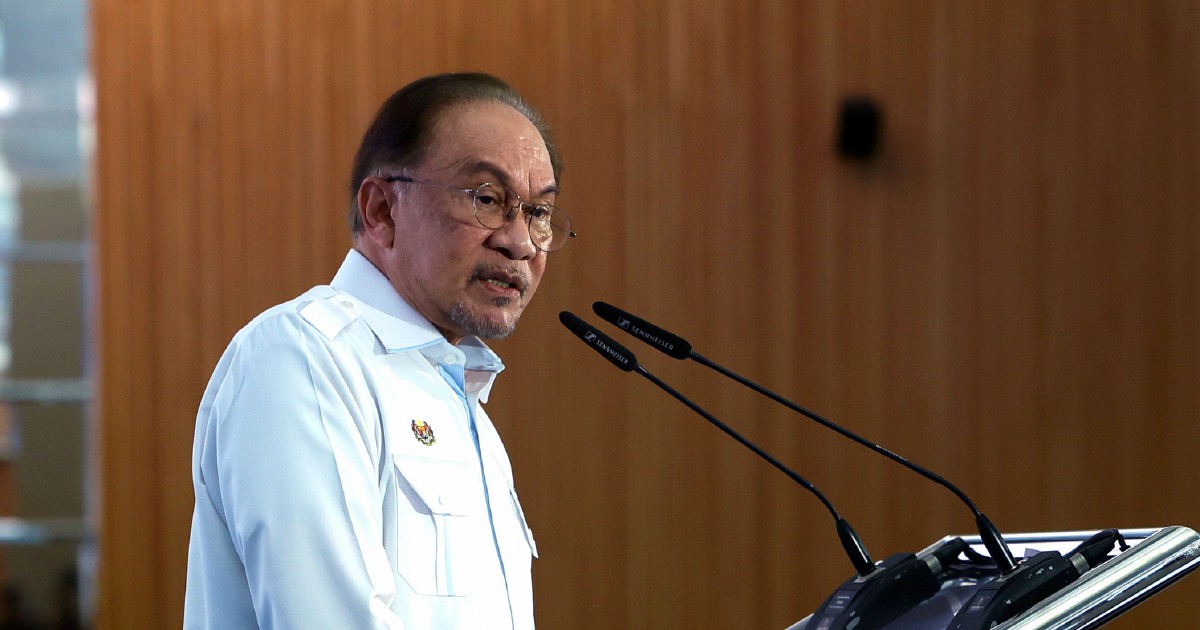
Prime Minister Datuk Seri Anwar Ibrahim has firmly dismissed claims that Malaysia's federal government allocates development resources disproportionately to certain states, pushing back against persistent political assertions that the treasury favours particular regions in its spending decisions.
The assertion directly addresses a recurring debate in Malaysian politics regarding how infrastructure funds and development projects are distributed across the nation's thirteen states and three federal territories. Opposition-aligned states and their leaders have frequently voiced frustration that peninsular states not governed by Pakatan Harapan or related coalitions receive fewer development allocations compared to those administered by the ruling coalition. This tension has become especially pronounced following the 2022 general election, where political fragmentation led to a more complex federal-state relationship.
Anwar's categorical denial reflects the federal government's position that development allocations follow merit-based and need-based criteria rather than political considerations. The Prime Minister's office has consistently maintained that project selection depends on factors such as population size, infrastructure deficits, economic development needs, and national priority areas rather than the electoral performance or coalition affiliation of state governments. This approach theoretically ensures that states facing genuine development challenges receive commensurate federal support regardless of their political alignment.
The controversy surrounding federal development spending carries significant implications for Malaysia's fiscal federalism and centre-state relations. States governed by opposition parties have alleged that the federal apparatus channels disproportionate resources toward allied administrations, disadvantaging their populations and limiting their capacity to undertake crucial development initiatives. Such accusations, whether substantiated or not, undermine public confidence in the equity of resource distribution and create political friction that affects governance effectiveness across multiple levels.
From a regional perspective, Malaysia's experience with development allocation disputes reflects broader Southeast Asian challenges with federal fiscal arrangements. Countries including Indonesia and the Philippines have similarly grappled with questions about fair resource distribution between central authorities and sub-national governments. How Malaysia addresses these concerns influences perceptions of democratic governance and federal equity across the region, particularly regarding whether opposition-held territories receive equitable treatment from administrations they did not support.
The Prime Minister's position also reflects contemporary Malaysian political realities shaped by the fragmentation evident in recent electoral outcomes. With no single coalition commanding overwhelming parliamentary majorities and various state governments controlled by different political entities, the stakes of federal development allocation have intensified. States governed by parties outside the federal government's alliance increasingly scrutinize spending patterns, while the federal administration must balance political pressures against genuine governance needs across diverse regions.
Public perception of federal development fairness affects citizen confidence in institutions and electoral behaviour. Residents in states perceiving discriminatory allocation patterns may feel economically marginalized by the federal system, potentially influencing their political preferences in future elections. Conversely, transparent, equitable allocation criteria strengthen democratic institutions by demonstrating that resource distribution follows objective standards rather than partisan preferences. This dynamic makes Anwar's dismissal of unfairness allegations particularly consequential for Malaysia's political stability.
The federal government's allocation methodology remains partially opaque to external scrutiny, which contributes to ongoing suspicion among opposition-governed states. Greater transparency regarding how development projects are selected and funds distributed could substantially diminish allegations of political bias. Publishing detailed criteria, comparative allocation figures across states, and project justifications would provide citizens and state leaders with concrete evidence either supporting or contradicting claims of inequitable distribution. Such measures would strengthen federal governance legitimacy.
For Malaysian citizens residing in states across the political spectrum, development allocation equity directly affects daily life quality. Infrastructure improvements, educational facilities, healthcare systems, and economic development projects depend significantly on federal funding. Residents in states believing their regions face discriminatory allocation face justified frustration if federal resources are indeed distributed inequitably. Even if no deliberate partisan bias exists, perceptions of unfairness damage the social contract between citizens and government institutions.
The Prime Minister's rebuttal will likely prove insufficient to satisfy opposition-governed states absent supporting evidence demonstrating equitable allocation patterns. States including Penang, Selangor, and others not fully aligned with the federal government will probably continue scrutinizing federal spending announcements, comparing their allocations against other states and seeking evidence supporting their contentions. This ongoing tension will persist unless the federal government substantially increases transparency around its allocation decision-making processes and provides comparative data allowing objective assessment of distribution fairness.
Looking forward, resolving federal development allocation disputes will require more than prime ministerial denials. Establishing independent mechanisms to review allocation criteria, publishing transparent data on project selection processes, and potentially reforming the formula-based allocation system could address legitimate concerns about fairness. Such measures would benefit all Malaysians by ensuring development resources flow according to genuine needs rather than political calculations, ultimately strengthening both federal governance and public trust in democratic institutions across the nation.

