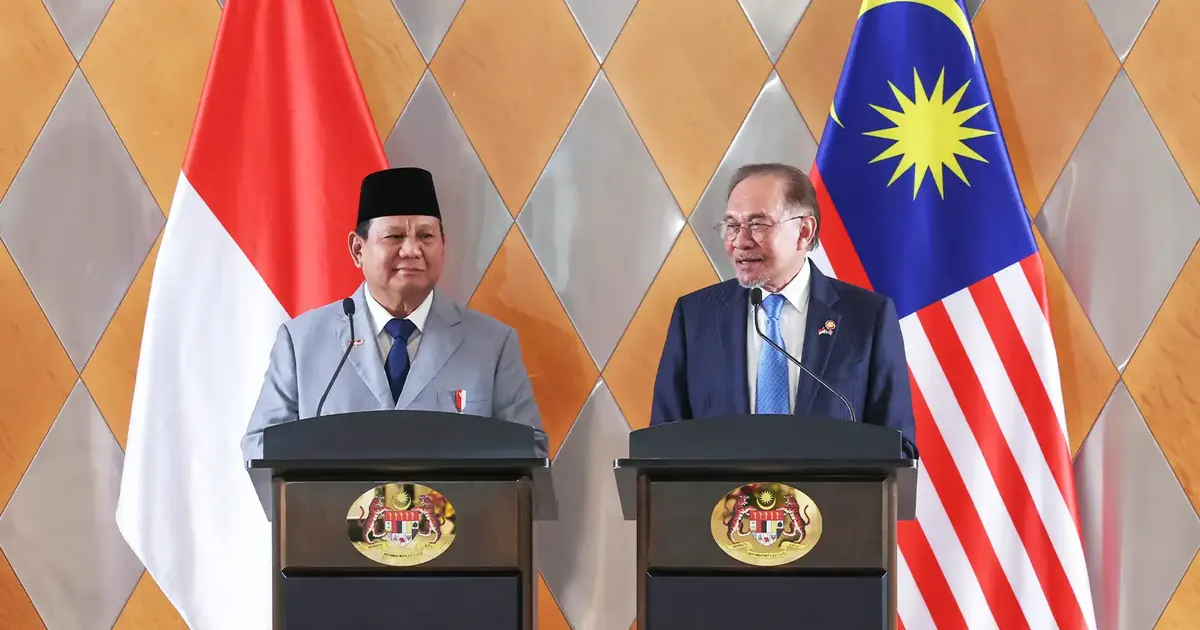
Prime Minister Anwar Ibrahim has escalated diplomatic efforts by directly writing to Indonesian President Prabowo Subianto regarding the precarious financial position of Malaysia's Federal Land Development Authority (Felda) in its Eagle High venture, a situation that could result in losses exceeding RM2 billion if mismanaged. The correspondence underscores growing concern at the highest levels of government about the trajectory of this cross-border investment and signals the severity with which Kuala Lumpur views the matter.
The Eagle High project represents a significant exposure for Felda, the statutory body responsible for overseeing the welfare and economic development of some 112,000 settler families across Malaysia. Originally envisioned as a major investment opportunity, the venture now threatens to erode the financial resources that Felda relies upon to fund settlement schemes, infrastructure development, and social programmes that benefit its constituents. The scale of potential losses—amounting to more than RM2 billion—represents a material threat to Felda's operational capacity and its ability to serve its stakeholder communities effectively.
According to Anwar's assessment, the realistic recovery scenario appears grim, with Felda potentially recouping only RM200 million from the entire investment should the situation be allowed to deteriorate further without effective intervention. This represents a recovery rate of barely ten per cent, illustrating the magnitude of value destruction that has already occurred or is at imminent risk. The disparity between the initial outlay and the projected recovery highlights critical questions about due diligence processes, risk management frameworks, and governance oversight that enabled such exposure to accumulate in the first place.
The decision to communicate directly with President Prabowo reflects Malaysia's diplomatic approach to resolving cross-border commercial disputes. As Indonesia's new leadership under Prabowo takes office, the Malaysian government appears to be seeking cooperation at the presidential level to explore remedial options and negotiate a more favourable outcome for Felda. This top-level engagement suggests that conventional commercial channels may have proved insufficient in addressing the impasse, necessitating intervention through official state channels.
Felda's involvement in the Eagle High venture occurred within a broader context of Malaysian settlement authorities and sovereign wealth entities seeking higher returns through international diversification during periods of strong commodity prices and economic optimism. However, the project appears to have been undermined by unforeseen market conditions, structural challenges in the underlying business model, or governance deficiencies that were not adequately anticipated during initial investment decisions. The extent of the exposure raises fundamental questions about investment governance at Malaysian state enterprises.
The timing of Anwar's intervention coincides with heightened focus on governance and financial accountability across Malaysian statutory bodies. Recent audits and investigations into various agencies have revealed patterns of poor investment decisions and inadequate oversight mechanisms. Felda's situation represents a high-stakes test case for how the government will address legacy investments that have soured while simultaneously pursuing accountability and implementing stronger safeguards for future capital deployment.
For Malaysian settlers who depend on Felda's services and income distributions, the potential losses carry real human consequences beyond abstract balance sheet deterioration. Disruptions to Felda's financial health could constrain its capacity to deliver land development schemes, provide technical support for agricultural productivity, or maintain social infrastructure in settler communities. The ripple effects would extend to downstream sectors, including agribusiness supply chains and rural economic ecosystems that depend on Felda's operational effectiveness.
The correspondence also reflects Malaysia's broader engagement strategy with Indonesia across multiple domains including trade, investment, security, and resource management. Bilateral commercial disputes occasionally require high-level political intervention to prevent escalation and find mutually acceptable solutions. By involving President Prabowo directly, Anwar positions the matter as one of state-to-state significance rather than a purely corporate or sectoral issue, potentially opening pathways for negotiated settlements that extend beyond conventional commercial remedies.
Indonesia's domestic context adds another layer of complexity to the situation. President Prabowo's administration is consolidating power and establishing its policy priorities, which may create both opportunities and constraints for resolving longstanding commercial disputes involving Malaysian entities. The receptivity of the new Indonesian leadership to addressing Felda's concerns remains to be seen, though the direct appeal from Malaysia's Prime Minister signals serious intent on Kuala Lumpur's part to find a resolution.
Looking forward, the outcome of Anwar's overture will likely influence how Malaysian entities approach cross-border investments and the level of scrutiny applied to such ventures going forward. If negotiations yield a substantial recovery beyond the currently projected RM200 million, it could provide partial vindication for efforts to salvage the situation. Conversely, if recovery remains minimal despite high-level intervention, it will reinforce the need for forensic analysis of how Felda's investment decisions were made and what systemic reforms are necessary to prevent similar outcomes.
The Eagle High situation ultimately encapsulates broader governance challenges facing Malaysian state-linked enterprises, including the imperative to balance commercial returns with accountability to stakeholder communities, the necessity of rigorous due diligence across international investments, and the importance of maintaining responsive governance structures capable of identifying and addressing emerging risks before they metastasize into full-blown crises. Anwar's correspondence to Prabowo represents a pivotal moment in determining whether diplomatic and political pressure can achieve material recovery from an increasingly troubled investment.

