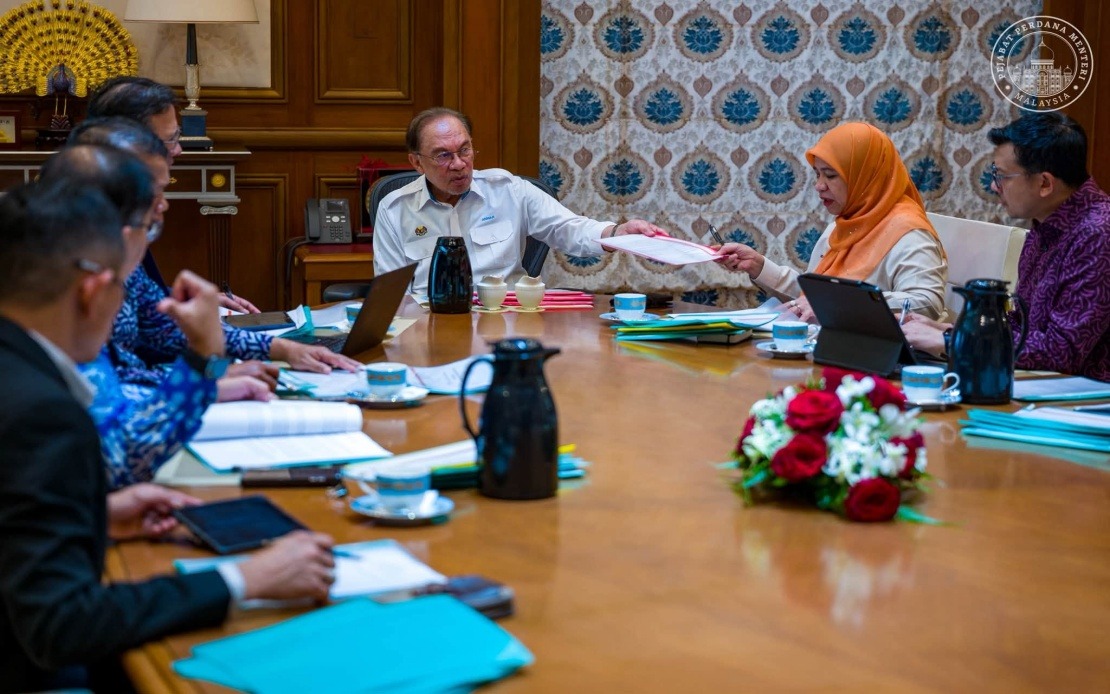
Prime Minister Datuk Seri Anwar Ibrahim has signalled his administration's intent to move quickly on resolving entrenched challenges within Malaysia's Federal Land Development Authority, particularly concerning second-generation residents who have long grappled with inadequate housing and unclear land tenure arrangements. In remarks shared via social media on July 6, the premier stressed that FELDA cannot allow these matters to languish further, demanding instead an immediate mobilisation of resources and policy frameworks to tackle the grievances that have accumulated over decades.
The issues affecting FELDA settlers extend beyond simple administrative inconvenience. Many second-generation residents inherited plots and dwellings from their parents but lack formal documentation securing their ownership rights, creating legal uncertainty and hindering their ability to access credit, make improvements, or pass assets to their own heirs with confidence. Housing stock, meanwhile, has deteriorated in numerous schemes across the country, with original structures now decades old and many families trapped in substandard conditions despite contributing substantially to FELDA's original mission of rural development and poverty alleviation.
Anwar's intervention underscores the political salience of FELDA settlements within Malaysia's electoral map. The authority oversees approximately 116 schemes nationwide, representing a constituency of roughly 900,000 people across settler families and their descendants. Any government neglecting these communities risks alienating a significant voter base that has traditionally formed part of the country's rural backbone. By publicly committing to urgent action, the Prime Minister is signalling that his administration treats FELDA revitalisation as a policy priority rather than a perpetual backlog item.
The Premier emphasised the necessity of methodical problem analysis coupled with transparent, achievable remedies. His statement that "every problem needs to be carefully examined and followed up with a clear solution plan" reflects an apparent frustration with previous approaches that may have diagnosed issues without implementing concrete fixes. This suggests the government intends to move beyond general pledges toward detailed implementation frameworks with defined timelines and accountability measures.
FELDA's institutional capacity to deliver such reforms remains a question mark. The authority has faced criticism over governance and resource allocation, with some schemes suffering from years of deferred maintenance and inadequate basic infrastructure. Whether FELDA possesses the technical expertise, financial resources, and administrative bandwidth to simultaneously tackle land registration, housing rehabilitation, and second-generation succession issues across 116 schemes represents a genuine challenge that will test the MADANI Government's commitment to follow-through.
The housing question particularly affects middle-aged and elderly settlers whose children now constitute the second generation. These adult children often lack formal recognition as rightful residents despite living in FELDA housing for their entire lives. Establishing clear legal pathways for succession and ownership transfer has remained contentious, involving questions about pricing, subsidisation, and the extent to which FELDA properties should be treated as commercial assets versus public trust arrangements. Resolving this requires legislative clarity, potentially including amendments to FELDA's enabling statutes or new administrative procedures.
The land ownership dimension intersects with Malaysia's broader property rights and housing affordability conversations. Many FELDA plots remain constrained by historical restrictions preventing subdivision or commercial use, essentially locking settlers and their descendants into static arrangements poorly suited to contemporary economic realities. Liberalising these restrictions while protecting community cohesion and agricultural productivity represents a delicate policy balance.
For Malaysian readers, FELDA issues encapsulate broader tensions within rural development policy. The authority was established in 1956 to settle landless families on newly developed agricultural land, positioning it as a cornerstone of post-independence social mobility. Decades later, however, FELDA settlements often embody stagnation rather than prosperity, with beneficiaries and their offspring frequently lacking the capital, market access, or diversified economic opportunities to prosper from agriculture alone. Unresolved housing and ownership issues compound this economic marginalisation.
Anwar's statement also reflects the MADANI Government's campaign narrative of reforming institutions and addressing accumulated grievances from previous administrations. By publicly calling for urgency on FELDA, the Premier positions his government as responsive and action-oriented. However, the credibility of such positioning depends entirely on translating rhetorical commitment into tangible outcomes—a test that will intensify as constituent expectations rise following the Prime Minister's very public intervention.
Moving forward, observers should watch for specific announcements regarding task forces, funding allocations, or legislative proposals designed to implement Anwar's mandate. The success of FELDA resolution efforts will likely become a barometer for broader government performance in addressing legacy issues affecting rural Malaysia, potentially shaping electoral dynamics in the agricultural heartland ahead of the next general election.

