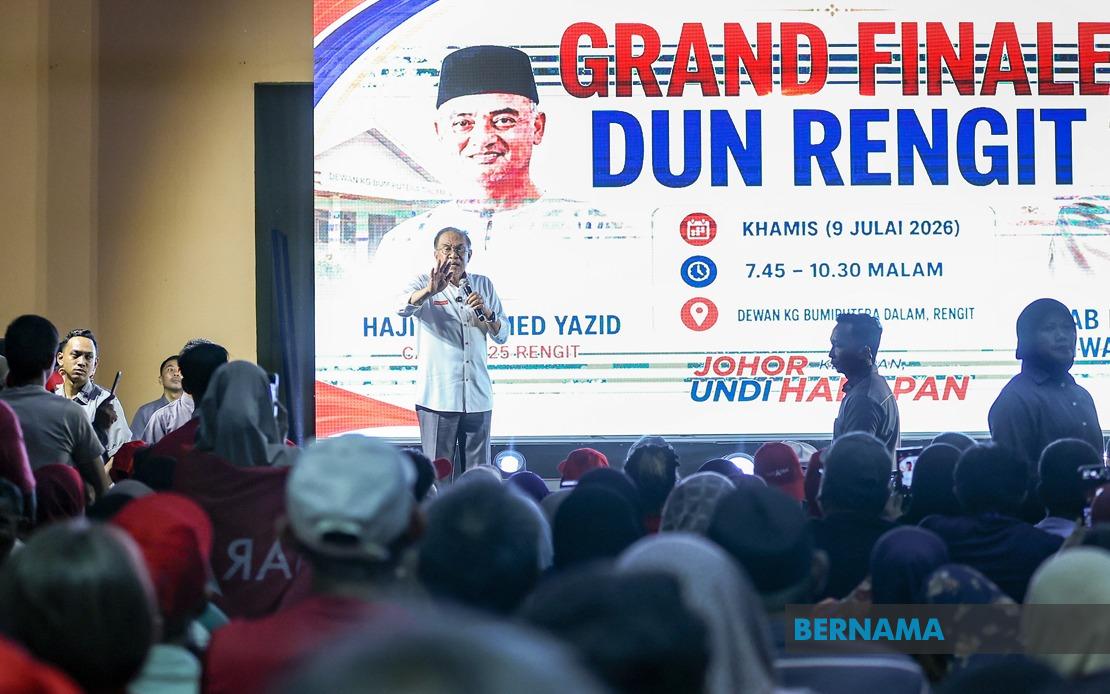
Prime Minister Datuk Seri Anwar Ibrahim has committed to tackling entrenched infrastructure deficiencies in Rengit, vowing that Johor's status as a developed state demands immediate attention to deteriorating health facilities and chronic water supply failures. Speaking at a Pakatan Harapan campaign rally in Batu Pahat, Anwar emphasised that access to functioning healthcare and clean water represent fundamental entitlements rather than luxuries, and that their provision cannot be indefinitely postponed. The remarks underscored growing voter frustration in the constituency over years of neglect, positioning infrastructure reform as central to the coalition's electoral messaging.
Anwar's comments carried particular weight given the symbolic importance of basic services in rural and semi-rural constituencies. His observation that "clinics must treat sick people, not clinics that are themselves in poor condition" captured the contradiction at the heart of the problem: health infrastructure designed to alleviate suffering instead compounds community hardship through decay and unavailability. Water supply disruptions, meanwhile, affect agricultural productivity, household sanitation, and business operations across the region, creating cascading economic consequences beyond immediate inconvenience. By naming these issues explicitly, the Prime Minister signalled that a PH state government would prioritise remedying chronic underinvestment in basic services.
The campaign event represented one of three rallies Anwar attended across Johor on the evening of July 9, reflecting the intensity of coalition efforts to consolidate support ahead of the 16th state election scheduled for Saturday. The "Serumpun Kasih Sejiwa Harmoni Grand Finale" programme drew Sri Gading MP and Johor Amanah chairman Aminolhuda Hassan, alongside PH's Rengit candidate Yazid Abu Bakar, creating a visible show of unity across the coalition's constituent parties. This coordinated approach sought to demonstrate organisational coherence and shared commitment to Rengit voters, countering any perception of fractured or competing interests within the opposition alliance.
The Rengit constituency has emerged as a closely watched battleground where infrastructure performance becomes a decisive factor. Residents have experienced cumulative disappointment with public service delivery, and their voting patterns will reflect whether they believe pledges of improvement. Anwar's strategy involved binding federal-level commitment to state-level outcomes, implicitly suggesting that electing PH representatives would unlock additional resources and political capital from the federal government. This linking of state and national interests represents a core element of PH's electoral appeal, particularly in constituencies where voter trust in traditional state-level governance has eroded.
Beyond Rengit, Anwar articulated a broader vision of prioritisation that encompassed water supply, housing, education, and healthcare as interconnected pillars of development. This framing acknowledges that infrastructure degradation rarely occurs in isolation; deficient water systems compound health problems, while poor schools and housing combine to entrench poverty and limit economic mobility. By presenting these services as an integrated package requiring coordinated state and federal attention, Anwar positioned PH as capable of systemic reform rather than merely addressing individual complaints. For Malaysian voters accustomed to fragmented, inconsistent service delivery, this comprehensive approach holds considerable appeal.
Anwar also directed pointed remarks toward government officials and community leaders, reminding them of their obligation to exercise authority with integrity and resist temptation to exploit positions for private benefit. This messaging served dual purposes: it acknowledged widespread public perception of corruption and self-dealing within state institutions, whilst simultaneously positioning a PH administration as committed to accountability and ethical governance. In Johor, where perceptions of institutional integrity significantly influence voter calculations, such statements carry weight. Anwar's willingness to name the problem of abuse of office suggested that a change of government would bring genuine scrutiny to official conduct and consequences for misconduct.
The Prime Minister's appeal to voters to elect representatives aligned with the Federal Government introduced an important strategic dimension to the campaign. By emphasising coordination between state and federal levels, Anwar argued that opposing parties—however capable at the state level—would struggle to deliver development if their priorities conflicted with federal initiatives or if federal resources flowed preferentially toward aligned administrations. This argument particularly resonates in states where infrastructure projects require federal funding or approval, making electoral alignment a practical consideration beyond ideological preference. For Rengit voters evaluating their options, the prospect of state representatives working harmoniously with federal policymakers offered tangible benefits in terms of development momentum.
Packatan Harapan entered the Johor election contesting all 56 seats through a coordinated allocation among coalition partners. The PKR fielded 20 candidates, Amanah contributed 19, and DAP supplied 17 representatives, a distribution reflecting negotiated power-sharing that sought to balance party ambitions with coalition viability. This internal architecture of the coalition demonstrates both its strengths and inherent tensions: the diversity of representation appeals to different voter constituencies and geographies, yet requires constant management to prevent internal competition from undermining collective performance. The designation of Yazid Abu Bakar as the Rengit candidate reflected deliberate party placement designed to maximise appeal within that specific constituency's demographic and geographic composition.
The broader electoral landscape saw 172 candidates competing across all 56 seats, indicating robust competition and suggesting that incumbents faced serious challenges in multiple constituencies. Such saturated competition intensifies pressure on candidates to articulate concrete, deliverable commitments rather than abstract promises. Anwar's focus on resolving specific infrastructure problems in Rengit exemplified this necessity: voters wanted to know not merely that their concerns were heard, but that incoming representatives possessed both the will and the means to address them. The specificity of promises regarding health facilities and water supply therefore served as credibility markers in a crowded electoral field.
For Malaysian observers and regional analysts, the Johor election outcome carries significance beyond the state itself. Johor has traditionally functioned as a bellwether for broader national political trends, and performance in this election would offer insights into whether voter frustrations with service delivery translate into electoral punishment for incumbent parties, or whether other considerations predominate in voter calculations. The concentration of campaign effort on infrastructure promises suggests that opposition and incumbent parties alike recognised such issues as motivating forces. Success in Rengit and similar constituencies would validate PH's strategy of emphasising government accountability and basic service provision, potentially informing campaign messaging in future electoral contests across Malaysia and the region.

