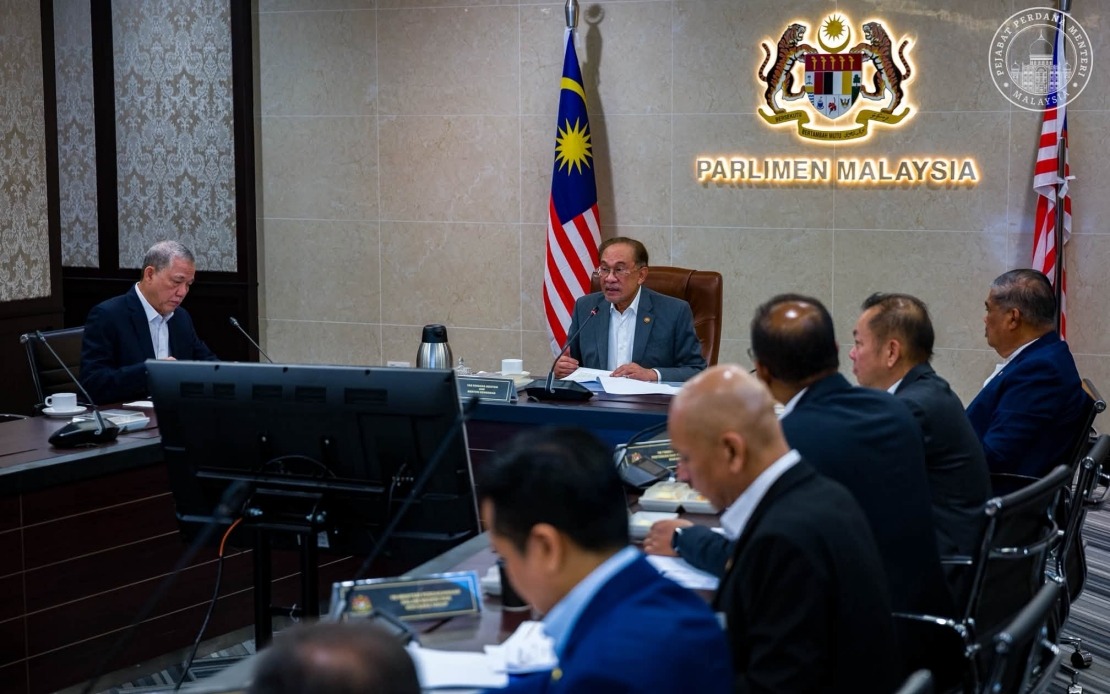
Prime Minister Datuk Seri Anwar Ibrahim has mobilised Malaysia's agricultural apparatus to prepare comprehensive countermeasures against the approaching Super El Niño phenomenon, directing the Ministry of Agriculture and Food Security to accelerate protective measures starting from November. The directive emerged from discussions at the inaugural National Food Security Council Meeting, where leadership reviewed systemic vulnerabilities and response mechanisms across the entire food production chain, from primary farming through to export competitiveness.
El Niño events, characterised by warming Pacific Ocean temperatures, historically disrupt rainfall patterns across Southeast Asia and trigger drought conditions that undermine crop yields and livestock productivity. A Super El Niño—an intensified variant—poses particular concern given Malaysia's agricultural dependence on monsoon precipitation and seasonal water availability. The November timeline provides a critical window for preparation, though weather models suggest peak impacts would manifest through the first half of 2026, affecting multiple planting cycles and threatening the income stability of farming communities already navigating volatile commodity markets and climate volatility.
The Prime Minister's emphasis on minimising disruption to national food production reflects growing recognition that agricultural resilience constitutes a strategic national asset. Malaysia, despite its tropical environment, imports substantial quantities of essential foodstuffs—rice, wheat, and animal feed represent significant foreign exchange outlays. Any domestic production contraction would intensify import pressure, elevate consumer food prices, and strain government subsidy mechanisms already stretched across multiple sectors. For lower-income households, food inflation directly impacts household budgets and purchasing power, making agricultural continuity a social stability concern beyond mere economic calculation.
The council's attention to fisheries cooperation with Thailand signals recognition that transboundary challenges require coordinated responses. Fish stocks, migrating species, and shared maritime resources mean that El Niño impacts ripple across national boundaries. Thailand's fishing industry interconnects with Malaysian markets through both trade and shared maritime zones, making bilateral dialogue essential for maintaining regional supply chains and preventing competitive depletion of common resources during stress periods when fishing communities face pressure to intensify catch efforts.
Anwar's directive to complete mitigation planning through appropriate channels while maintaining food safety and quality standards indicates an attempt to balance speed with regulatory rigour. Bureaucratic machinery often slows during crises, but the agriculture ministry must execute policy adjustments rapidly—adjusting water allocation protocols, revising crop insurance frameworks, stockpiling feed inputs, and potentially deploying irrigation infrastructure—while simultaneously ensuring that corner-cutting does not compromise food safety standards that protect public health and market access for exports.
Engagement with fishing communities assumes particular importance given their structural vulnerability. Fishing families operate with minimal buffers, facing immediate income loss when catch declines due to environmental factors beyond their control. The government's emphasis on product standards compliance suggests an intention to maintain market access and pricing power even during production downturns, though enforcement mechanisms and support mechanisms remain undefined in current announcements. Fishermen require not merely compliance instructions but practical support—credit facilities, market guarantees, or livelihood alternatives—to weather extended low-productivity periods.
Technological adaptation constitutes a centrepiece of the government's longer-term resilience strategy. Precision irrigation systems, drought-resistant crop varieties, controlled environment agriculture, and data-driven farming practices can substantially reduce climate vulnerability, though their adoption requires substantial capital investment and farmer training. Malaysian agricultural holdings remain fragmented, with smallholder farmers dominant in key sectors, creating implementation challenges for technology deployment. Policy incentives, subsidised infrastructure, and extension services become critical for translating technological possibilities into farmer-level adoption.
The council's review of sectoral competitiveness points toward recognition that climate adaptation cannot remain purely defensive. Malaysian agribusiness must simultaneously build internal resilience while enhancing competitive positioning in regional and global markets where supply disruptions elsewhere may create temporary opportunity windows. Value-added production, quality premiums, and market diversification reduce vulnerability to any single climate shock or market fluctuation, though requiring coordinated investment across the sector.
Innovation frameworks deserve particular attention given Malaysia's existing technological capabilities in specific agricultural niches. The country possesses research institutions, agribusiness companies, and a technology-enabled private sector potentially capable of developing climate-adapted solutions suited to tropical conditions. Government coordination of research priorities, intellectual property frameworks, and commercialisation pathways could accelerate deployment of technologies specifically engineered for Malaysian contexts rather than merely importing foreign solutions.
For policymakers and citizens alike, the El Niño preparation debate illuminates broader systemic questions about food security strategy. Exclusively domestic production remains economically impossible—Malaysia cannot meaningfully self-supply cereals, oils, and proteins at current consumption levels within arable land constraints. Rather, prudent strategy combines domestic resilience, supply chain diversification across multiple origin countries, strategic reserves, price stabilisation mechanisms, and market-based allocation systems that prevent artificial scarcities. The government's current emphasis on production continuity must eventually integrate these broader elements into coherent policy architecture.
Regional cooperation patterns emerging from Thai fisheries discussions suggest potential for wider Southeast Asian coordination on climate response. The region faces common vulnerabilities—shared water systems, interconnected food markets, and similar agricultural exposure—making unilateral national approaches suboptimal. ASEAN-level frameworks for climate-resilient food systems, coordinated research programs, and supply chain mapping could enhance collective capacity to manage environmental shocks. The current situation presents opportunity to advance institutional mechanisms that transcend parochial national interests.

