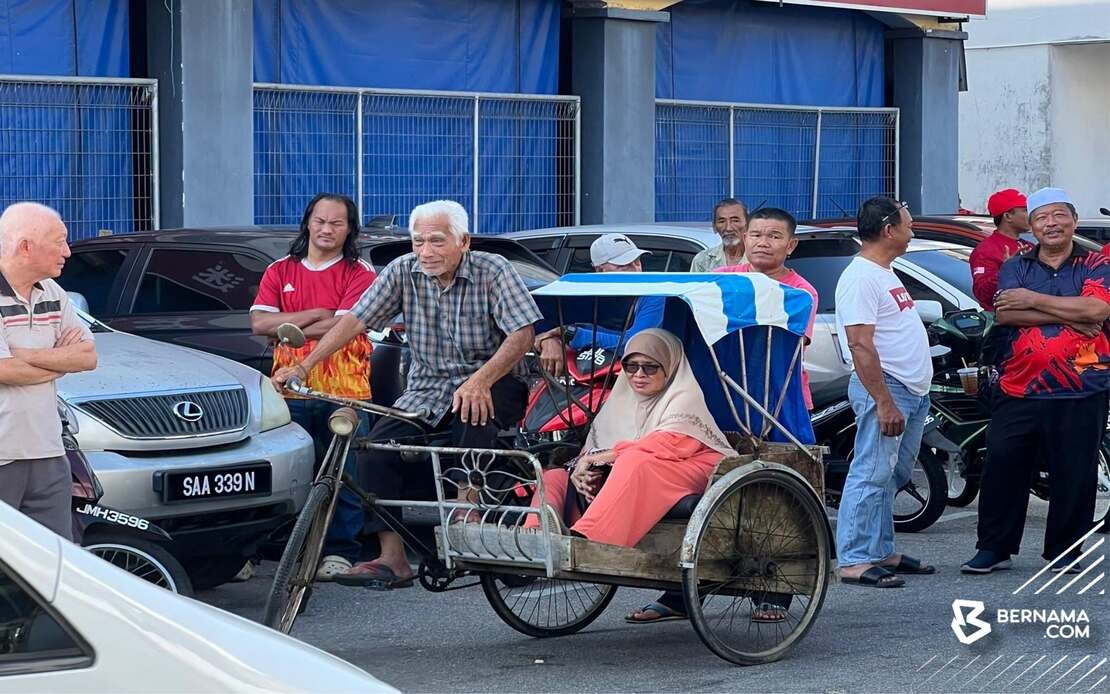
Prime Minister Datuk Seri Anwar Ibrahim has expressed heartfelt appreciation for an elderly couple's determined effort to glimpse him during a recent campaign visit to Johor, acknowledging their gesture through a social media post despite not meeting them in person at the intended venue.
Abdul Razak Pelangga, 86, made the decision to transport his wife Jamilah Samsudin, 64, by trishaw from their home in Kampung Parit Bugis to a coffee shop in the town of Senggarang, Batu Pahat, after learning that the country's top political leader would be stopping there for breakfast. The journey covered nearly a kilometre by pedal power, a considerable physical undertaking for a man of his age, reflecting the significance he and his wife attached to the opportunity to see Anwar in person.
In his Facebook response, Anwar conveyed his regret at missing the couple despite their considerable effort. He pledged that circumstances would permit their meeting on a future occasion, and offered blessings for their health and wellbeing. The brief message encapsulated a sentiment that resonated beyond the immediate incident, touching on themes of grassroots connection and public service that feature prominently in the government's political messaging.
The imam of Masjid Raudhatul Jannah Parit Bugis revealed that Abdul Razak had consciously chosen the trishaw over more convenient transportation options available to him. Though he had access to both a car and a motorcycle, he determined that operating either vehicle would present parking complications at the coffee shop venue. This deliberation suggests the couple weighed practical considerations carefully, settling on a method that prioritised their ability to reach the location while minimising logistical obstacles.
The incident occurred during Anwar's visit to the Senggarang state constituency as part of electoral activity connected to the Johor State Election. His schedule at Kedai Kopi Hailam Sri Medan encompassed approximately 50 minutes spent dining and engaging with members of the local community through an informal meet-and-greet programme. Such visits form a standard component of political engagement in Malaysian states, allowing leaders to connect with constituents outside formal rally settings and demonstrate accessibility to ordinary residents.
The timing of Abdul Razak's initiative—learning only the previous day of Anwar's impending visit and making arrangements to travel to meet him—underscores the spontaneous nature of grassroots political enthusiasm. The couple did not receive advance notification or special arrangements; rather, they independently determined to undertake the journey based on publicly available information about the premier's movements. This voluntarism adds weight to their gesture, as it reflected genuine personal motivation rather than coordinated political activity.
The trishaw journey carries cultural resonance in Malaysian society, where such three-wheeled vehicles retain symbolic importance despite motorisation's dominance in urban and semi-urban transport. The choice of this traditional conveyance to visit a modern political leader creates a narrative intersection between generational values and contemporary governance. For many Malaysians, particularly those of advancing years, the trishaw represents continuity with earlier eras of community life.
Anwar's public acknowledgment of the couple through social media represents a shift in how political leaders engage with constituent interactions. Rather than allowing the missed meeting to pass unnoticed, he chose to amplify their gesture and express formal appreciation. This approach serves multiple purposes: it validates the effort of ordinary citizens, generates positive public sentiment, and projects an image of a leader responsive to grass-roots gestures regardless of immediate political utility.
The incident also reflects broader patterns within Malaysian political culture, where personal connectivity between leaders and citizens continues to hold significant weight despite modernisation and formalised institutions. Anwar's response suggests recognition that such unscripted moments—even when plans misalign—carry value for the political relationship between government and governed. The trishaw journey became noteworthy precisely because it lacked orchestration or expectation of reciprocal benefit.
For observers of Malaysian politics, the episode provides insight into the dynamics of campaign-period engagement, showing how leaders attempt to balance extensive schedules with responsiveness to constituent initiatives. While Anwar's 50-minute stop at the coffee shop served the formal campaign purpose, the couple's independent effort to participate in that moment and his subsequent acknowledgment of their missed encounter demonstrated an understanding that political connection extends beyond scheduled programming.
The couple's journey also illuminates the diverse ways that citizens experience and respond to political leadership. For an 86-year-old resident of a small Johor town, the opportunity to be in proximity to the prime minister represented a meaningful moment, worthy of considerable physical effort. This perspective contrasts with urban centres where political figures are more frequently encountered, suggesting that such visits carry particular significance in less frequently visited communities.

