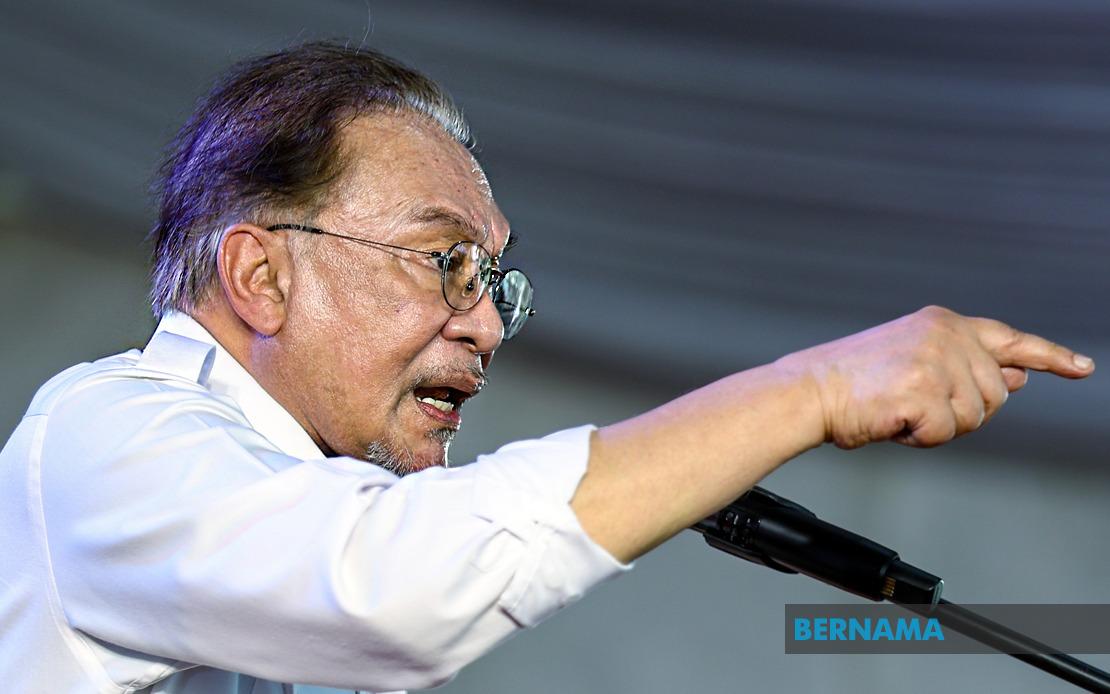
Datuk Seri Anwar Ibrahim, leading Pakatan Harapan's charge in the Johor state election, embarked on a demanding campaign schedule spanning eight constituencies in the northern part of the state. The whirlwind tour demonstrated the coalition's determination to maintain momentum during the second week of a closely contested electoral battle, with Anwar personally engaging voters across multiple communities to rally support for PH's candidates and strengthen grassroots organization.
The Pakatan Harapan chairman's itinerary reflected a carefully structured strategy designed to maximize voter contact across diverse demographic groups. Beginning at 8.55 am with a community breakfast programme at Warung Pak Din in Kampung Sahri, Anwar's day incorporated eight separate engagement points spanning from the early morning through to late evening, demonstrating the physical and organizational demands of contesting a state election in Malaysia's second-largest state by population.
The constituencies targeted—Layang-Layang, Senggarang, Semerah, Bukit Naning, Pemanis, Gambir, Serom, and Palong Timur—fall under the broader Buloh Kasap state legislative assembly seat, indicating PH's focus on consolidating support in a specific geographic cluster. This concentrated approach allows for efficient resource deployment while enabling the coalition to build momentum in areas where it holds competitive prospects or needs to counter perceived weaknesses.
Throughout the day, Anwar participated in various community engagement formats, each tailored to specific local contexts. The schedule included meet-and-greet sessions, a community feast at Vila Kemboja in Semerah, a volunteer launch in Muar, and a grassroots outreach programme at a Felda settlement in Palong Timur. This diversified approach reflects contemporary Malaysian electoral campaigning, which increasingly emphasizes direct personal engagement alongside digital and media strategies.
For the broader Johor contest, Pakatan Harapan has mounted an unprecedented effort by fielding candidates across all 56 state seats—a complete slate reflecting the coalition's ambitions to capture the state government. The candidate distribution demonstrates careful negotiation among coalition partners, with PKR contesting 20 seats, Amanah 19 seats, and DAP 17 seats. This allocation reflects both the relative party strengths and strategic considerations about candidate quality and electability in specific constituencies.
The Johor state election represents a significant battleground for Malaysian politics, given the state's economic importance and its role as a bellwether for national electoral trends. The 172 candidates across all political formations contesting 56 seats indicates competitive races in many constituencies, with polling day scheduled for July 11 and early voting on July 7. The intensity of Anwar's campaign schedule suggests PH views the election as winnable despite facing entrenched opposition in several areas.
For Anwar personally, the Johor campaign carries particular significance. As Prime Minister and Pakatan Harapan chairman, his visible presence on the ground signals the coalition's confidence while allowing him to directly address voter concerns about economic issues, governance, and the direction of the Madani administration. State elections serve as crucial popularity barometers for national leaders, and strong PH performance in Johor would validate Anwar's leadership both within the coalition and among the broader electorate.
The campaign's second week proved decisive for all contesting coalitions, as voters formed final impressions before the election. PH's decision to deploy Anwar for intensive ground-level engagement across multiple constituencies in a single day indicated awareness that traditional media coverage alone would be insufficient to secure victory. Personal appearances by senior political figures remain potent tools in Malaysian electoral politics, particularly in reaching swing voters and consolidating support among base voters who may be considering alternative choices.
The specific constituencies visited also reflect Pakatan Harapan's electoral mathematics in Johor. Northern state constituencies contain diverse voter bases, including urban workers, agricultural communities, and increasingly suburban settlements. By concentrating on eight constituencies within a manageable geographic radius, Anwar's tour enabled meaningful interaction rather than superficial coverage, allowing local party machinery to channel voter momentum toward election day.
The scale of Anwar's campaign commitment underscored the high stakes surrounding the Johor election for national politics. A strong PH showing would strengthen the Prime Minister's hand in managing coalition dynamics and pursuing policy objectives, while a disappointing result could embolden critics within and outside the coalition questioning the government's direction. In this context, the intensity of personal campaigning by Malaysia's most senior political figure reflected both opportunity and risk.
Southeast Asian observers watching Malaysian electoral developments would note that the Johor contest tested whether Pakatan Harapan's 2020 federal election coalition structure remains viable and vote-winning at state level. The fielding of a full slate across all seats represented a statement of intent, yet ground-level campaigning remained essential for translating organizational readiness into actual voter support, making Anwar's intensive engagement schedule a necessary component of the coalition's overall electoral strategy.

