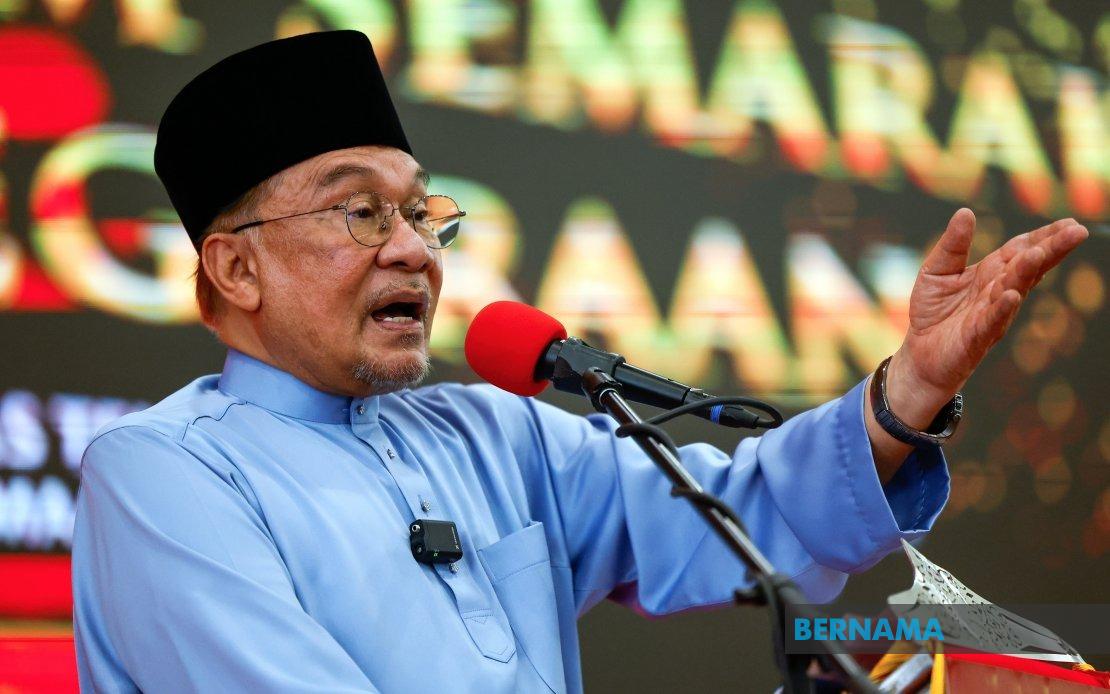
Prime Minister Datuk Seri Anwar Ibrahim is executing an ambitious campaign itinerary throughout Negeri Sembilan, demonstrating Pakatan Harapan's determination to maximise voter engagement in the final stretch before the state election this Saturday. The comprehensive schedule reflects the coalition's strategic emphasis on direct grassroots interaction and high-profile endorsements to consolidate support across diverse constituencies in the crucial swing state.
Anwar's day commenced with an afternoon community engagement in the Chennah constituency located in Jelebu, where constituents had the opportunity for informal dialogue with the Prime Minister. This direct format aims to address voter concerns at the ground level while projecting PH's accessible leadership approach. Such face-to-face interactions have become increasingly central to Malaysian political campaigns, allowing parties to move beyond scripted messaging and demonstrate genuine responsiveness to local issues affecting individual communities.
Following the Jelebu session, Anwar proceeded to the Temu Anwar programme hosted at the Islamic Dakwah Centre Hall in Paroi, a format designed to engage with voters on matters of religious and social significance. This programme sequence indicates PH's recognition of Islam's centrality to Malaysian political discourse and the importance of presenting its credentials on matters relating to faith and community welfare. The scheduling of such engagement reflects broader competitive dynamics where all major coalitions must address religious concerns proactively.
The evening agenda transitioned to community-specific outreach with a dinner engagement at Klana Resort targeting the Indian community. This targeted approach underscores PH's emphasis on appealing to Malaysia's diverse voter constituencies through culturally tailored programming. Such community-specific events represent a deliberate strategy to build coalitional support by demonstrating attentiveness to the distinct priorities and cultural practices of different demographic groups within the electorate.
The campaign culmination occurs across two major rally venues, beginning at Betaria Business Centre in Seremban at 9 pm, followed by mobilisation at the Desa Cempaka Night Market in Nilai at 10.30 pm. These evening events maximise accessibility for working voters and maintain momentum through the final hours before the Friday midnight campaign cessation deadline. The sequential venue strategy ensures geographic coverage across multiple parliamentary divisions while concentrating resources where voter density supports larger gatherings.
Anwar's dual role as Pakatan Harapan chairman and PKR president amplifies the symbolic weight of his personal participation. His visible involvement signals the coalition's serious commitment to Negeri Sembilan, a state where demographic shifts and previous electoral volatility make the outcome strategically consequential. The Prime Minister's physical presence generates media coverage and reinforces messaging discipline across the coalition's communications apparatus.
The campaign programme involves several prominent figures whose participation reflects coalition cohesion and complementary political positioning. Negeri Sembilan Menteri Besar Datuk Seri Aminuddin Harun's presence as the PH candidate for Linggi establishes continuity in state-level leadership, while DAP secretary-general Anthony Loke Siew Fook's participation in the Chennah constituency contest demonstrates the coalition's cross-party candidate placement strategy. This multi-party format reinforces PH's positioning as a unified electoral front rather than competing individual parties.
The supporting cast of campaign participants including Amanah president Datuk Seri Mohamad Sabu, PKR vice-president Datuk Seri Amirudin Shari, and PH communications director Datuk Seri Fahmi Fadzil represents deliberate allocation of coalition resources. Each participant brings specific constituency appeal and media reach, with communications specialists ensuring consistent messaging across multiple simultaneous events. This personnel deployment reflects professional campaign management principles increasingly adopted by Malaysian political organisations.
Packatan Harapan's comprehensive candidate slate across all 36 state seats demonstrates its confidence in contesting decisively rather than adopting strategic withdrawal tactics. The distribution of 16 PKR candidates, 11 DAP candidates, and 9 Amanah candidates reflects negotiated seat-sharing arrangements and reflects each coalition partner's negotiating position. This universal contestation approach maximises geographical presence while risking seat fragmentation if coalition discipline falters.
The broader electoral context involves 103 candidates contesting these 36 seats, indicating competitive multi-cornered contests in many divisions. For the 867,151 eligible ordinary voters, Saturday's election represents a consequential opportunity to reshape state-level political alignment. Negeri Sembilan's recent electoral history demonstrates volatility, making intensive final-week campaigning by established leadership particularly strategic for securing voter consolidation among persuadable segments.
The campaign's scheduling discipline, ending Friday at 11.59 pm, demonstrates compliance with electoral regulations while maximising final-moment messaging opportunities. PH's decision to deploy its highest-ranking leadership in accelerating mode during the final campaign week reflects assessment that voter sentiment remains fluid and responsive to concentrated persuasion efforts. The intensive schedule prioritises voter contact volume alongside symbolic reassurance of leadership commitment.
For Malaysian voters observing coalition dynamics, this coordinated campaign structure reveals both PH's organisational capacity and the political stakes surrounding state-level contests. Negeri Sembilan elections carry implications beyond immediate state governance, influencing broader assessments of coalition strength and individual leader credibility heading toward anticipated national electoral contests. Anwar's personal participation underscores the administration's investment in maintaining electoral momentum and coalition cohesion across Malaysia's federal-state political architecture.

