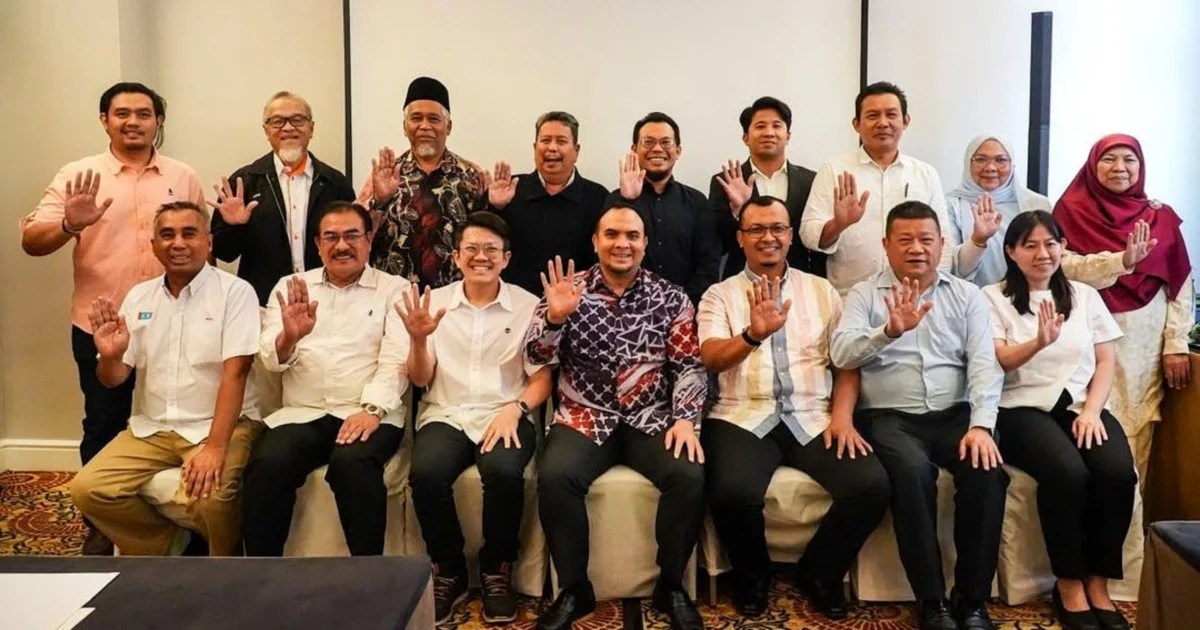
Prime Minister Datuk Seri Anwar Ibrahim's political secretary, Datuk Ahmad Farhan Fauzi, has assumed the role of chairman for Pakatan Harapan in Pahang, marking a notable shift in the coalition's leadership structure within the state. The appointment underscores the prime minister's strategy to consolidate control over regional political machinery through trusted associates positioned within his immediate circle.
The elevation of Datuk Ahmad Farhan Fauzi from his position as political secretary reflects a broader pattern within the Pakatan Harapan coalition of promoting key administrative figures to high-profile leadership positions. This move signals the coalition's intention to strengthen governance in Pahang, a state that remains strategically important within the nation's political landscape. By placing someone closely aligned with the prime minister in this role, Anwar Ibrahim effectively extends his influence over the regional party machinery that will be crucial for the coalition's performance in future electoral contests.
Datuk Ahmad Farhan Fauzi's previous role within the Prime Minister's Office positioned him at the intersection of political strategy and administrative implementation. His deep familiarity with the prime minister's policy agenda and political priorities makes him a natural choice to lead Pakatan Harapan's operations in Pahang. This transition demonstrates how contemporary Malaysian politics increasingly relies on networks of trusted operatives who maintain constant proximity to the seat of power while simultaneously managing regional party structures that determine electoral outcomes.
Pahang has long been a politically volatile state, with representation contested between multiple coalitions and independent factions. The coalition's decision to appoint a figure with direct access to the prime minister suggests confidence in his ability to navigate the complex political terrain within Pahang. The appointment also sends a clear message to party members and supporters about where authority ultimately lies within the coalition's decision-making hierarchy.
The timing of this appointment carries significance for Pakatan Harapan's preparation for upcoming electoral cycles. By solidifying leadership at the state level, the coalition aims to present a unified front and demonstrate organisational competence to voters. The choice to elevate someone from within the prime minister's immediate staff rather than promoting an existing regional party figure indicates a deliberate strategy to ensure alignment between state-level political operations and the federal government's broader objectives.
Datuk Ahmad Farhan Fauzi's appointment also reflects the premium placed on administrative efficiency and organisational discipline within Anwar Ibrahim's administration. His background in managing political affairs at the highest level of government provides him with insights into how electoral machinery should function, resource allocation strategies, and coordination between different layers of party organisation. These competencies are increasingly valued as Malaysian political coalitions compete more intensely for voter support through improved ground-level organisation.
The move illustrates the interconnected nature of Malaysian political structures, where proximity to federal power translates into influence over state-level operations. Datuk Ahmad Farhan Fauzi's dual positioning as both the prime minister's political secretary and now Pahang's coalition chairman creates a direct conduit for policy implementation and political strategy. This arrangement enables rapid decision-making and ensures that state-level initiatives align with the government's broader political and economic agenda.
For Pahang specifically, the appointment suggests that Pakatan Harapan intends to maintain its competitive presence within the state following recent political developments. The coalition's performance in Pahang has implications extending beyond the state's borders, affecting overall national political dynamics and the balance of power within federal parliament. By appointing a high-profile figure closely associated with the prime minister, Pakatan Harapan signals its commitment to securing and retaining support among Pahang voters.
The appointment also reveals something about contemporary Malaysian political culture, where the boundary between administrative roles and party positions has become increasingly permeable. Senior government officials now frequently assume party leadership responsibilities, blurring traditional distinctions between civil service and political party machinery. This trend reflects the personalised nature of Malaysian politics, where individual leaders' political networks extend throughout both governmental and party structures.
Regionally, this development matters because Pahang's political complexion influences the broader Southeast Asian political environment. As a constituent state within Malaysia's federal system, Pahang's governance and electoral patterns affect regional stability and the precedents set for state-federal relations. The coalition's effort to strengthen its position in Pahang demonstrates how national-level political leaders increasingly focus on comprehensive state-level management to consolidate their overall political authority.
Datuk Ahmad Farhan Fauzi faces significant expectations in his new role, requiring him to balance administrative responsibilities in the prime minister's office with active engagement in Pahang's party operations. His success will be measured by both the coalition's electoral performance and his ability to maintain internal party cohesion among sometimes competing factions and personalities within Pahang's Pakatan Harapan structure.
Looking forward, this appointment sets the stage for how Pakatan Harapan will compete for voter confidence in Pahang over coming years. The coalition's investment in placing a trusted associate in this leadership position reflects confidence in its ability to challenge for dominance in the state while advancing the prime minister's wider political objectives.

