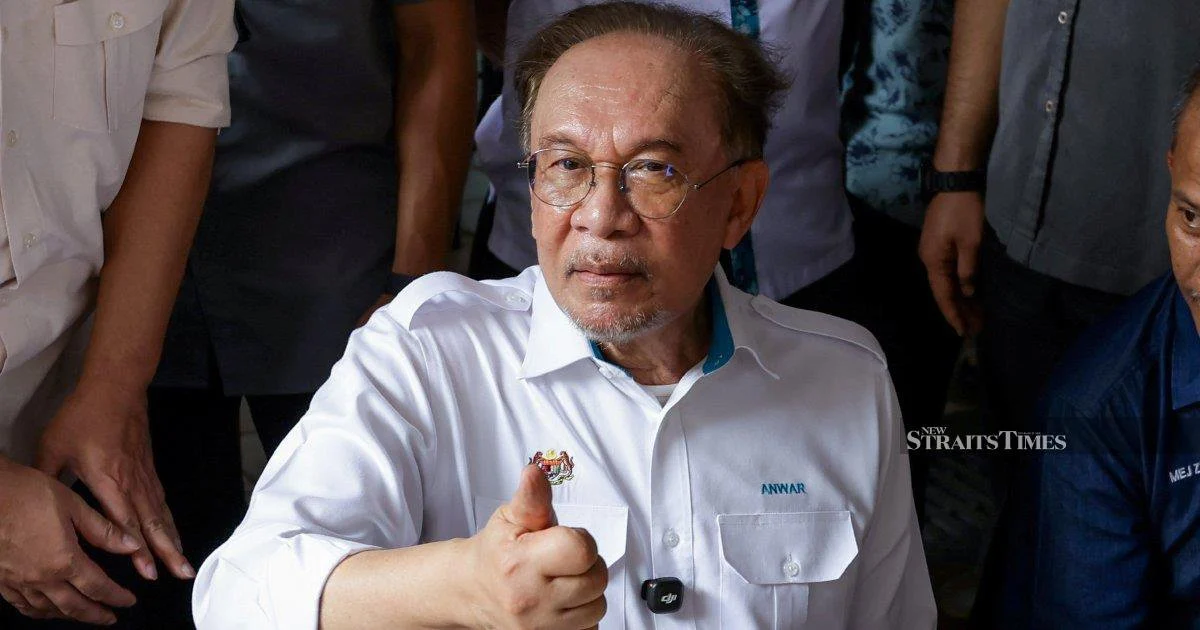
Prime Minister Datuk Seri Anwar Ibrahim has consolidated his position as Malaysia's most favoured political figure, according to fresh polling data released by the Merdeka Centre, a respected independent research institute that tracks public sentiment across the nation. The survey findings underscore the shifting dynamics of political approval in Malaysia, with significant variations in how different leaders are perceived by the electorate.
The Merdeka Centre's methodology, which has been employed to gauge Malaysian public opinion across multiple cycles, captures satisfaction levels among respondents regarding various aspects of political leadership. Anwar Ibrahim's commanding position in this latest round of measurements reflects sustained backing for his administration during a period marked by economic pressures and policy adjustments across multiple sectors. His elevation to the approval rankings represents a notable consolidation of support among diverse demographic and geographic constituencies nationwide.
The survey results reveal a clear stratification within Malaysia's political leadership hierarchy, with marked differences in how various office holders resonate with the general public. While Anwar Ibrahim secures the uppermost position in the approval spectrum, the data indicates that other prominent figures occupy distinctly lower positions on the popularity scale. These variations point to differing public assessments of individual leaders' performance, policy direction, and overall political effectiveness.
The positioning of Deputy Prime Minister Zahid Hamidi at the lower end of the approval rankings carries particular significance for understanding current political realignments in Malaysia. Zahid's standing reflects ongoing public skepticism that continues to shadow his political career, despite his substantial portfolio responsibilities and previous tenure in various ministerial positions. His relatively low approval rating suggests that public confidence in his leadership remains fractured, potentially influenced by his earlier legal challenges and their residual impact on public perception.
Merdeka Centre surveys function as important barometers of political mood in Malaysia, particularly given the institution's reputation for methodological rigor and independence from partisan influence. The institute's findings are regularly referenced by political analysts, media commentators, and government officials seeking to understand shifts in public opinion. This latest release therefore carries weight beyond mere numerical rankings, potentially influencing political strategy calculations among competing power bases within the government and opposition.
The approval differential between top and bottom performers in the survey suggests deeper divisions within Malaysia's political establishment regarding public trust and perceived competence. For Anwar Ibrahim, the positive reading provides political capital as he navigates complex governance challenges including inflation management, employment concerns, and infrastructure development commitments. The Prime Minister's approval strength appears to transcend the factional tensions that have historically fragmented Malaysian politics along ethnic, regional, and ideological lines.
Zahid Hamidi's low standing in the Merdeka survey occurs within a broader context of institutional challenges facing his UMNO party, which has struggled to regain its historical dominance following electoral setbacks in recent polling cycles. His position as Deputy Prime Minister places him in a structurally powerful position despite public reservations, creating a disconnect between formal authority and popular endorsement. This gap between office and approval presents a complicating factor in coalition management and policy implementation within the government apparatus.
The survey data carries implications for Malaysia's evolving political trajectory as the nation approaches potential electoral cycles and leadership transitions. Opposition parties will likely scrutinize these findings for strategic advantages, while government-aligned figures may attempt to strengthen their individual standings through increased public engagement and policy emphasis. The approval hierarchy thus becomes an active factor in political competition rather than merely a passive reflection of sentiment.
For regional observers monitoring Malaysia's political stability, these approval patterns signal the consolidation of executive authority around Anwar Ibrahim's leadership, while simultaneously highlighting fissures within the coalition government structure. Southeast Asian counterparts watching Malaysian politics often assess such surveys to gauge the durability of ruling arrangements and the likelihood of institutional continuity. The Merdeka Centre's findings therefore possess significance extending beyond Malaysia's borders to the broader regional political landscape.
The contrast between Anwar Ibrahim's high approval and Zahid Hamidi's low standing also illuminates public differentiation between individual leaders rather than blanket support or rejection of the government as a whole. Malaysian voters appear capable of distinguishing between personalities, demonstrated competence, and specific policy performances, suggesting a more sophisticated electorate than sometimes acknowledged in political commentary. This nuanced approval distribution may encourage leaders to focus on personal credibility and substantive achievements rather than relying solely on party machinery or factional loyalty.
As Malaysia continues managing economic headwinds and social demands, the approval ratings captured by the Merdeka Centre will likely remain relevant touchstones for political actors assessing their standing and strategic options. The significant gap between top and lower-ranking leaders creates both incentives for lagging figures to rehabilitate their images and opportunities for rising stars to consolidate gains. Political parties will undoubtedly incorporate these findings into calculations regarding leadership composition, ministerial appointments, and campaign messaging strategies moving forward.

