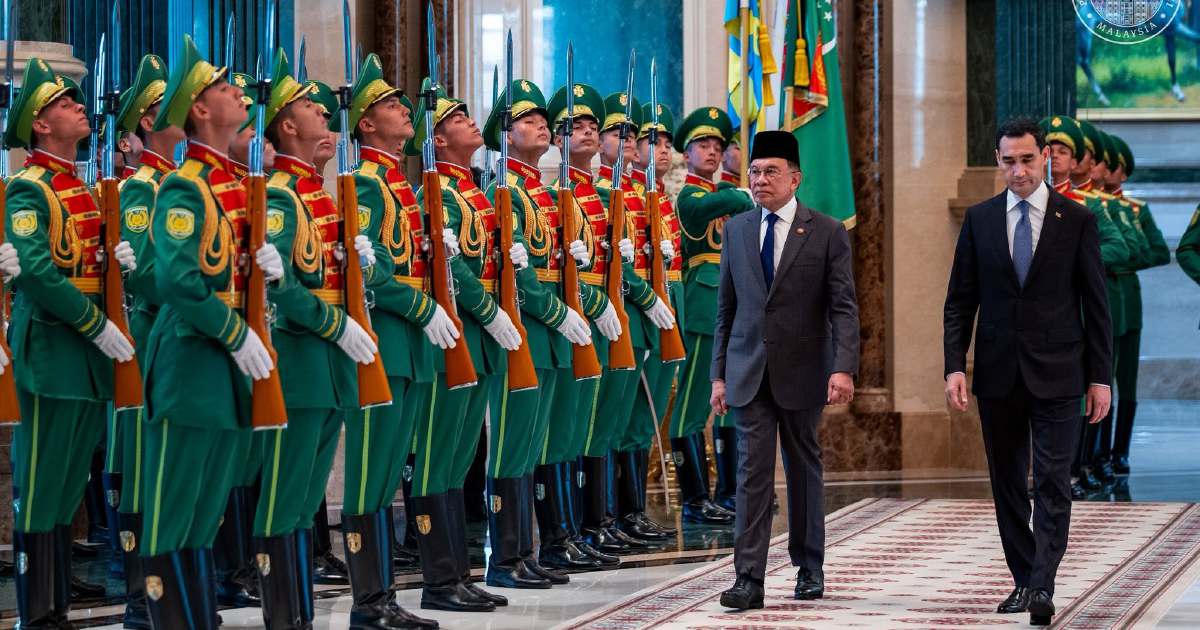
Prime Minister Datuk Seri Anwar Ibrahim has been formally received at Turkmenistan's Presidential Palace in Ashgabat, an occasion that marks a significant diplomatic milestone as this constitutes his inaugural official visit to the Central Asian nation since assuming the premiership. The ceremonial reception underscores Malaysia's continued efforts to deepen bilateral ties with countries beyond its traditional regional sphere, particularly as the nation seeks to strengthen economic and political partnerships across multiple continents.
Turkmenistan, strategically positioned along the historic Silk Road and serving as a crucial energy producer in Central Asia, represents an increasingly important destination for Malaysian diplomatic engagement. The nation's substantial natural gas reserves and developing infrastructure projects create potential avenues for Malaysian businesses and investors to explore partnerships in energy, construction, and technology sectors. For Malaysia, cultivating stronger relationships with Central Asian states offers an opportunity to diversify its international portfolio and reduce dependence on traditional trading partners.
The official welcome ceremony at the Presidential Palace signals the high-level significance both nations accord to this meeting. Such ceremonial protocols are typically reserved for visits of considerable diplomatic importance, suggesting that both Turkmenistan and Malaysia view this engagement as foundational to establishing a deeper, more substantive relationship. The timing and formal nature of the reception indicate mutual interest in advancing cooperation across multiple domains, from trade and investment to cultural and educational exchanges.
From Malaysia's perspective, engagement with Central Asian countries aligns with the nation's broader foreign policy objectives of establishing a more balanced and diversified network of international relationships. Rather than relying predominantly on neighbouring Southeast Asian states or traditional Western partners, Malaysia has been systematically building bridges with emerging economies and regional powers. Turkmenistan's geographic position makes it a natural gateway for Malaysian interests in the wider Central Asian region, which collectively represents a significant economic zone with considerable untapped potential.
The visit occurs within a broader context of Malaysian diplomatic expansion across Asia and beyond. Prime Minister Anwar Ibrahim has made strengthening Malaysia's international standing a core component of his administration's agenda, recognising that enhanced global engagement can complement domestic economic development priorities. By visiting Central Asia, the Prime Minister demonstrates Malaysia's commitment to being a truly regional and global player rather than limiting itself to Southeast Asian affairs.
Turkmenistan's significance extends beyond its energy resources. The country maintains strategic importance in regional geopolitics, serving as a bridge between Europe and Asia while maintaining neutral status in various international disputes. For Malaysia, developing relations with such a carefully positioned nation provides valuable diplomatic leverage and strengthens the country's profile as an independent actor on the world stage capable of engaging constructively with diverse political systems and ideologies.
Economic opportunities form a crucial dimension of this bilateral engagement. Malaysian enterprises, particularly those in construction, telecommunications, and technology sectors, may find receptive markets in Turkmenistan as the nation pursues modernisation and infrastructure development. Similarly, Malaysian expertise in areas such as Islamic finance and governance could prove attractive to Turkmenistan's leadership as both nations explore deeper institutional cooperation.
The cultural and people-to-people dimension of Malaysian-Turkmenistan relations also merits consideration. As both nations develop closer ties, opportunities emerge for educational exchanges, tourism initiatives, and cultural programmes that can build understanding and lasting connections between their respective populations. Educational partnerships, in particular, could enable Turkmeni students to pursue studies in Malaysia while Malaysian scholars and students gain exposure to Central Asian perspectives and knowledge.
Looking forward, this official visit may catalyse more substantive engagements between Malaysian and Turkmen institutions. Government-to-government meetings, commercial delegations, and academic exchanges could follow in the wake of this presidential reception, gradually building the foundations for a more comprehensive bilateral relationship. The success of this visit will likely influence the trajectory of Malaysia-Turkmenistan relations for years to come.
For Southeast Asian observers, Malaysia's active diplomacy in Central Asia carries broader implications. It demonstrates how regional powers can and should expand their international footprint strategically, creating new opportunities for economic growth and soft power influence. Other ASEAN nations may similarly benefit from adopting comparable approaches to engagement with distant but strategically important regions, potentially transforming ASEAN's collective diplomatic reach and economic opportunities across the Eurasian landmass.

